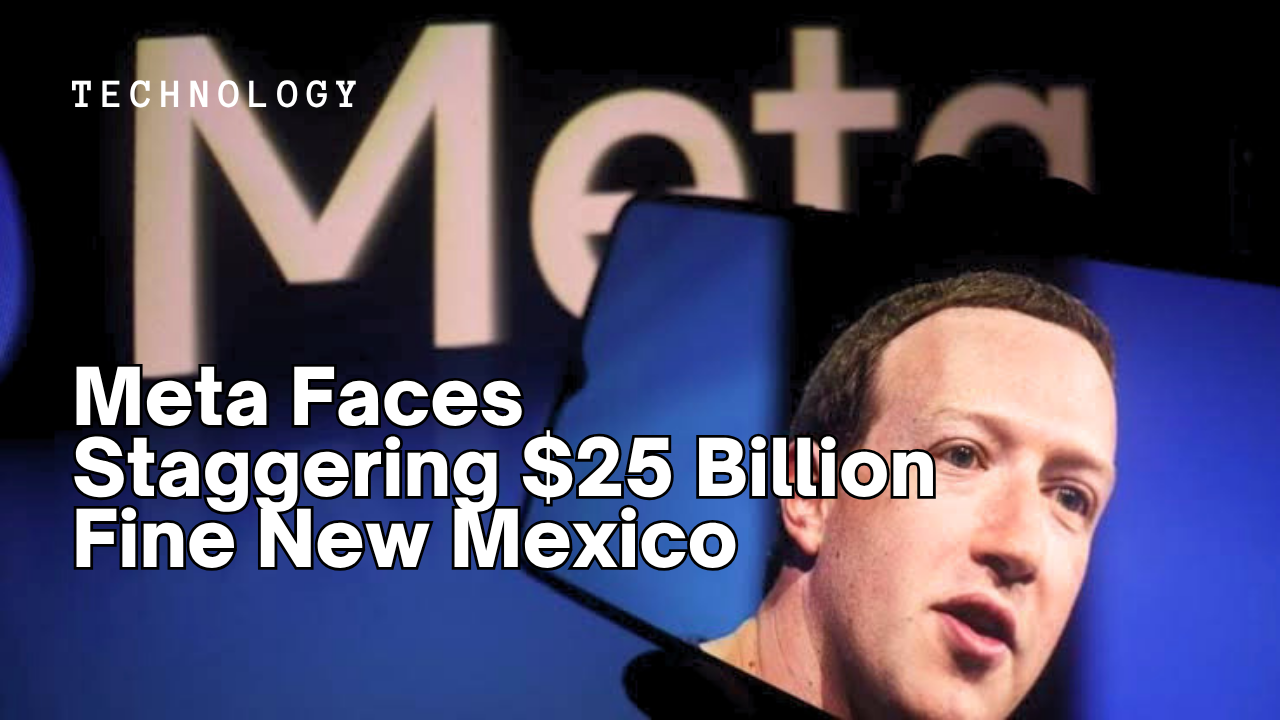
Is the era of massive tech companies operating with impunity finally drawing to a close? It certainly feels that way, especially with the recent announcement that Meta, the parent company of Facebook, Instagram, and WhatsApp, faces a staggering $25 billion fine in New Mexico related to the infamous Cambridge Analytica data privacy scandal. This isn’t just another regulatory slap on the wrist; this is a landmark legal penalty that could redefine corporate accountability in the digital age, setting a powerful precedent for data privacy regulations across the globe in 2026 and beyond.
For those of us who have followed the long, winding saga of data breaches and tech giants’ often lukewarm responses, this feels like a seismic shift. It highlights a growing global impatience with how our personal information is handled and misused. And honestly, it’s about time.
Key Takeaways
- Meta faces an unprecedented $25 billion legal penalty from New Mexico over its role in the Cambridge Analytica data misuse.
- This fine is specifically tied to violations of the state’s Unfair Practices Act and Inspection of Public Records Act.
- The case revives scrutiny of the 2018 Cambridge Analytica scandal, emphasizing the long-term repercussions of data exploitation.
- Experts believe this could establish a significant new benchmark for tech fines, pushing for greater social media regulation and accountability.
- The decision underscores a growing trend of states asserting authority in consumer protection and digital rights against tech giants.
Table of Contents
- What is the Meta New Mexico Cambridge Analytica Fine?
- The Staggering
- What is the Meta New Mexico Cambridge Analytica Fine?
- The Staggering $25 Billion Legal Penalty Explained
- Why This Tech Fine Matters for Data Privacy
- Broader Implications for Social Media Giants
- Addressing Common Misconceptions About Data Privacy Cases
- FAQ
5 Billion Legal Penalty Explained
- Why This Tech Fine Matters for Data Privacy
- Broader Implications for Social Media Giants
- Addressing Common Misconceptions About Data Privacy Cases
- FAQ
What is the Meta New Mexico Cambridge Analytica Fine?
The Meta New Mexico Cambridge Analytica fine represents a monumental legal ruling where the state of New Mexico has ordered Meta to pay an astounding $25 billion. This immense sum is a direct consequence of the company’s alleged failure to comply with demands related to the 2018 Cambridge Analytica data scandal, specifically violating state consumer protection and public records laws. It’s a potent reminder that even years after a scandal breaks, the legal ramifications can continue to escalate.
This isn’t just about the initial breach, you see. It’s about transparency, accountability, and the sheer volume of personal data that was compromised or misused. When we talk about data privacy, we’re often discussing nebulous concepts, but a fine of this magnitude puts a very concrete price tag on corporate negligence.
Revisiting the Cambridge Analytica Scandal
Let’s rewind for a moment. The Cambridge Analytica scandal, which fully came to light around March 2018, exposed how the political consulting firm had harvested the personal data of millions of Facebook users without their consent. This data was then allegedly used for political advertising purposes, influencing elections in various countries, including the 2016 U.S. presidential election.
The mechanism was deceptively simple: a third-party academic researcher developed a personality quiz app, “thisisyourdigitallife,” which not only collected data from users who took the quiz but also, crucially, from their Facebook friends. This meant data from tens of millions of people who never even downloaded the app ended up in Cambridge Analytica’s hands. It was a stark wake-up call for how interconnected and vulnerable our digital lives truly are, and for many, it profoundly reshaped their trust in social media platforms.
The New Mexico Lawsuit: A Unique Angle
While many jurisdictions investigated the Cambridge Analytica fallout, New Mexico took a particularly aggressive stance. The state’s Attorney General filed a lawsuit not just over the initial data breach, but for Meta’s subsequent actions, or inactions. Specifically, New Mexico argued that Meta violated the state’s Unfair Practices Act by misleading users about their data privacy and failing to protect their information. Furthermore, Meta was accused of violating the Inspection of Public Records Act by not adequately responding to requests for information regarding the incident, an angle that sets this case apart from others.
This legal strategy highlights a shift. Rather than solely focusing on the original transgression, states are now looking at how companies respond to inquiries and their ongoing transparency. As Reuters reported in a related case in 2023, regulatory bodies are increasingly scrutinizing corporate cooperation with investigations. It demonstrates a commitment to holding tech companies accountable not just for their initial missteps, but for their conduct throughout the entire legal process.
The Staggering $25 Billion Legal Penalty Explained
When you hear $25 billion, it’s hard not to flinch. This isn’t pocket change, even for a company as vast as Meta. According to CNBC, who broke the story on October 21, 2026, this specific penalty originates from New Mexico’s persistent legal efforts to enforce consumer protection and public records statutes that Meta allegedly breached. It’s a punitive measure designed to make a very clear statement about the costs of failing to safeguard user data.
Think about it. We’ve seen multi-million dollar fines before, but something of this magnitude truly signals a new phase in tech regulation. It moves beyond “cost of doing business” into a realm where the financial hit is undeniably impactful.
How New Mexico Reached This Figure
The $25 billion figure wasn’t pulled out of thin air. New Mexico’s legal team likely meticulously calculated the penalties based on the number of affected residents, the duration of the violations, and the specific statutes broken. For instance, the Unfair Practices Act often allows for significant per-violation penalties, and when you multiply that across potentially millions of affected individuals over several years, the numbers quickly climb.
It also reflects the state’s willingness to aggressively pursue the maximum possible penalties, unlike some other jurisdictions that might opt for smaller, negotiated settlements. This particular case serves as a prime example of a state attorney general leveraging every available legal tool to protect its citizens and uphold local statutes, refusing to back down from a tech giant.
Meta’s Official Response and Next Steps
Naturally, a fine of this scale isn’t accepted without a fight. Meta is expected to vigorously appeal the New Mexico court’s decision. In similar previous cases, tech companies have argued that such fines are excessive or that they have already implemented significant changes to address past issues. We’ve seen this play out many times, like in 2023 when Visa, Mastercard, and major banks faced new litigation over fees, leading to prolonged legal battles and appeals. This situation with Meta will likely follow a similar protracted path through the appellate courts.
Their legal strategy will probably focus on procedural challenges, disputing the interpretation of state laws, or arguing that federal regulations should preempt state action. For now, however, the ruling stands as a stark warning. The company will be under immense pressure to demonstrate robust data protection measures and transparency moving forward, especially if they hope to mitigate future legal exposure.
Why This Tech Fine Matters for Data Privacy
This $25 billion tech fine isn’t just a headline-grabbing number; it’s a critical development for the future of data privacy. It signals a heightened level of scrutiny and accountability that lawmakers and courts are now willing to impose on even the largest corporations. For too long, the narrative has been that big tech operates in a gray area, often outpacing regulation. This penalty flips that script.
What it really means is that the expectation for safeguarding personal information is no longer a suggestion; it’s a legally enforceable mandate with severe financial consequences. And that, in my opinion, is exactly how it should be.
Setting a Precedent for Social Media Regulation
This ruling from New Mexico could very well set a powerful precedent for social media regulation across the United States, and potentially internationally. Other states and countries, grappling with their own data privacy concerns, will be watching closely. Could this empower more local jurisdictions to pursue similar high-stakes lawsuits?
Absolutely. It shows that state-level actions can wield significant power against global tech behemoths. Historically, federal agencies or pan-national bodies like the EU have led the charge on tech regulation. But this case demonstrates the potent impact of state-specific consumer protection laws, urging other states to potentially ramp up their own enforcement efforts. It could lead to a patchwork of regulations, making compliance even more complex for companies like Meta.
Consumer Protection in the Digital Age
For the average user, this fine translates to a stronger sense of consumer protection in the digital age. It reinforces the idea that companies cannot simply collect and monetize personal data without robust safeguards and transparent practices. We all rely on these platforms for communication and information, but that reliance shouldn’t come at the cost of our privacy. This fine tells companies that neglecting data privacy has severe, real-world financial repercussions.
It also empowers individuals, encouraging them to demand more from the platforms they use daily. When companies like Meta face such substantial penalties, it sends a clear message down to every individual user: your data has value, and its misuse has consequences. This is a critical step towards rebuilding trust in online services that have, at times, squandered it.
Broader Implications for Social Media Giants
The ripple effects of this New Mexico decision will undoubtedly be felt far beyond Meta’s immediate legal team. This isn’t an isolated incident; it’s part of a larger, global trend towards increased scrutiny of how social media companies operate. Every other major player in the tech space, from TikTok to Google, will be taking note, assessing their own data handling practices and compliance frameworks.
This pushes the entire industry towards a more cautious and compliant approach to data, something many privacy advocates have championed for years. It’s not just about avoiding fines; it’s about maintaining user trust and avoiding reputational damage that can last for years.
The Shifting Landscape of Digital Accountability
We are witnessing a profound shift in the landscape of digital accountability. Gone are the days when companies could simply issue an apology and promise to do better. Now, the promises come with a multi-billion dollar price tag if they fail to deliver. This move by New Mexico underlines that jurisdictions are becoming more sophisticated in understanding and prosecuting complex digital transgressions.
It also signals a maturation of legal frameworks designed to handle the unique challenges of the internet. Legislators and legal experts are learning from past cases, developing more effective ways to hold tech companies responsible for their impact on society. We’re seeing less “wild west” and more structured regulation, even if it’s still evolving.
Potential Ripple Effects on Other Platforms
Could this Meta fine impact other platforms? Absolutely. Consider the ongoing concerns about data collection practices across a myriad of apps and services. We’ve recently seen reports, for example, about LG Smart TVs logging audio and network data without consent, raising similar questions about privacy and user agreements. These instances, while different in scale and context, contribute to a broader environment where data privacy is paramount.
Other social media platforms, search engines, and even emerging AI models are under increasing pressure to ensure their data handling is unimpeachable. The specter of a multi-billion dollar fine now looms larger than ever, incentivizing proactive compliance and investment in robust privacy protections. No company wants to be the next to face such a staggering penalty.
Addressing Common Misconceptions About Data Privacy Cases
When news like this breaks, it’s easy for misconceptions to take hold. Let’s clarify a couple of key points that often arise in discussions about large-scale tech fines and data privacy lawsuits. Not every big number means immediate, tangible change for every individual, but the cumulative effect is undeniable.
And yes, the legal process is often incredibly slow. That’s just how it works.
Is This Just Another Slap on the Wrist for Big Tech?
Some might argue that $25 billion, while massive, is still a drop in the ocean for a company with Meta’s market capitalization. “Just a slap on the wrist,” they might say. I understand that perspective. Meta is indeed one of the wealthiest companies on the planet. However, to dismiss a $25 billion fine as inconsequential would be a significant oversight. This figure represents a genuine financial hit, and more importantly, a catastrophic reputational blow. Such fines aren’t just about the immediate cash outflow; they impact investor confidence, attract further regulatory scrutiny, and compel companies to reallocate resources towards compliance.
When you factor in the long-term legal costs, the mandated operational changes, and the potential for similar fines in other jurisdictions, it becomes a far greater deterrent than a mere inconvenience. This is a powerful signal that the regulatory environment is tightening, making business as usual increasingly untenable for platforms that disregard data privacy.
Do Users Actually See Any Direct Benefit?
This is a common, and valid, question. When a company pays a massive fine, does that money go directly back to the individuals whose data was misused? In most cases, with fines of this nature, the money goes to the state or federal government that levied the penalty. It might be allocated to state general funds, consumer protection initiatives, or legal departments. So, no, you likely won’t see $50 show up in your bank account because of this particular fine. However, the indirect benefits are substantial.
These fines act as a powerful deterrent, forcing companies to invest heavily in better data security and privacy measures to avoid future penalties. This ultimately benefits all users by creating a safer, more transparent digital environment. Moreover, the publicity surrounding such cases raises public awareness about data privacy issues, empowering individuals to make more informed choices about their online activities. It’s a long game, but one where everyone ultimately stands to gain from improved protections.
The $25 billion fine against Meta in New Mexico is a landmark moment in the ongoing battle for data privacy. It underscores the growing resolve of states to hold powerful tech companies accountable for their actions and inactions, particularly concerning user data. This isn’t the end of the story; it’s likely just another chapter in a much larger narrative about how we, as a society, decide to manage and protect our digital lives in an increasingly interconnected world. The message is clear: data privacy isn’t optional, and ignoring it comes with a truly staggering price.
Sources
- CNBC — Meta Faces Staggering $25 Billion Fine in New Mexico Cambridge Analytica Case
- Reuters — Meta to pay $725 mln to settle Cambridge Analytica privacy lawsuit
FAQ
What is the core issue in the Meta New Mexico Cambridge Analytica case?
The core issue revolves around Meta’s alleged failure to adequately protect user data and its lack of transparency following the Cambridge Analytica scandal. New Mexico’s lawsuit specifically cited violations of state consumer protection and public records laws, arguing that Meta misled users and obstructed investigations.
How large is the legal penalty Meta faces in New Mexico?
Meta faces a staggering $25 billion legal penalty from the state of New Mexico. This represents one of the largest fines ever levied against a tech company for data privacy violations, reflecting the serious nature and widespread impact of the alleged breaches.
What was the Cambridge Analytica scandal?
The Cambridge Analytica scandal involved a political consulting firm harvesting the personal data of millions of Facebook users without their explicit consent. This data was then used for targeted political advertising, raising significant concerns about data misuse and electoral integrity.
Will Meta pay the $25 billion fine immediately?
It is highly unlikely that Meta will pay the $25 billion fine immediately. The company is expected to appeal the court’s decision vigorously. Legal battles of this magnitude typically involve lengthy appeals processes that can span several years.
Does this fine mean individual users will receive compensation?
While the fine is immense, it typically means the funds will go to the state government that levied the penalty, rather than directly to individual users. The primary benefit for users is indirect, through stronger enforcement of data privacy laws and increased corporate accountability, leading to better protections overall.
What impact could this have on other tech companies?
This substantial tech fine is expected to have significant ripple effects across the entire technology industry. It will likely encourage other social media platforms and tech giants to reassess and strengthen their own data privacy practices and compliance measures to avoid similar punitive actions.
Why is New Mexico’s approach unique in this case?
New Mexico’s approach is unique because it specifically targeted Meta not just for the initial data misuse, but for alleged violations of its state-specific Unfair Practices Act and Inspection of Public Records Act related to Meta’s response and transparency during the investigation. This strategy focused on ongoing corporate conduct rather than solely the original breach.

TRENDING: Google Unveils Gemini 4 Argon AI Model
Download the new game Guess The Celebrity Quiz and check how well you know your idols
Always be up to date with the news and follow the trends!
 Support our work by giving us a small donation
 Support our work by giving us a