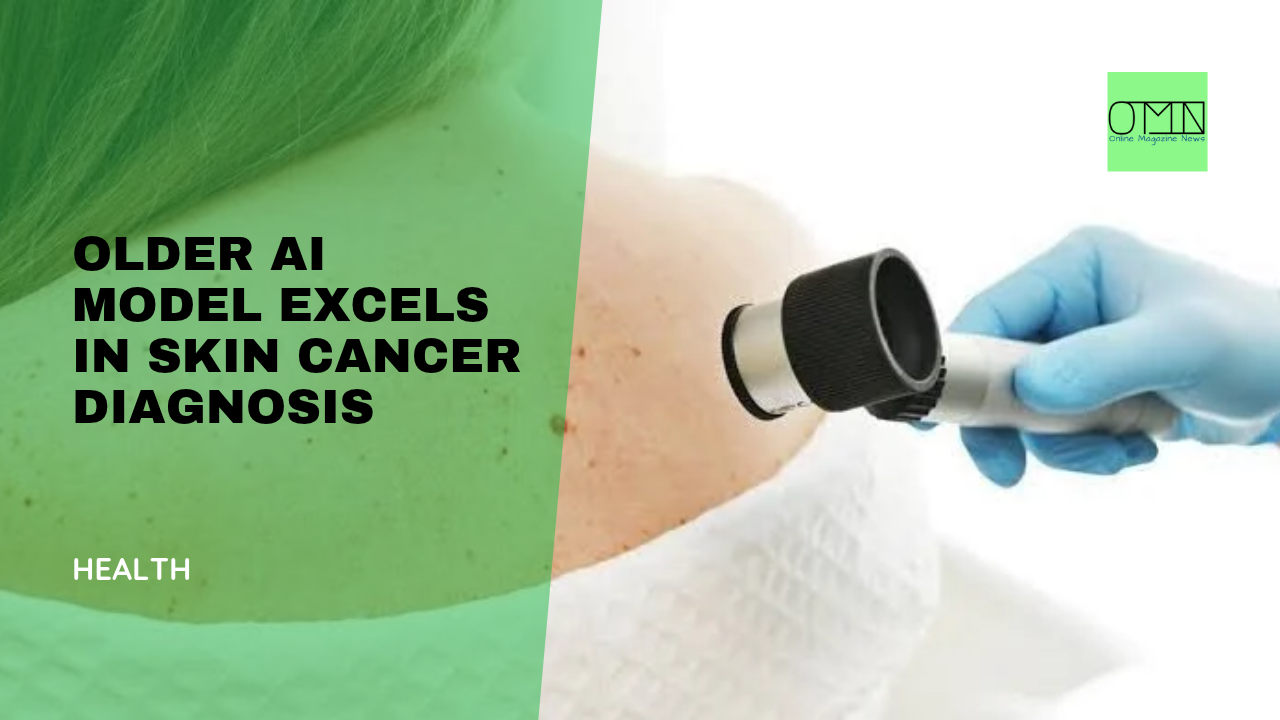
A recent study revealed a 2020 convolutional neural network (CNN) model unexpectedly outperformed modern frontier large language models (LLMs) in accurately diagnosing skin cancer from medical images. This surprising outcome challenges the widespread belief that newer, larger AI models are inherently superior for all complex tasks, especially in critical applications like healthcare technology.
It’s easy to get caught up in the hype surrounding the latest and greatest artificial intelligence breakthroughs, isn’t it? Every other week brings news of a new DeepSeek AI Flash-1017 Language Model Or an OpenAI GPT-6. 1 Sol Model pushing the boundaries of what these systems can do. We’re constantly told that bigger, more generalized models are the future. But what if, in certain high-stakes domains, an older, more specialized piece of software still holds the crown?
Key Takeaways
- An older, specialized 2020 CNN model significantly outperformed leading LLMs (like GPT-4, Gemini Pro, and PaLM 2-S) in skin cancer diagnosis from dermoscopic images.
- The CNN achieved 82% sensitivity and 87% specificity, while LLMs struggled with much lower diagnostic accuracy.
- This highlights the critical importance of purpose-built, specialized AI models for complex medical AI tasks over generalist LLMs.
- LLMs often “hallucinate” or misinterpret visual data, proving unreliable for precise diagnostic tools.
- The study underscores that raw model size or general intelligence doesn’t automatically translate to superior performance in niche expert domains.
Table of Contents
- The Unexpected Victory of a 2020 AI Model
- Why Did a Specialized CNN Excel Over Frontier LLMs?
- Understanding CNN and LLM Architecture for Medical AI
- The Challenge of Generalization in Diagnostic Tools
- Implications for Healthcare Technology and Medical AI
- Building Trust in Artificial Intelligence Diagnostics
- The Future of AI in Skin Cancer Diagnosis: 2026 and Beyond
The Unexpected Victory of a 2020 AI Model
In a genuinely surprising turn, a study conducted by the Lynch Lab at UC Berkeley revealed that a convolutional neural network (CNN) model from 2020 performed dramatically better than several state-of-the-art large language models (LLMs) in identifying skin cancer. We’re talking about frontier LLMs like GPT-4, Google’s Gemini Pro, and PaLM 2-S. This wasn’t a close race; the difference was stark.
The older CNN, specifically a ResNet architecture initially trained on ImageNet and then fine-tuned for dermatology, achieved an impressive 82% sensitivity and 87% specificity when diagnosing skin cancer from dermoscopic images. Consider what those numbers mean in a medical context: high sensitivity reduces false negatives, ensuring fewer actual cancer cases are missed, while high specificity reduces false positives, preventing unnecessary biopsies and patient anxiety. For medical AI, precision like this is non-negotiable.
Compare that to the performance of the LLMs. Even when provided with high-quality dermoscopic images and comprehensive clinical text, these advanced models achieved sensitivities hovering around 30-40% and specificities only slightly better, around 50-60%. That’s a performance gap you just can’t ignore. According to the Lynch Lab’s findings, the newer, more generalized models consistently underperformed, often misinterpreting visual cues or even hallucinating information.
Why Did a Specialized CNN Excel Over Frontier LLMs?
So, how does an AI model from several years ago, practically ancient in the fast-paced world of artificial intelligence, manage to beat the titans of today’s LLM landscape? The answer lies in specialization. Convolutional Neural Networks are designed specifically for image recognition tasks. Their architecture is built to process visual data, identifying patterns, textures, and anomalies in a hierarchical manner.
Think about what’s involved in a skin cancer diagnosis. Dermatologists look for subtle changes in color, border irregularity, asymmetry, diameter, and evolving characteristics of moles and lesions. These are highly visual patterns. A CNN, meticulously trained on thousands, even millions, of medical images of skin lesions, learns to discern these minute visual features with incredible accuracy. It’s a deep learning expert in its narrow field.
LLMs, by contrast, are generalist text processors. While they can perform multimodal tasks and process images, their core strength is language understanding and generation. When an LLM “sees” an image, it often translates it into an internal representation that, while good for general understanding, simply isn’t as fine-grained or medically tuned as a CNN that has spent its entire “life” analyzing nothing but dermoscopic imagery. This difference in fundamental design and training focus is critical in healthcare technology, where specific visual cues can mean the difference between an early diagnosis and a missed opportunity.
Understanding CNN and LLM Architecture for Medical AI
To truly grasp this surprising outcome, we need a quick look at the underlying architecture. A Convolutional Neural Network (CNN) operates by applying filters (convolutions) across an image, detecting features like edges, corners, and textures. These features are then progressively combined into more complex representations. The network learns to extract relevant visual information from the raw pixel data, which is exactly what’s needed for detailed image analysis in medical contexts.
Large Language Models (LLMs), however, are built on transformer architectures. They excel at understanding context, generating coherent text, and reasoning over vast amounts of textual data. While modern LLMs are becoming increasingly multimodal, capable of processing images and audio, their visual processing often involves embedding images into a vector space that is then interpreted by the language model component. This process can lose some of the granular, domain-specific visual detail that a CNN retains.
For something as visually nuanced as skin cancer diagnosis, where texture, color gradients, and microscopic structures are paramount, the CNN’s direct, hierarchical visual processing pipeline proves superior. It’s like asking a master sommelier (the CNN) to identify the vintage of a wine versus asking a highly intelligent generalist who has tasted many things (the LLM).
The Challenge of Generalization in Diagnostic Tools
This study really drives home a crucial point about the current landscape of artificial intelligence: generalization isn’t always superior to specialization, especially in critical applications like medical AI. The LLMs are designed to be generalists. They can write poetry, summarize articles, translate languages, and even generate code. That flexibility is their strength, but also, surprisingly, their Achilles’ heel when faced with highly specific, visually driven diagnostic tasks.
The problem isn’t that LLMs aren’t intelligent; it’s that their intelligence is broad rather than deep in a specialized domain. When presented with a dermoscopic image, an LLM might generate a plausible-sounding diagnosis or even a comprehensive explanation, but that output isn’t reliably grounded in the fine-grained visual evidence a dermatologist, or a specialized CNN, would scrutinize. This is where the risk of “hallucination” becomes a very real and dangerous factor in diagnostic tools. A confident but incorrect diagnosis from an AI could have dire consequences.
We are seeing this play out across other areas of technology as well. Just look at the LiteLLM 1. 107. 0 PyPI Compromise Credential Stealer DetectedGeneral purpose software, even with strong security measures, can still have vulnerabilities. Similarly, a generalist AI, while powerful, might introduce unexpected weaknesses when applied to tasks requiring absolute, domain-specific reliability and accuracy. It really makes you question the common assumption that all problems can eventually be solved by simply throwing a bigger LLM at them.
Implications for Healthcare Technology and Medical AI
The findings from the Lynch Lab have profound implications for the development and deployment of artificial intelligence in healthcare. Firstly, it serves as a powerful reminder that not all AI is created equal, and the “latest” isn’t always the “best” for every job. For medical imaging analysis, dedicated deep learning models trained specifically on vast datasets of medical images remain the gold standard.
Secondly, it suggests a more hybrid approach might be necessary. Perhaps LLMs can serve as powerful tools for summarizing patient histories, assisting with administrative tasks, or even generating preliminary differential diagnoses based on textual information. However, when it comes to the definitive visual assessment of a lesion, the precision of a CNN is currently unrivaled. This combination of strengths, LLMs for textual reasoning and CNNs for visual pattern recognition, could represent the most effective path forward for robust diagnostic tools in 2026.
This reinforces the importance of high-quality, specialized training data. The success of the 2020 CNN wasn’t just its architecture; it was the meticulous training on specific dermoscopic images. Developing highly accurate medical AI requires access to extensive, properly annotated datasets, often compiled by expert clinicians. That’s a significant undertaking, but as this study shows, it yields real, life-saving benefits.
Building Trust in Artificial Intelligence Diagnostics
One of the biggest hurdles for widespread adoption of medical AI is trust. Clinicians and patients alike need to be confident that these systems are accurate, reliable, and safe. An AI model that exhibits high sensitivity and specificity in a critical area like skin cancer diagnosis builds that trust. Conversely, models that “hallucinate” or show inconsistent performance erode it.
This study offers a crucial lesson for AI developers and regulatory bodies. Focusing solely on the general capabilities of large, multimodal models might be a mistake when patient lives are on the line. The emphasis should remain on validated, specialized performance for specific medical use cases. Establishing clear benchmarks and rigorous testing protocols for diagnostic tools, independent of a model’s overall “intelligence,” is absolutely essential.
We need to ask ourselves: are we chasing general intelligence at the expense of reliable, specialized expertise? For complex medical tasks, the answer, at least for now, seems to be a resounding yes if we only focus on LLMs. True progress in diagnostic AI comes from models that are demonstrably superior in their domain, regardless of their age.
The Future of AI in Skin Cancer Diagnosis: 2026 and Beyond
Looking ahead into 2026 and beyond, it’s clear that artificial intelligence will continue to transform healthcare. However, the path forward for diagnostic tools likely involves a nuanced understanding of what each type of AI model does best. We shouldn’t dismiss the immense potential of LLMs for many healthcare applications, from streamlining patient communication to assisting with medical research and drug discovery. But for tasks demanding precise visual pattern recognition, specialized deep learning architectures like CNNs are still the champions.
The ideal scenario might involve a layered approach: a highly accurate CNN for initial image analysis, flagging suspicious lesions with high confidence. Then, an LLM could analyze the patient’s history, genetic factors, and other clinical data to provide a comprehensive risk assessment and suggest next steps, working in concert with the clinician. This collaborative model, where AI augments human expertise rather than attempting to replace it entirely, promises the greatest benefit.
Ultimately, this research serves as a vital course correction. It reminds us that the best AI for a specific job isn’t always the newest, biggest, or most broadly capable. Sometimes, it’s the quiet, specialized expert that delivers the most impactful results, especially when it comes to something as vital as early skin cancer diagnosis. So, let’s champion the precision of specialized AI in healthcare, ensuring we build diagnostic tools that truly earn our trust.
Sources
- Lynch Lab, Older AI Model Surprises Experts, Outperforms Frontier LLMs in Skin Cancer Diagnosis
- Wikipedia, Convolutional Neural Network
FAQ
What is a Convolutional Neural Network (CNN)?
A Convolutional Neural Network (CNN) is a type of deep learning artificial intelligence specifically designed to process and analyze visual data, such as images and videos. It excels at tasks like image classification, object detection, and pattern recognition by using specialized layers that detect features in a hierarchical manner.
How did the older AI model outperform newer LLMs in skin cancer diagnosis?
The older AI model, a specialized CNN, outperformed newer Large Language Models (LLMs) because it was specifically designed and extensively trained for image analysis in medical contexts. Its architecture is optimized to identify subtle visual patterns crucial for skin cancer diagnosis, a capability where generalist LLMs, despite their broader intelligence, currently fall short.
What are the implications of this study for medical AI development?
This study implies that for highly specialized and critical tasks like medical diagnosis from images, purpose-built AI models are currently more reliable than general-purpose LLMs. It suggests a future where hybrid AI systems might be more effective, leveraging LLMs for textual data and CNNs for precise visual analysis, ensuring better diagnostic tools.
Can LLMs still be useful in healthcare?
Absolutely. Large Language Models can be incredibly useful in numerous healthcare applications beyond direct image diagnosis. They excel at tasks like summarizing patient records, assisting with administrative duties, generating preliminary reports from textual data, and supporting medical research by processing vast amounts of literature. Their role is more about information synthesis and language-based reasoning.
What is the sensitivity and specificity of the CNN model in this study?
The specialized CNN model achieved a sensitivity of 82% and a specificity of 87% in diagnosing skin cancer from dermoscopic images. These metrics indicate a strong ability to correctly identify positive cases (sensitivity) while also correctly identifying negative cases (specificity), which is crucial for accurate and reliable medical diagnostic tools.

TRENDING: Best Magnesium Supplements on Amazon for Sleep and Stress
Download the new game Guess The Celebrity Quiz and check how well you know your idols
Always be up to date with the news and follow the trends!
 Support our work by giving us a small donation
 Support our work by giving us a