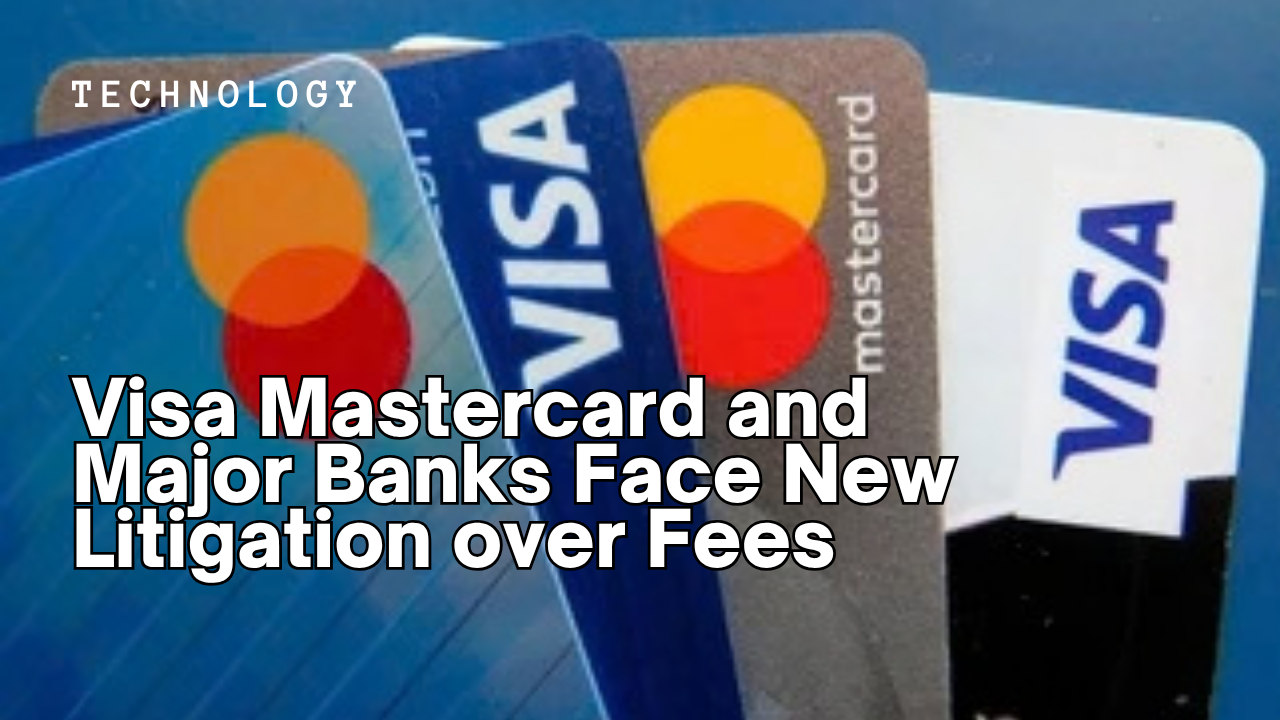
The merchant fee litigation involves a series of new lawsuits alleging that Visa, Mastercard, and several major banks have conspired to inflate credit card transaction fees through anticompetitive rules. You should care because these “swipe fees” act as a hidden tax on nearly every purchase you make, potentially driving up retail prices for everyone, regardless of whether you pay with plastic or cash.
Key Takeaways
- Systemic Overcharging: Merchants allege that Visa and Mastercard’s rules prevent them from steering customers toward cheaper payment methods.
- Bank Involvement: Large financial institutions are accused of coordinating with card networks to maintain high interchange fees.
- Cost Impact: These fees often exceed 2% per transaction, costing U.S. businesses billions of dollars annually.
- Legal Precedent: This new wave of litigation follows a rejected $30 billion settlement, suggesting a push for more permanent structural changes in the industry.
You know, for years, the act of swiping a credit card felt like a seamless, almost invisible part of our daily lives. Whether you were grabbing a coffee or booking a flight, the convenience was the point. But behind that split-second digital handshake, a massive legal battle has been brewing for decades, and it just hit a boiling point. The latest round of litigation isn’t just a minor disagreement over pennies; it is a full-scale assault on the “swipe fee” infrastructure that powers the American economy.
According to ClassAction.org, a new set of lawsuits has been filed against Visa, Mastercard, and heavyweights like JPMorgan Chase, Bank of America, and Wells Fargo. The core of the complaint? That these entities have worked in tandem to fix the prices of merchant fees, effectively stifling competition and forcing businesses to swallow exorbitant costs. If you have ever noticed a “cash discount” at a gas station or a “3% fee for credit cards” at a local bistro, you are seeing the front lines of this war.
Table of Contents
- What Is the New Credit Card Fee Litigation?
- How Credit Card Interchange Fees Actually Work
- Why Major Banks Are Now in the Legal Crosshairs
- The Hidden Impact on Your Wallet and the Retail Economy
- Common Misconceptions About Merchant Fee Antitrust Cases
- What This Means for the Future of Payments in 2026
- Frequently Asked Questions
What Is the New Credit Card Fee Litigation?
The current litigation is a coordinated legal effort by merchants to dismantle the “anti-steering” and “honor all cards” rules that Visa and Mastercard enforce across their networks. These rules essentially forbid shop owners from telling you, the customer, that one card costs them more to process than another. The plaintiffs argue that this lack of transparency prevents a free market from functioning, as banks and networks don’t have to compete on price to get their cards into your wallet.
This isn’t just a new story; it is the continuation of a saga that saw a significant turning point in June 2024. At that time, a federal judge in Brooklyn, Margo Brodie, signaled she would likely reject a proposed $30 billion settlement that would have capped fees for a few years but left the underlying rules intact. Merchants argued the deal was a “band-aid on a bullet wound,” and their rejection opened the floodgates for the current, more aggressive lawsuits we are seeing today.
I find it fascinating that while we often focus on the tech side of finance, like the origins of the Apple Card, the plumbing of the system remains remarkably archaic and protected by these complex legal frameworks. The new lawsuits specifically name the banks because the banks are the ones that actually receive the lion’s share of the interchange fee, not just the card networks themselves.
How Credit Card Interchange Fees Actually Work
To understand the lawsuit, you have to understand where the money goes. When you buy a $100 item, the merchant might only receive $97.50. The remaining $2.50 is the “swipe fee” or interchange fee. This fee is set by Visa and Mastercard, but it is paid to the bank that issued your card. This revenue stream is exactly what funds those lucrative travel points and 2% cash-back rewards we all love. The litigation argues that because Visa and Mastercard set these fees centrally for all their member banks, it constitutes a form of horizontal price-fixing.
The Comparison: Small Business vs. Big Retail
While the fees might seem small to a giant like Walmart, they are a survival issue for mom-and-pop shops. Here is how the burden shifts:
- Large Retailers: Often have the volume to negotiate slightly better “proprietary” rates or can afford the legal teams to join class actions.
- Small Merchants: Usually stuck with “off-the-shelf” rates that can exceed 3% for premium rewards cards, often representing their entire profit margin on a sale.
- Online Vendors: Face even higher “Card Not Present” fees due to perceived fraud risks, further eating into the digital economy.
The truth is, the current system creates a weird incentive structure. Banks want to issue high-fee rewards cards because they make more money per swipe, and merchants feel forced to accept them because if they don’t, they lose the customer. This “all-or-nothing” acceptance rule is a primary target of the 2026 legal challenges.
Why Major Banks Are Now in the Legal Crosshairs
Why are banks like JPMorgan Chase and Wells Fargo named in the litigation alongside the card networks? The lawsuits allege that these banks don’t just use the Visa/Mastercard networks; they actively participate in a “conspiracy” to protect the interchange fee revenue. Since the banks own the relationship with the cardholder, they are the ones who benefit most from the status quo. If Visa were to lower fees unilaterally, the banks would see a massive drop in their non-interest income.
We saw a similar tension recently in the tech world when Apple faced frustration over in-app advertisements and ecosystem control. Just as Apple controls the App Store, Visa and Mastercard control the “Payment Store.” The banks are the developers in this analogy, reaping the rewards of a closed system that makes it very difficult for new, cheaper payment rails to emerge.
One specific allegation is that the banks and networks work together to block “debit routing” competition. Even though laws like the Durbin Amendment were supposed to lower debit fees, merchants claim the defendants found technical ways to circumvent these savings. This level of alleged coordination is what makes this an antitrust case rather than a simple contract dispute. The litigation seeks not just money, but a court order that would allow merchants to choose which networks they use for every single transaction.
The Hidden Impact on Your Wallet and the Retail Economy
Here is the counterintuitive part: you might think that lower fees for merchants don’t matter to you, or worse, that they will take away your credit card points. While it is true that rewards might be trimmed if fees drop, the current system actually forces people who pay with cash or basic debit cards to subsidize the rewards of wealthy credit card users. Economists often refer to this as a regressive transfer of wealth from lower-income consumers to higher-income ones.
A study by the Federal Reserve Bank of Boston previously noted that the average rewards-card-using household receives an annual subsidy of over $1,000 from cash users. By forcing merchants to keep prices the same for everyone, the cost of the swipe fee is “baked in” to the price of milk, bread, and gasoline. If the litigation succeeds, we might see a more transparent pricing model where the cost of the payment method is clear at the point of sale.
Think about it: would you still use your premium sapphire-level card if the merchant showed you that it cost an extra $4 in fees for a $100 purchase? Most of us wouldn’t. The “anticompetitive” rules are designed specifically to prevent you from ever having to make that choice. The lawsuit aims to break this veil of secrecy and let the market decide what a transaction is actually worth.
Common Misconceptions About Merchant Fee Antitrust Cases
There is a common belief that if Visa and Mastercard lose, credit cards will become more expensive for the consumer to hold. In reality, the “price” of the card (annual fees, interest rates) is separate from the “swipe fee.” While rewards programs might be less flashy, the competition for your business as a cardholder would likely shift toward better service or lower interest rates rather than just how much a bank can extract from a merchant.
Another misconception is that this is a “new” problem. In fact, this legal battle has been going on for nearly 20 years. The difference in 2026 is the sheer volume of evidence regarding how these fees have scaled even as technology has made processing transactions cheaper. The plaintiffs argue that in a truly competitive market, the price of processing a digital payment should have plummeted over the last two decades, just like the cost of data storage or internet bandwidth.
Instead, interchange fees have remained stubbornly high, and in some categories, they have actually increased. This decoupling of “cost to provide service” vs. “price charged” is a classic red flag for antitrust regulators. It is similar to how we see AI models becoming more efficient and cheaper; the payment industry is being accused of artificially preventing that same natural deflationary pressure from hitting transaction costs.
What This Means for the Future of Payments in 2026
If the courts side with the merchants, the ripple effects will be massive. We could see the rise of “Pay by Bank” options that bypass the card networks entirely, similar to how UPI works in India or Pix in Brazil. These systems allow for near-instant transfers with almost zero fees. Currently, the dominance of Visa and Mastercard in the U.S. makes it very hard for these alternatives to gain a foothold because they don’t offer the same “universal acceptance” that the big networks mandate through their rules.
We might also see a shift in how we think about digital privacy and data. As we’ve seen with LG TVs logging data without consent, the entities that control the pipes often have too much power over the information flowing through them. Breaking the card network monopoly could lead to more decentralized, privacy-focused payment methods that don’t rely on a handful of mega-banks to validate every purchase.
Look, the bottom line is that the current litigation is about more than just a few percentage points on a receipt. It is about whether the digital economy will be controlled by a private duopoly or if it will open up to true innovation. Whether you are a business owner or just someone who uses a card to buy groceries, the outcome of these lawsuits will dictate the cost of living for years to come.
Sources
- ClassAction.org, Visa, Mastercard, and Major Banks Facing New Litigation
- Reuters, Breaking down the merchant fee settlement rejection
- Federal Trade Commission, Overview of Antitrust Laws and Credit Markets
Frequently Asked Questions
Why are merchants suing Visa and Mastercard again?
Merchants are filing new lawsuits because a previous $30 billion settlement was rejected for not doing enough to change the anticompetitive rules. The new litigation seeks to permanently end rules like “Honor All Cards,” which force merchants to accept expensive rewards cards if they want to accept any cards from that network at all. The goal is to introduce real price competition among the banks and card networks.
Will my credit card rewards disappear if the merchants win?
It is possible that rewards programs could become less generous, as these programs are largely funded by the interchange fees that merchants pay. However, the litigation argues that this is a fairer outcome than having cash-paying customers subsidize the travel and cash-back perks of credit card users. Banks would likely have to find new, more transparent ways to compete for your loyalty.
How much do these credit card fees cost the average business?
For many small businesses, credit card fees are the second or third largest operating expense, right after labor and rent. Most merchants pay between 1.5% and 3.5% of every sale to the banks and networks. Over the course of a year, this can amount to tens of thousands of dollars for a small shop, often making the difference between profit and loss.
Are banks like JPMorgan and Bank of America involved in the lawsuit?
Yes, several major banks are named as defendants in the new litigation. The lawsuits allege that these banks co-conspired with Visa and Mastercard to set high interchange rates and prevent merchants from using cheaper processing alternatives. Because the banks receive the majority of the fee revenue, the plaintiffs argue they are central to the alleged antitrust violations.
Can merchants already charge a fee for using a credit card?
In many states, merchants are legally allowed to “surcharge” or offer a “cash discount,” but the card networks have historically made this very difficult through complex rules and fine print. The lawsuits aim to make it easier and more standard for merchants to show consumers the true cost of their payment choice without fear of being kicked off the network. This would ideally lead to consumers choosing lower-cost payment methods more often.
The landscape of American commerce is shifting. While the convenience of the swipe won’t go away, the invisible tax that funds it is finally being scrutinized in the highest courts. As we move further into 2026, keep an eye on your local registers; the changes resulting from this litigation might be coming to a checkout screen near you sooner than you think. Understanding these shifts is the first step in navigating a fairer, more transparent financial future for everyone.

TRENDING: Google Unveils Gemini 4 Argon AI Model
Download the new game Guess The Celebrity Quiz and check how well you know your idols
Always be up to date with the news and follow the trends!
👉🏻 Support our work by giving us a small donation