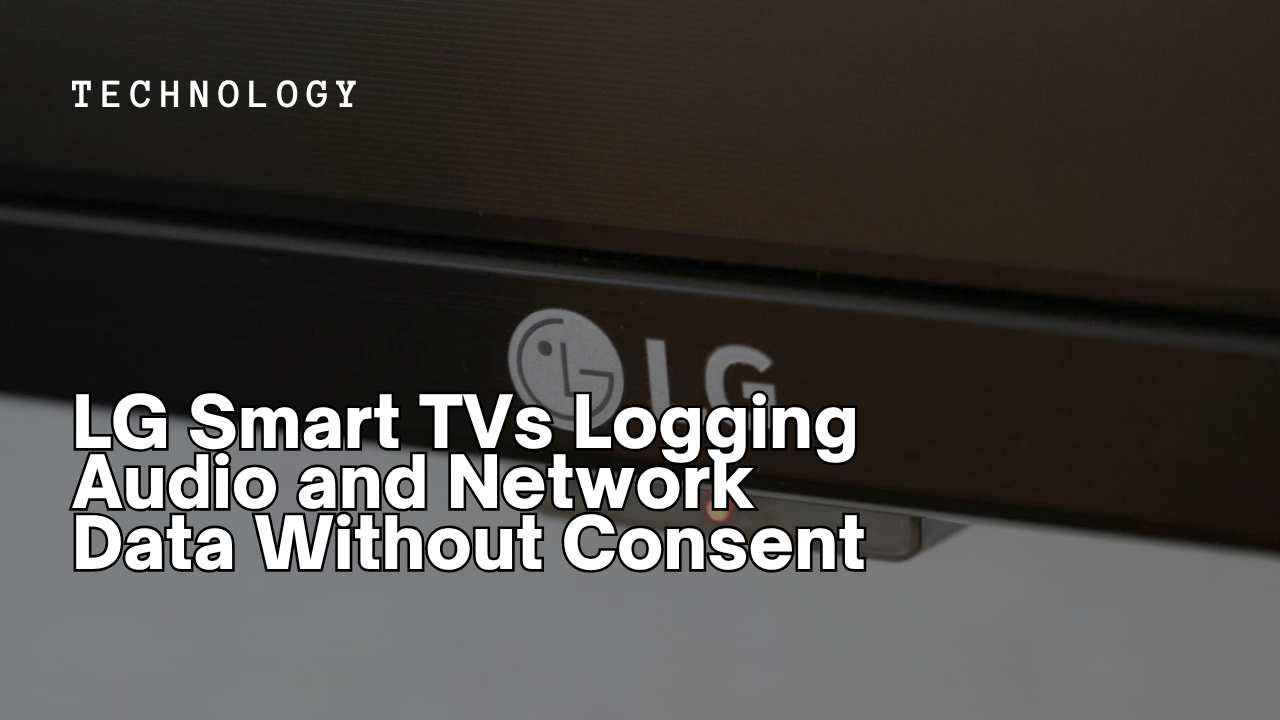
In a significant revelation that has rattled the consumer electronics landscape, some LG Smart TVs are allegedly logging audio even with the screen completely off and actively monitoring other devices on home networks without explicit user permission. This unsettling discovery, detailed in a report originating from Notebookcheck.net, citing Hacker News, casts a long shadow over the privacy assurances provided by smart home devices.
It raises profound questions about the true extent of data collection in our living rooms and compels us to scrutinize the smart home security measures we rely on every single day. We, as consumers, expect a certain baseline of privacy when we invest in consumer electronics, don’t we? The idea that our televisions might be listening or scanning our private networks, even when seemingly inactive, is a difficult pill to swallow.
Key Takeaways
- LG Smart TVs were reportedly found logging audio with the screen off and scanning local networks.
- The data collection extends beyond basic usage metrics, potentially including connected devices.
- This incident highlights critical vulnerabilities in smart home privacy and data logging practices.
- Consumers are urged to review smart TV settings and consider network segmentation for enhanced security.
- The findings underscore a growing need for greater transparency and stronger consumer data protection laws.
Table of Contents
- Understanding the LG Smart TV Privacy Controversy
- Why Does Smart TV Data Collection Matter for You?
- The Double Threat: Audio Recording with the Screen Off
- Protecting Your Smart Home: Practical Steps for LG Smart TV Owners
- The Future of Smart TV Privacy and Consumer Rights
- Sources
- FAQ About LG Smart TV Privacy
Understanding the LG Smart TV Privacy Controversy
The LG Smart TV privacy controversy centers on alarming findings by security researcher Aaron Christophel, who discovered that specific LG Smart TV models were engaging in extensive data collection without clear user consent. This involved not just logging what you watched, but capturing audio when the display was off and actively scanning your entire local network for other devices. It’s a significant departure from what most users would deem acceptable for a household appliance, even a “smart” one.
What Exactly Was Discovered?
Aaron Christophel’s detailed investigation, as highlighted by Hacker News, uncovered two primary forms of concerning data logging. First, the TVs were recording audio snippets even when the screen was powered down. This wasn’t tied to active voice commands; it appeared to be a persistent background process. Think about that for a moment. Your TV, sitting dormant, potentially listening in on your conversations.
Second, and equally troubling, the LG Smart TVs were performing comprehensive scans of local network devices. This means your television was mapping out every computer, smartphone, tablet, and smart appliance connected to your home network. Such network snooping goes far beyond what’s necessary for basic smart TV functionality.
The Role of Firmware in Data Logging
The core of this issue lies within the television’s firmware. Firmware is essentially the operating system that runs your smart TV, dictating all its functions, including how it interacts with its environment and what data it collects. Christophel’s analysis indicated that certain firmware versions contained code specifically designed for these invasive data logging activities.
This isn’t a bug, or so it seems. It appears to be an intentional design choice, raising serious questions about LG’s data privacy policies. Understanding how companies leverage firmware can be a critical step in maintaining your digital privacy, especially as we move further into a connected world where even our latest foldable phones become extensions of our personal data spheres.
Why Does Smart TV Data Collection Matter for You?
Smart TV data collection matters because it erodes the fundamental expectation of privacy within your own home. When a device you invite into your living space acts as an undeclared surveillance tool, it shifts the power dynamic between consumer and corporation dramatically. This isn’t just about targeted ads; it’s about creating a comprehensive digital profile of you and your household.
Beyond Marketing: The Broader Implications of Network Snooping
While some argue that data logging is merely for improving services or delivering personalized advertisements, network snooping has far more ominous implications. When your smart TV maps your entire home network, it gains insight into every connected device you own. This could reveal sensitive information about your digital footprint, your work-from-home setup, or even vulnerabilities in your other smart gadgets.
Imagine the potential for security breaches. If an LG Smart TV’s data collection system is compromised, attackers could potentially gain access to a detailed map of your home network, identifying targets for further exploitation. This kind of vulnerability can turn a convenient smart device into a significant smart home security risk.
Historical Context: LG’s Past Privacy Challenges
This isn’t the first time LG has faced scrutiny over its data collection practices. Back in 2014, LG was at the center of a similar controversy when a researcher discovered that its Smart TVs were collecting viewing habits and other sensitive data, including filenames from USB drives, even when users had explicitly opted out of data collection. This prior incident led to an apology from LG and a firmware update.
The recurrence of such issues, nearly a decade later in 2026, suggests a persistent challenge in how the company approaches user privacy. It makes you wonder: are these isolated incidents, or indicative of a broader industry trend where convenience often trumps user consent?
The Double Threat: Audio Recording with the Screen Off
The discovery of LG Smart TVs recording audio even when the screen is off presents a particularly invasive form of data collection. Most users might assume their TV’s microphone is only active when they intentionally use a voice command feature, like asking for a show recommendation or adjusting the volume. The idea of it being a passive listener, however, fundamentally changes the privacy calculus.
This capability effectively transforms your television into a silent, always-on microphone within your home, raising profound concerns about conversational privacy. Your private discussions, family moments, or even sensitive phone calls could theoretically be captured without your knowledge or consent. It’s a stark reminder that the “smart” features we embrace often come with hidden costs to our personal space.
How Voice Recognition Features Can Be Exploited
Voice recognition technology, while convenient, relies on microphones to capture audio. When these systems are designed to operate with the screen off, or in a constantly listening mode, the risk of accidental or intentional exploitation increases. While LG states such recordings are for improving services, the lack of transparency about how this data is stored, processed, and secured is deeply troubling.
For instance, if these audio files are transmitted to external servers, they become vulnerable to data breaches. The implications stretch beyond just LG; this type of vulnerability could be exploited by malicious actors or even accessed by law enforcement without proper warrants, blurring the lines of digital rights. Consumers must understand these inherent risks when considering the convenience of connected devices like smartwatches or TVs.
Protecting Your Smart Home: Practical Steps for LG Smart TV Owners
If you own an LG Smart TV, or any smart TV for that matter, you have options to mitigate these privacy risks. Proactive measures are essential for maintaining your smart home security. It’s about taking back control over your digital footprint.
Network Segmentation and Firewall Rules
One highly effective technical strategy is network segmentation. This involves creating a separate, isolated network for your smart devices, often called a “guest network” or an “IoT network,” distinct from your main home network where your computers and sensitive data reside. By separating these networks, you limit the ability of a compromised smart TV to snoop on or access your more critical devices.
Additionally, configuring firewall rules on your router can restrict your smart TV’s outbound internet access to only essential services, blocking known data logging servers or suspicious IP addresses. While this requires a bit of technical know-how, it offers a robust layer of protection. Think of it like a digital moat around your most sensitive data.
Reviewing Smart TV Privacy Settings
Every smart TV comes with a suite of privacy settings, though they can often be buried deep within menus. Take the time to navigate through your LG Smart TV’s settings to locate options related to data collection, personalized advertising, and voice recognition. Look for specific toggles to disable “LG Collection Data,” “Voice Information,” or “LivePlus.”
While opting out of these features may reduce some “smart” functionalities, it’s a crucial step in preventing unwanted data logging. Be aware that even with these settings adjusted, the underlying firmware might still present challenges, as seen in previous incidents.
Considering Alternative Consumer Electronics
For some, the persistent privacy concerns may lead to a re-evaluation of smart TV ownership altogether. If the trade-off between smart features and digital privacy feels too great, consider using a “dumb” TV connected to a streaming stick or box (like an Apple TV or Roku) that offers more transparent and controllable data policies. This approach separates the display from the intelligence, giving you more granular control over what data is collected and by whom.
Alternatively, exploring open-source media centers can provide similar functionality with greater privacy assurances. It might require a bit more setup initially, but the peace of mind can be well worth the effort. For a deeper dive into protecting your personal information in a digital age, you might find our article on GrapheneOS phones insightful, demonstrating how some users are taking extreme measures for digital security.
The Future of Smart TV Privacy and Consumer Rights
The ongoing revelations about LG Smart TV privacy highlight a broader systemic issue within the consumer electronics industry. As our homes become increasingly connected, the line between convenience and intrusive surveillance blurs. This isn’t just about one brand; it’s about the entire ecosystem of smart devices and our expectations as users.
Consumers are becoming more aware and vocal about their digital rights. This growing public scrutiny, alongside the increasing call for international AI safety regulations in 2026, will hopefully push manufacturers towards more ethical data practices and greater transparency. It will necessitate clearer privacy policies that are easy to understand and readily accessible, not hidden in legalese.
Regulatory Landscape in 2026
The regulatory landscape for data privacy is evolving, albeit slowly. Laws like GDPR in Europe and CCPA in California have set precedents for consumer rights regarding their data. However, these regulations often struggle to keep pace with rapid technological advancements and the complex, often global, supply chains of smart devices. In 2026, we anticipate continued pressure for stronger, more harmonized international standards for smart home device data collection. The goal should be to empower users with true control over their personal information, not just an illusion of choice.
Sources
- Notebookcheck.net, LG Smart TVs Caught Logging Audio, Snooping on Home Networks Without Consent
- Ars Technica, LG smart TVs phoning home with user viewing habits, even when data collection is off
The issues surrounding LG Smart TV privacy serve as a potent reminder that we must remain vigilant consumers in an increasingly connected world. Understanding the technology we bring into our homes, and advocating for stronger privacy standards, is no longer optional. It’s a necessity for safeguarding our digital lives and maintaining the sanctity of our personal spaces. We should all demand greater transparency and control from the companies that build our consumer electronics.
FAQ About LG Smart TV Privacy
Are all LG Smart TVs affected by this data logging issue?
The recent reports specifically mention findings by security researcher Aaron Christophel concerning certain LG Smart TV models and firmware versions. While the full extent isn’t universally confirmed across all models, it highlights a potential vulnerability that LG users should be aware of and investigate.
Can my LG Smart TV record me even when it’s off?
According to the findings, some LG Smart TVs were reportedly logging audio even when the screen was off, implying a constantly active microphone regardless of the display state. This means the TV could theoretically capture audio from your environment even when it appears to be inactive.
How can I check if my LG Smart TV is snooping on my network?
While directly checking for network snooping without specialized tools is difficult, you can review your LG Smart TV’s privacy settings. Look for options to disable data collection, personalized ads, and voice information. Additionally, monitoring your router’s traffic logs might reveal unusual outbound connections from your TV.
What is network segmentation and how does it help with smart TV privacy?
Network segmentation involves creating a separate, isolated Wi-Fi network (like a guest network) specifically for your smart devices, including your LG Smart TV. This limits their ability to interact with or snoop on other, more sensitive devices on your main home network, enhancing your overall smart home security.
Does disconnecting my LG Smart TV from the internet stop data collection?
Disconnecting your LG Smart TV from the internet will prevent it from transmitting collected data to LG’s servers or performing network scans. However, some data may still be collected locally on the device until it’s reconnected. For absolute privacy, physical disconnection from the network is the most effective method, though it removes all “smart” functionality.
What steps is LG taking to address these privacy concerns?
Historically, when faced with similar privacy concerns in 2014, LG issued an apology and released firmware updates to address the reported issues. As of the latest reports, consumers are awaiting official statements and remedial actions from LG regarding these most recent findings.
Are other smart TV brands also guilty of similar data logging practices?
While this specific report targets LG, the practice of extensive data collection is a common concern across the broader smart TV and smart device industry. Many manufacturers collect usage data for analytics and personalized content, making it crucial for consumers to scrutinize privacy policies of all their connected devices.

TRENDING: Meta Ordered to Pay $567 Million by New Mexico Court
Download the new game Guess The Celebrity Quiz and check how well you know your idols
Always be up to date with the news and follow the trends!
 Support our work by giving us a small donation