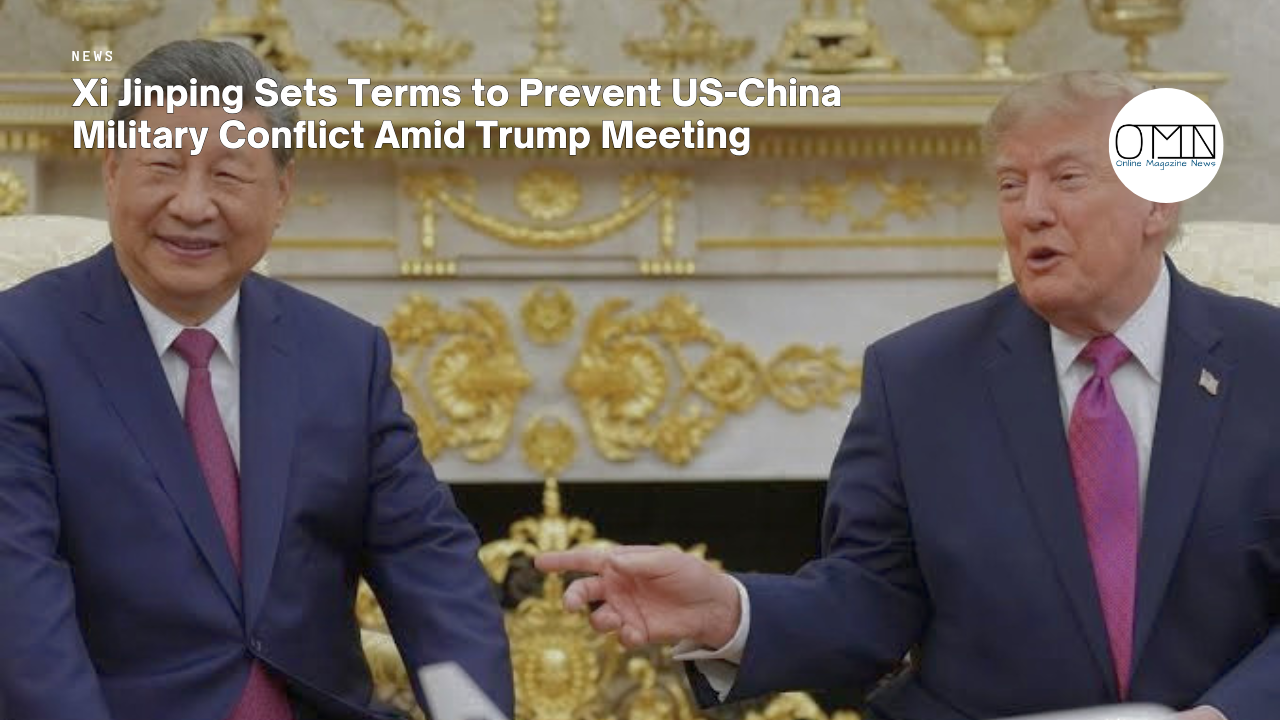
Xi Jinping is the President of the People’s Republic of China who has recently outlined four specific red lines intended to define the boundaries of US-China relations and prevent military conflict as the United States transitions to a second Donald Trump administration. You should care about these developments because the stability of global trade, maritime security in the Pacific, and the risk of accidental kinetic warfare depend entirely on how these two superpowers navigate their ideological and strategic differences in 2026.
Key Takeaways
- Strategic Boundaries: Xi Jinping identified Taiwan, democracy and human rights, China’s path and system, and China’s development right as the four “red lines” that must not be crossed.
- Stability Amid Transition: The meeting with outgoing President Joe Biden in Lima served as a clear signal to President-elect Donald Trump regarding Beijing’s non-negotiable positions.
- Conflict Mitigation: Both leaders agreed on the necessity of maintaining human control over nuclear weapons decisions, excluding AI from the “kill chain.”
- Economic Leverage: China remains firm that attempts to decouple or suppress its technological advancement will be met with significant resistance, framing development as a core security interest.
Table of Contents
Understanding Xi Jinping’s Four Red Lines
Xi Jinping recently utilized the APEC summit in Lima, Peru, to issue a stern warning that is clearly directed at the incoming Trump administration. During his final meeting with President Joe Biden, Xi explicitly stated that there are four “red lines” that the United States must not challenge if it wishes to avoid a total breakdown in communication or, worse, a military confrontation. According to The Guardian, these lines cover the Taiwan issue, democracy and human rights, China’s political system, and China’s right to economic development.
I find it particularly striking that Xi chose this moment of transition to be so granular. Usually, diplomatic language at this level remains shrouded in vague calls for “mutual respect,” but this was different. By naming these specific areas, Beijing is essentially providing a map of the minefield that Donald Trump will have to navigate starting in January. It is an attempt to set the terms of engagement before the new administration can even settle into the West Wing. The bottom line is that China is signaling it will not be intimidated by a return to “maximum pressure” tactics.
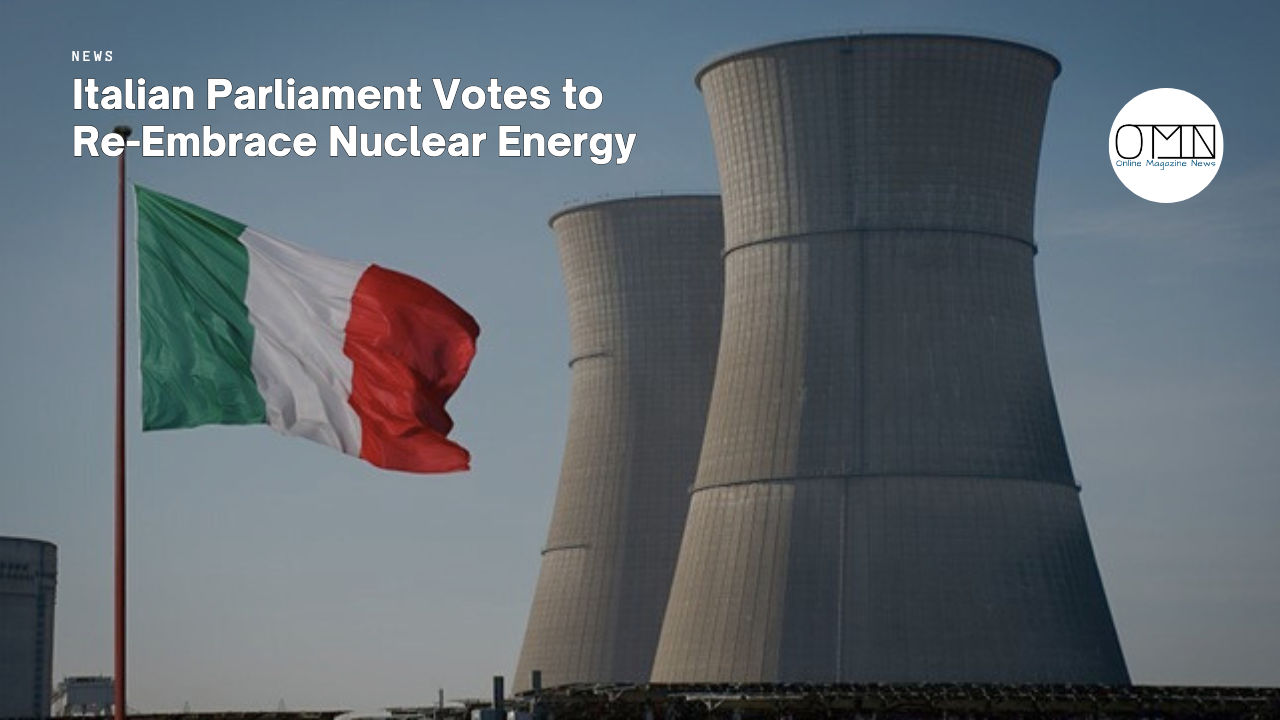
For those of us tracking global shifts, this isn’t just about rhetoric. When a world leader defines “red lines,” they are signaling the conditions under which they might consider military force or severe economic retaliation. We have seen similar firm stances in other geopolitical arenas, such as when the Italian Parliament voted to re-embrace nuclear energy to ensure their own sovereign energy security; nations are increasingly prioritizing self-preservation and rigid strategic boundaries over globalist consensus.
The Donald Trump Factor in US-China Diplomacy
Donald Trump represents a volatile variable in the delicate chemistry of US-China relations. During his first term, he initiated a trade war that fundamentally altered the global supply chain, and his recent cabinet picks, including noted China hawks like Marco Rubio for Secretary of State, suggest that his second term will be even more confrontational. Xi Jinping is clearly aware of this, which is why his comments in Lima were phrased as a desire for a “smooth transition” while simultaneously warning that a “new Cold War” should not be fought.
We need to consider the personality-driven nature of Trump’s foreign policy. Unlike the institutionalized approach of the Biden administration, Trump often relies on personal rapport mixed with sudden, aggressive leverage. Xi’s insistence that “neither side should try to remodel the other” is a direct response to the American neoconservative goal of changing China’s internal governance. Xi is telling Trump: “Deal with me as I am, or don’t deal with me at all.”
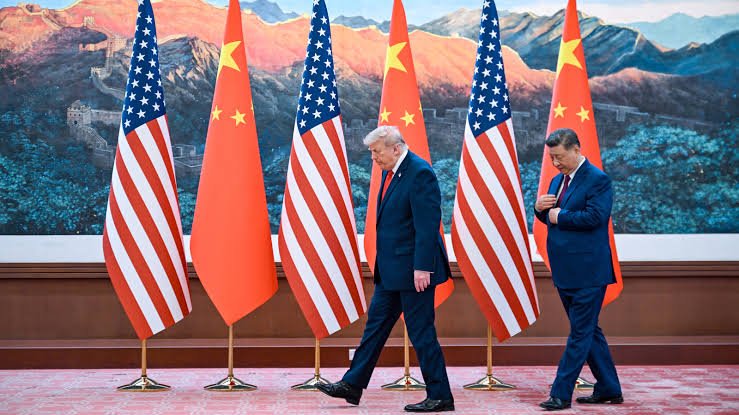
But here is the catch: Donald Trump also prides himself on being a “deal-maker.” There is a slim possibility that these red lines could serve as the basis for a grand bargain, provided Trump feels he is getting a win on trade or manufacturing. However, the appointment of hardliners suggests that the U.S. may be less interested in bargaining and more focused on containment. This creates a high-friction environment where a single miscalculation in the South China Sea could escalate rapidly.
What is the future of Strategic Ambiguity under Trump?
Strategic ambiguity has long been the cornerstone of U.S. policy regarding Taiwan, where the U.S. remains vague about whether it would militarily intervene if China invaded. Under a second Trump term, this ambiguity might shift toward either a more explicit defense of the island or, conversely, a transactional approach where Taiwan is used as a bargaining chip. Xi Jinping’s explicit naming of Taiwan as a “red line” is designed to remove the “bargaining chip” option from the table entirely.
Assessing the Risk of Military Conflict in 2026
Why should you be concerned about a military conflict between two nuclear-armed states? The risk in 2026 isn’t necessarily a planned invasion, but rather an accidental clash. With both navies operating in close proximity in the South China Sea, the margin for error is razor-thin. Xi’s terms for preventing conflict include a demand that the U.S. stop supporting “Taiwan independence” forces and cease its military provocations near Chinese waters.
According to reports from the Lima summit, Xi stressed that if the U.S. treats China as an adversary, the relationship will “suffer setbacks or even regress.” This is a stark contrast to the “guardrails” that Joe Biden attempted to install. While Biden focused on “managing competition,” Xi is now arguing that the competition itself is the problem if it challenges the survival of the Chinese Communist Party. Military communication channels have been restored, but they are only as effective as the political will behind them.
We also have to look at the regional allies. Countries like Japan, Australia, and the Philippines are deepening their security ties with Washington. In Beijing’s eyes, this looks like encirclement. When you combine this with the potential for new tariffs and tech restrictions, similar to how DHS surveillance policies have raised concerns about government overreach at home, you see a Chinese leadership that feels increasingly backed into a corner. And a superpower that feels cornered is a superpower that takes risks.
Taiwan as the Ultimate Flashpoint
Xi Jinping has been more explicit about Taiwan than perhaps any Chinese leader in recent history. He told Biden, and by extension, Trump, that “Taiwan independence” is “incompatible with peace and stability” in the region. This is the first of his four red lines and the one most likely to trigger a kinetic military conflict. The Chinese military has increased its “gray zone” activities, frequently crossing the median line of the Taiwan Strait to exhaust Taiwan’s air defense capabilities.
I believe the common misconception is that China wants an immediate war. In reality, Beijing prefers “reunification” through coercion and isolation. However, if the Trump administration moves to formally recognize Taiwan or significantly increases the presence of U.S. troops on the island, Xi’s red line will have been crossed. At that point, the internal political pressure on Xi to act would be immense. He has tied his personal legacy and the “Great Rejuvenation of the Chinese Nation” to the Taiwan issue.
The U.S. position remains complicated by the Taiwan Relations Act, which mandates that the U.S. provide the island with the means to defend itself. As we move into 2026, the arrival of new U.S. weapons systems, including Harpoon missiles and upgraded F-16s, will likely be viewed by Xi as a direct violation of the terms he just set. It is a classic security dilemma: what one side sees as a necessary defense, the other sees as a provocative escalation.
AI and Nuclear Safety Agreements
One of the few bright spots in the recent Biden-Xi meeting was the agreement that humans, not artificial intelligence, must make the decisions regarding the use of nuclear weapons. This is a massive step for international relations. As AI becomes integrated into every facet of technology, from OpenAI’s latest GPT-6 Astra to autonomous drones, the risk of an algorithm triggering a nuclear launch is a legitimate sci-fi nightmare turned reality.
Xi Jinping and Joe Biden both recognized that while they may disagree on everything else, they agree that the world shouldn’t end because of a coding error. This is a rare instance of shared “strategic sanity.” By excluding AI from the “kill chain,” both nations are attempting to build a high-level guardrail that transcends the specific occupant of the White House. It will be interesting to see if Donald Trump upholds this specific agreement, given his penchant for dismantling his predecessor’s deals.
However, the agreement is currently non-binding. It is a “statement of intent” rather than a formal treaty. In the world of high-stakes diplomacy, a statement is only as good as the next day’s headlines. We are seeing a world where technology moves faster than policy, and this nuclear-AI pact is a desperate attempt to catch up. For now, it represents a sliver of cooperation in an otherwise darkening sky.
Economic Warfare and Technological Sovereignty
The fourth red line mentioned by Xi Jinping is China’s “right to development.” This is code for the ongoing tech war. The U.S. has placed severe restrictions on high-end semiconductors and AI chips, citing national security. Xi views this as a blatant attempt to keep China as a second-tier economy. He argues that “decoupling” is not a solution and that “small yard, high fence” policies are hurting the global economy.
Think about it: China is the world’s factory. If the U.S. continues to restrict China’s access to the tools of the future, China will, and is, developing its own. We’ve seen this with the recent advancements in Grok 4.7 and other AI models; the race for technological supremacy is the new arms race. Xi’s red line here is a warning that if the U.S. tries to bankrupt China’s tech sector, China will use its control over critical minerals and global supply chains to retaliate.
This is where the Trump administration’s proposed 60% tariffs on Chinese goods come into play. If Trump follows through, he isn’t just starting a trade war; he is crossing Xi’s “development” red line. The Chinese response would likely be asymmetric. They won’t just tax U.S. goods; they might cut off the supply of rare earth elements needed for everything from EVs to fighter jets. It is a mutually assured destruction of the global economy.
The Future of International Relations
As we look toward the remainder of 2026, the “terms” set by Xi Jinping will be tested repeatedly. The international community is watching closely, as the friction between these two giants dictates the flow of global capital and the safety of international shipping lanes. We are no longer in an era of engagement; we are in an era of managed confrontation.
I believe the most likely scenario is a series of “testing” periods. Trump will likely push the boundaries on trade, while Xi will push the boundaries on maritime activity. The success of their relationship, and the prevention of military conflict, will depend on whether they can find a way to let each other save face. Diplomacy is often about the art of the possible, and right now, the most we can hope for is a cold peace.
Keep an eye on the official rhetoric coming out of Beijing in the weeks following Trump’s inauguration. If the tone shifts from “setting terms” to “issuing ultimatums,” the risk of a miscalculation rises exponentially. For now, the red lines have been drawn in the sand. We just have to wait and see if the new administration decides to walk over them.
Sources
- The Guardian, Xi Jinping sets terms for relationship with US as he meets Joe Biden for final time
- Reuters, Global News and Diplomatic Updates
- Associated Press, International Relations and Security Reports
Navigating the complex waters of international relations requires a balance of firm boundaries and open dialogue. As the transition to the next U.S. administration begins, the terms set by Xi Jinping offer a clear, if challenging, framework for what lies ahead. Whether you are a business leader concerned about trade or a citizen worried about global security, staying informed on these strategic shifts is essential for understanding the world of 2026. Keep an eye on the upcoming diplomatic appointments in Washington, as they will be the first real test of these new red lines.
FAQ
What are Xi Jinping’s four red lines for the US?
Xi Jinping’s four red lines are the Taiwan issue, democracy and human rights, China’s path and political system, and China’s right to economic development. These represent the core interests that Beijing considers non-negotiable in its relationship with the United States. Crossing these lines, according to Xi, could lead to a total breakdown in diplomatic relations or military conflict.
How does Donald Trump’s election affect US-China relations?
Trump’s election introduces a period of high uncertainty due to his history of trade wars and his appointment of China hawks to key cabinet positions. While Trump is transactional and may seek a “deal,” his rhetoric suggests a return to “maximum pressure” tactics. This directly clashes with Xi Jinping’s recently stated red lines, potentially increasing the risk of a diplomatic or economic confrontation.
Did Biden and Xi agree on AI and nuclear weapons?
Yes, during their final meeting in Lima, both leaders agreed that human beings must retain control over the decision to use nuclear weapons. They specifically stated that artificial intelligence should not be allowed to make autonomous decisions regarding nuclear launches. This is a significant, albeit non-binding, agreement aimed at preventing accidental global catastrophe as AI technology advances.
Why is Taiwan considered the most dangerous red line?
Taiwan is considered the most dangerous red line because it involves both national sovereignty and strategic military positioning. China views Taiwan as a breakaway province that must be reunified with the mainland, while the U.S. is legally bound to provide Taiwan with defensive capabilities. Any move toward formal independence or increased U.S. military presence on the island could trigger a direct military response from Beijing.
What does “right to development” mean in this context?
The “right to development” refers to China’s ability to advance technologically and economically without external interference or containment. Specifically, it is a response to U.S. sanctions on Chinese tech firms and restrictions on high-end semiconductors. Xi Jinping argues that these measures are an attempt to suppress China’s rise, and he has designated this as a red line that the U.S. must respect to maintain stable relations.

TRENDING: FBI Investigation Into Service Selling 153 Million Drivers Licenses
Download the new game Guess The Celebrity Quiz and check how well you know your idols
Always be up to date with the news and follow the trends!
 Support our work by giving us a small donation
 Support our work by giving us a