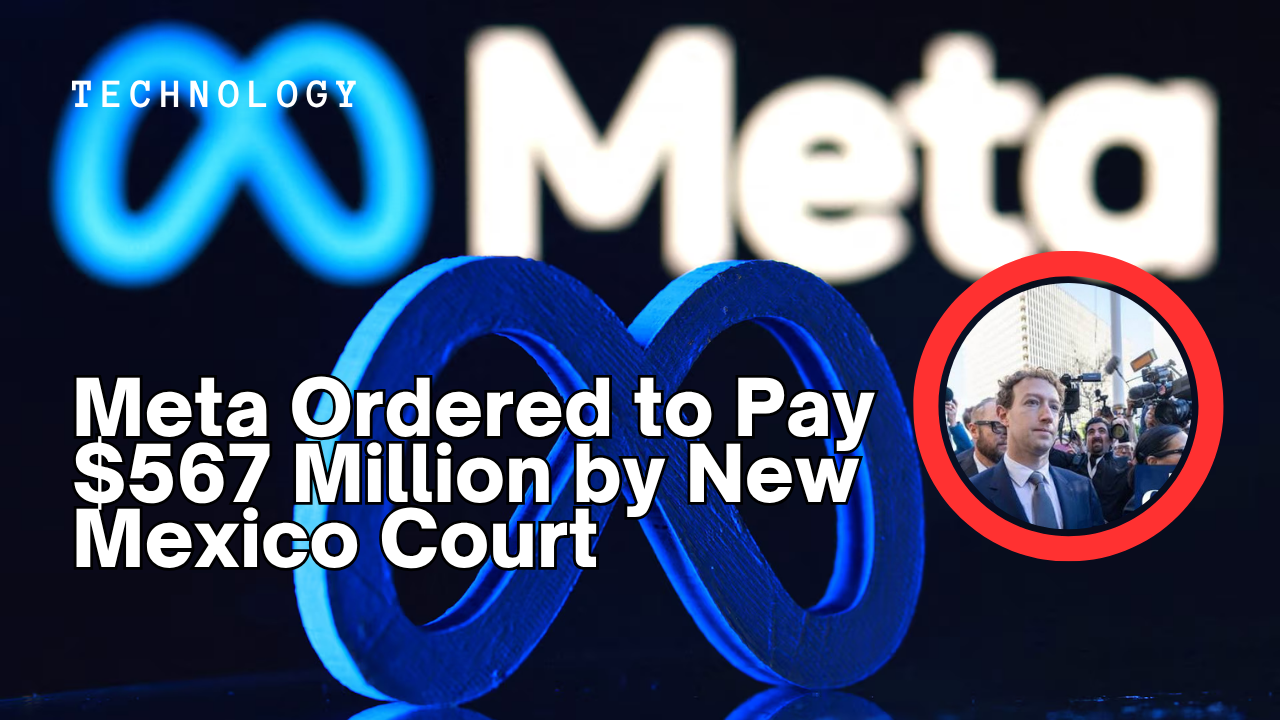
Meta is facing a landmark court order requiring the tech giant to pay $567 million following a legal battle in New Mexico over the platform’s impact on children’s mental health. This decision, handed down in August 2026, represents one of the most significant financial penalties ever leveled against a social media company regarding the safety and psychological well-being of its youngest users.
I have spent years tracking how tech liability shifts under the weight of new legislation, but this specific ruling feels different. It is not just about a fine; it is a signal that the era of “move fast and break things” has officially hit a legal wall when it involves minors. We are seeing a fundamental shift in how courts view the responsibility of platforms like Instagram and Facebook toward the developing brains of teenagers.
- Record Penalty: Meta must pay $567 million to New Mexico following a lawsuit focused on children’s mental health.
- Addictive Design: The court focused on features allegedly designed to maximize engagement at the expense of minor safety.
- Tech Liability: This ruling sets a major precedent for dozens of other pending state lawsuits across the U.S.
- Digital Wellness: The funds are expected to be allocated toward statewide youth mental health initiatives and digital literacy.
Understanding the New Mexico Court Order
The New Mexico court recently finalized a judgment that sends a shockwave through Silicon Valley, ordering Meta to pay $567 million in damages. According to The Guardian, the lawsuit alleged that Meta knowingly designed its products to hook young users, leading to a surge in depression, anxiety, and body dysmorphia. The scale of this payout reflects the court’s view that the harm caused was systemic rather than incidental.
For the average parent, this might seem like a distant corporate battle, but the implications are local and immediate. The state argued that Meta’s algorithms were not just “sticky” by accident; they were engineered to bypass the self-regulation mechanisms of the adolescent brain. This $567 million order is the first of its kind to successfully link specific algorithmic choices to quantifiable mental health harms in a state court.
We often talk about social media as a public square, but the New Mexico Attorney General argued it functions more like a digital slot machine for kids. By focusing on the “harms” rather than just data privacy, the state opened a new front in the war on tech liability. It is no longer just about who owns your data, but what that data-driven experience does to your child’s psyche.
Addictive Algorithms and Minor Safety
What exactly makes a social media platform harmful to children’s mental health? The New Mexico case delved deep into the internal mechanics of Instagram, highlighting features like “infinite scroll” and “intermittent variable rewards” (likes and notifications). These features were characterized as predatory when applied to users whose prefrontal cortex is still under construction.
In practice, this means the court looked at internal Meta documents that suggested the company was aware of the negative impact these features had on teen girls’ body image. While we have seen similar reports in the past, this is one of the few times a judge has assigned a specific, massive dollar value to that awareness. The court found that Meta’s failure to implement robust age verification and its continued use of dopamine-loop features constituted a breach of consumer protection laws.
Think about it this way: if a toy company released a product that was proven to cause long-term physiological stress in half of its users, it would be pulled from shelves immediately. The digital world has enjoyed a level of immunity that is now rapidly evaporating. As we have seen with other tech issues, such as the security implications of GrapheneOS, the boundary between user freedom and platform responsibility is being redrawn by the courts in 2026.
How does social media impact adolescent brain development?
Research presented during the trial indicated that frequent social media use during the “sensitive period” of adolescence can lead to permanent changes in how the brain processes rewards and social rejection. The constant “social comparison” fueled by curated feeds was a central pillar of New Mexico’s argument. The state presented data showing that since the widespread adoption of these platforms, youth suicide and self-harm rates in the state have seen a tragic uptick.
Why This Lawsuit Changes Tech Liability
The lawsuit in New Mexico is not an isolated incident; it is a bellwether for approximately 40 other states currently suing Meta for similar reasons. By securing a $567 million judgment, New Mexico has provided a roadmap for other jurisdictions to follow. This creates a massive financial risk for Meta, which could eventually face tens of billions in total penalties if other states reach similar conclusions.
One of the most nuanced takes from legal experts is that this ruling bypasses Section 230, the famous “shield” that protects tech companies from being sued for content posted by their users. The New Mexico court ruled that Meta is being held liable for its own conduct and design choices, not the speech of its users. This distinction is critical because it removes the primary legal defense tech giants have relied on for decades to avoid accountability.
The truth is, tech liability is evolving faster than federal legislation can keep up. While Congress debates national standards, individual states are taking the lead. This patchwork of legal requirements is exactly what Meta has tried to avoid, but the New Mexico ruling makes a unified, nationwide defense much harder to maintain. It is a win for those advocating for stricter digital wellness standards across the board.
Meta’s Response and Future Appeals
Meta, for its part, has consistently denied that its platforms are intentionally harmful. In statements following the court order, the company pointed to the “more than 30 tools” it has introduced to support teens and their parents, including screen time limits and enhanced privacy settings. They argue that social media is a vital tool for connection and that the court’s decision overlooks the positive aspects of their platforms.
However, the court found these tools to be “largely performative” and difficult for parents to navigate. Meta has already signaled its intent to appeal the $567 million judgment, arguing that the fine is excessive and based on flawed interpretations of state law. This legal maneuvering will likely drag on for years, but the immediate impact is a massive reputational hit to a company already struggling to gain the trust of younger generations.
We should also consider the trade-offs here. If Meta is forced to fundamentally change its algorithms to be less “addictive,” the user experience might become less engaging, which could drive users to other, less-regulated platforms like TikTok. There is a real risk that by targeting one giant, we simply move the problem to another platform that is even further out of reach for U.S. regulators. It is a game of digital whack-a-mole that requires a more holistic approach than just one-off lawsuits.
The Future of Digital Wellness in 2026
As we navigate the middle of 2026, the focus is shifting from “how do we stop using tech?” to “how do we live well with it?” The New Mexico ruling is a catalyst for this conversation. Part of the $567 million is slated to fund educational programs that teach digital wellness in schools, helping kids understand how algorithms work so they are less susceptible to their influence.
This approach aligns with broader health trends we have covered, such as the rise of light therapy for mood energy or the use of magnesium for stress relief. We are seeing a society-wide realization that our environment, both physical and digital, profoundly affects our biology. The New Mexico court is simply the first to codify that reality into a massive legal penalty.
The ultimate success of this ruling will not be measured in dollars, but in whether it forces Meta to prioritize safety over growth. If the cost of doing business (the fines) becomes higher than the revenue generated by addictive features, the business model will finally change. Until then, the burden remains on parents and educators to bridge the gap that the law is only just beginning to fill.
Looking ahead, we can expect more states to leverage this precedent to secure their own settlements. For Meta, the path forward involves a choice: continue fighting these battles in every state court, or voluntarily overhaul their platforms to meet a higher standard of minor safety. Given the financial pressure of a $567 million bill from just one state, the latter is starting to look like the only sustainable option.
Sources
- The Guardian, Meta Ordered to Pay $567 Million by New Mexico Court
- Reuters, Tech Liability and State Lawsuits Coverage 2026
Frequently Asked Questions
Why was Meta fined $567 million in New Mexico?
The fine was the result of a lawsuit alleging that Meta’s platforms, specifically Instagram and Facebook, were designed with addictive features that harmed the mental health of children. The court found that Meta was aware of these risks but prioritized user engagement and profit over the safety of minors.
What specific harms did the court identify?
The court pointed to increased rates of depression, anxiety, body dysmorphia, and self-harm among young users in New Mexico. It specifically highlighted algorithmic designs that encourage social comparison and constant scrolling as primary drivers of these psychological issues.
Will this ruling affect Meta users in other states?
While the $567 million payment is specific to New Mexico, the legal precedent makes it much easier for other states to win similar lawsuits. Currently, dozens of other U.S. states have active legal challenges against Meta for nearly identical reasons regarding child safety.
How will New Mexico use the $567 million?
The state plans to allocate a significant portion of the funds to youth mental health services, including counseling in schools and digital literacy programs. These initiatives aim to help children and parents better navigate the risks associated with long-term social media use.
What does this mean for the future of Section 230?
This ruling suggests that Section 230, which protects platforms from liability for user-posted content, may not protect them from lawsuits regarding their own platform design. By focusing on “product liability” and “addictive design,” courts are finding ways to hold tech companies accountable without violating federal speech protections.
Is Meta going to change how Instagram works?
Meta has already introduced several teen safety tools, but this ruling may force them to make deeper changes to their core algorithms. The pressure to reduce “addictive” loops is growing, and if enough states win similar judgments, Meta may be forced to redesign their platforms globally to avoid further financial penalties.

TRENDING: A plus-size blogger copies celebrity stylings to show that anyone can wear anything
Download the new game Guess The Celebrity Quiz and check how well you know your idols
Always be up to date with the news and follow the trends!
👉🏻 Support our work by giving us a small donation