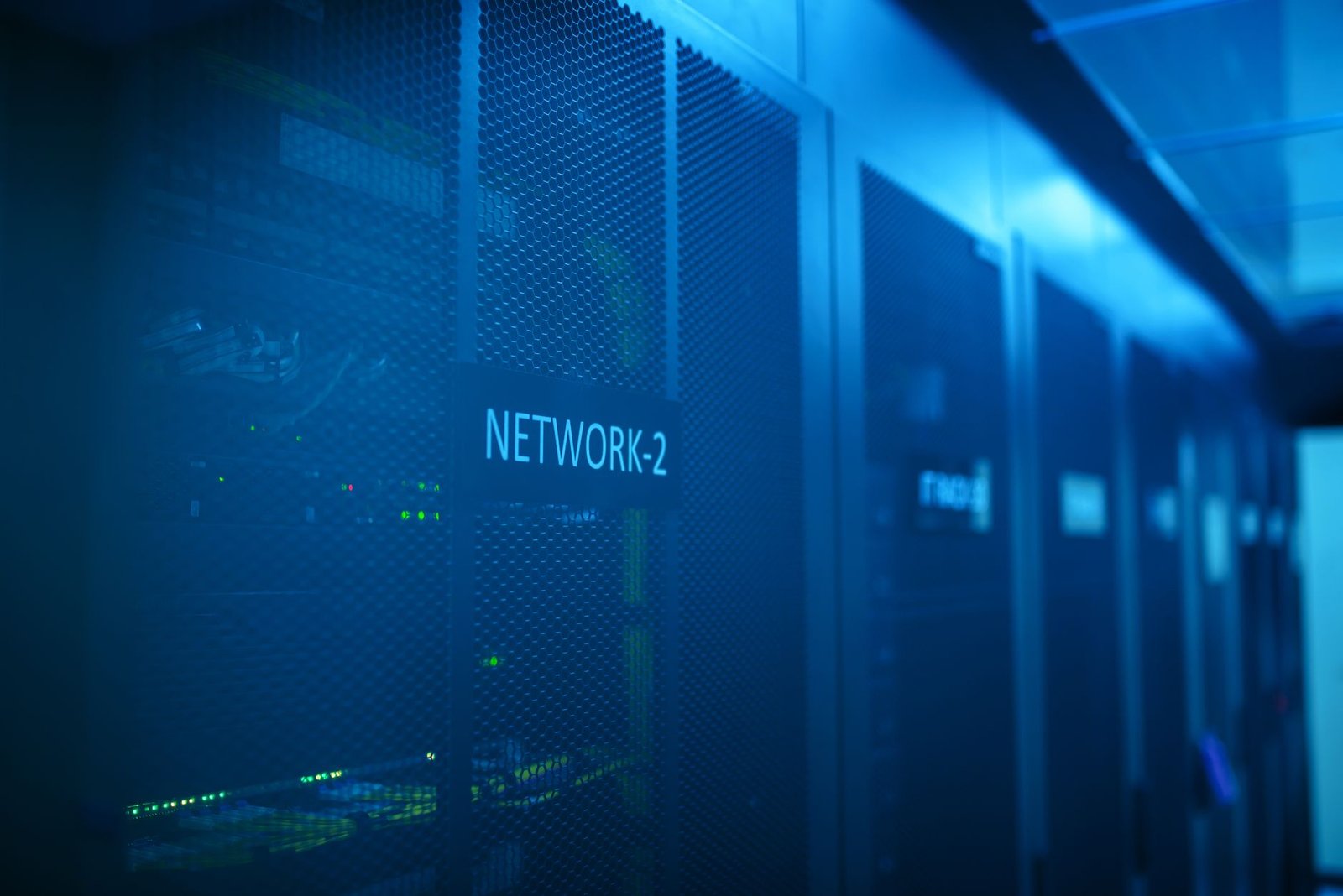
Have you ever tried to send an urgent message only to find your phone has absolutely no signal? Now imagine that happening to the most powerful military leaders in the world during a time of global tension. A highly classified US national security communications network has suffered a major outage, leaving top officials at the Pentagon and across the intelligence community temporarily in the dark.
Key Takeaways
- A critical, top-secret communications network used by the US Department of Defense and intelligence agencies went offline on November 17, 2026.
- The outage impacted the exchange of highly sensitive information, though officials maintain that “essential” command and control capabilities remained intact via backup systems.
- While the cause is officially being investigated as a technical failure, the incident has reignited fears regarding the vulnerability of US digital infrastructure to cyber warfare.
- This event follows a series of recent infrastructure glitches, including the US banking outage that recently disrupted major financial institutions.
Table of Contents
- What is the classified network outage?
- How US national security communications function
- Why this intelligence community outage matters
- Technical failure or foreign cyber attack?
- The growing pattern of US infrastructure instability
- Securing the Pentagon network for the future
What is the classified network outage?
On November 17, 2026, reports began to surface that a primary communications artery for the United States’ most sensitive data had suddenly ceased to function. According to CNN, the disruption affected a network used for transmitting Top Secret information, creating a significant “blind spot” in the day-to-day operations of the Pentagon and various intelligence agencies. The classified network outage represents one of the most significant technical failures in the US defense sector in recent memory.
I find that when we hear about “networks going down,” we usually think of a slow Wi-Fi connection at a coffee shop. But in the world of national security, a “down” status means that secure video teleconferencing, encrypted messaging, and real-time intelligence feeds from satellites or field agents are effectively frozen. The duration of the outage lasted several hours, forcing personnel to pivot to secondary, often slower, communication methods that are less integrated across different agencies.
How US national security communications function
The US government operates several layers of networks, often referred to as “enclaves,” to keep information safe. The most common are NIPRNet (Unclassified), SIPRNet (Secret), and JWICS (Top Secret/Sensitive Compartmented Information). While the government has not officially named which specific line went dark, the description of “highly classified” strongly suggests a disruption within the JWICS (Joint Worldwide Intelligence Communications System) environment. US national security communications rely on a complex web of fiber optics, satellites, and hardened data centers to ensure information is never intercepted.
When you look at the sheer scale of these systems, it is staggering. These aren’t just internet cables; they are physically separate infrastructures. In some cases, the cables are encased in specialized piping with pressure sensors to detect if someone is even trying to tap into the line. Despite these physical safeguards, the software and routing protocols that manage the data can still fail, leading to the type of Pentagon network down scenario we witnessed this week.
Why this intelligence community outage matters
You might wonder why a few hours of downtime is such a big deal. In the intelligence world, data has a “perishable” shelf life. If a drone in a conflict zone spots a high-value target, that information needs to travel through a classified network to a command center, where a decision is made in minutes. If the intelligence community outage happens during that window, the opportunity is lost. The real danger of a classified network failure is the loss of real-time situational awareness during a tactical operation.
These networks are the primary way the President and the National Security Council communicate with military commanders overseas. We rely on these systems to provide a “common operating picture.” Without it, different branches of the military might be looking at different versions of reality. If you think the Binance hack was a massive security lapse, consider the implications of the world’s most powerful military losing its ability to talk to itself.
Operational Delays and Backlogs
Beyond the immediate tactical risks, there is a massive administrative hangover. When a Top Secret network goes down, thousands of intelligence reports get stuck in the “outbox.” Once the system comes back online, there is a frantic rush to process the backlog, which can lead to human error or overlooked details in the mountain of data. It creates a secondary vulnerability that analysts have to navigate for days after the initial fix.
Technical failure or foreign cyber attack?
Whenever a Pentagon network down event occurs, the immediate question is: was it a hack? Pentagon officials were quick to state that there is “no immediate evidence of malicious actor involvement,” pointing instead to a potential configuration error or hardware failure. However, skeptics note that the timing is curious, coinciding with increased geopolitical friction. Investigating whether an intelligence community outage was caused by internal error or external sabotage is a process that can take months of forensic analysis.
We have seen similar “glitches” before that turned out to be more sinister. For instance, the Linux kernel flaw discovered earlier this year showed how a small software vulnerability can have massive ripples across secure systems. Whether this was a botched software update or a sophisticated “denial of service” attack remains the subject of intense debate behind closed doors in Washington.
Is the US military’s secret internet vulnerable to hacking?
Yes, but not in the way traditional websites are. Because classified networks like JWICS are “air-gapped” (physically disconnected from the public internet), they cannot be hacked by someone sitting in a basement with a laptop. However, they are vulnerable to “supply chain attacks,” where compromised hardware or software is installed by the government itself, or to “insider threats” where someone with authorized access introduces malware. While the physical separation provides a massive layer of defense, the complexity of modern software means no system is 100% immune to disruption.
The growing pattern of US infrastructure instability
Is it just me, or does it feel like everything is breaking lately? In the last year, we have seen major disruptions in everything from air traffic control systems to healthcare data. Just look at the Lovable Apps data breach or the recurring issues with commercial banking. These aren’t just isolated incidents; they are symptoms of an aging digital backbone that is struggling to keep up with 2026’s data demands. The classified network outage highlights a broader fragility in the national infrastructure that goes far beyond military applications.
The government is currently in the middle of a multi-billion dollar “cloud migration” for its defense data. Moving from old, local servers to modern cloud environments like the JWCC (Joint Warfighting Cloud Capability) is supposed to make these systems more resilient. But as any IT professional will tell you, the transition period is often the most dangerous time for outages to occur.
Securing the Pentagon network for the future
To prevent another classified network outage, the Department of Defense is looking toward “Zero Trust” architecture. This is a security model where the network assumes every user and every device is a potential threat, requiring constant verification. It is a radical departure from the old “moat and castle” approach to security. The future of US national security communications depends on building systems that can fail gracefully without bringing down the entire chain of command.
We are also seeing a push for “redundant pathing.” This means if a fiber optic cable in Virginia is cut, the data automatically reroutes through a satellite constellation or a secondary underwater cable. The goal is to ensure that a single point of failure can never again lead to a total intelligence community outage.
Comparison of Security Network Tiers
To understand the severity of this outage, it helps to look at the different networks the US government uses. Below is a simplified breakdown of the communication enclaves currently in operation.
| Network Name | Classification Level | Primary Usage | Vulnerability Type |
|---|---|---|---|
| NIPRNet | Unclassified | General email, public web browsing, logistics. | Public internet attacks, phishing. |
| SIPRNet | Secret | Tactical orders, non-SENSITIVE intelligence. | Hardware tampering, unauthorized access. |
| JWICS | Top Secret / SCI | Satellite imagery, high-level intelligence, covert ops. | Internal configuration errors, supply chain attacks. |
When the system fails at the JWICS level, the impact is catastrophic because there is no “higher” network to fall back on. You are effectively moving from the fastest, most secure digital highway back to the equivalent of paper maps and radio signals.
The recent classified network outage is a sobering reminder that even the most well-funded organizations in the world are not immune to technical failure. As the US continues to modernize its defense systems in 2026, the balance between high-tech capability and reliable stability will be the most important challenge facing the Pentagon. We often focus on the “flashy” side of military tech, like AI and stealth jets, but as this week proved, none of that matters if the people in charge can’t talk to each other. Keeping the Pentagon network down is a scenario no one can afford to let become a habit.
Frequently Asked Questions
What caused the classified network outage at the Pentagon?
The official word from the Department of Defense is that the outage was likely caused by a technical failure or an internal configuration error during system maintenance. While investigations are ongoing, there has been no public evidence released to suggest that a foreign adversary was responsible for the disruption.
How long did the national security communications remain offline?
Reports indicate that the primary systems were down or severely degraded for several hours before technicians were able to restore full functionality. During this window, agencies were forced to use emergency backup protocols to maintain the most essential lines of communication between command centers.
Is this the first time a Top Secret network has gone down?
No, there have been smaller, localized outages in the past, but the scale and reach of this specific 2026 incident are considered highly unusual. Most classified outages are resolved in minutes; an outage lasting several hours suggests a deeper structural or software-level issue within the network backbone.
Did the outage affect nuclear command and control?
According to defense officials, the systems responsible for nuclear command and control (NC3) are separate and operate on even more specialized, high-redundancy hardware. These systems were reportedly not impacted by the general classified network outage, ensuring the nation’s nuclear deterrent remained functional throughout the crisis.
What is being done to prevent another intelligence community outage?
The Pentagon is accelerating its move toward “Zero Trust” security models and increasing investment in redundant satellite-based communication arrays. These measures are designed to ensure that if a physical ground-based network fails, the intelligence community can immediately switch to space-based assets without losing data flow.
Sources
- CNN, Highly Classified US National Security Communications Network Goes Down
- Department of Defense, Official Communications and Infrastructure Updates