Most articles about the best noise-canceling microphone for WFH will tell you to just buy a pair of high-end headphones and call it a day. I am here to tell you that’s exactly how you end up sounding like you’re underwater during the Q3 board presentation. A dedicated noise-canceling microphone is the only way to ensure your voice remains crisp while your neighbor decides to mow their lawn at 10 AM on a Tuesday.
We may earn a commission from links in this article. As someone who has spent the last six years navigating the shift from high-rise office cubicles to a sprawling, often chaotic home office in 2026, I have learned that “noise reduction” is not the same as “noise cancellation.” One slightly lowers the volume of the dishwasher; the other makes it disappear entirely. I’ve tested everything from $20 plastic clip-ons to $400 broadcast units, and the products on Amazon today are better than they’ve ever been.
Key Takeaways
- Directional Pick-up is King: Cardioid and super-cardioid patterns are essential for blocking out room noise.
- Hardware vs. Software: While AI noise suppression helps, a physical microphone with environmental noise cancellation (ENC) provides a more natural sound.
- Latency Matters: For real-time office calls, USB and dedicated 2.4GHz wireless connections beat standard Bluetooth every time.
- Physical Mute Buttons: Never underestimate the peace of mind that a physical “red light” mute button provides during a high-stakes call.
Table of Contents
- How Noise-Canceling Microphones Actually Work
- Headsets vs. Standalone Microphones
- The Best Noise-Canceling Microphones on Amazon
- Technical Features to Look for in 2026
- Real-World Examples and Setup Tips
- Frequently Asked Questions
How Noise-Canceling Microphones Actually Work
There is a common misconception that noise-canceling microphones use the same technology as your favorite Bose or Sony headphones. They don’t. Active Noise Cancellation (ANC) in headphones creates “anti-noise” to protect your ears. In contrast, an office call microphone focuses on isolating your voice from the environment before it ever reaches your boss’s speakers.
Most high-quality microphones use a dual-mic system. One microphone faces your mouth to capture your voice, while a second “environmental” microphone faces away to listen to the ambient noise. The internal processor then subtracts the ambient frequencies from the primary voice signal. It’s essentially real-time audio editing, and when done correctly, it can make a construction site sound like a library.
If you’ve followed our recent guide on the latest tech products released in 2026, you know that silicon-based MEMS microphones are now the industry standard. These tiny components are significantly more durable and precise than the old electret condensers we used a decade ago. The truth is, the best noise-canceling microphone isn’t just “quieting” the room, it’s actively ignoring it.
What is a polar pattern and why should you care?
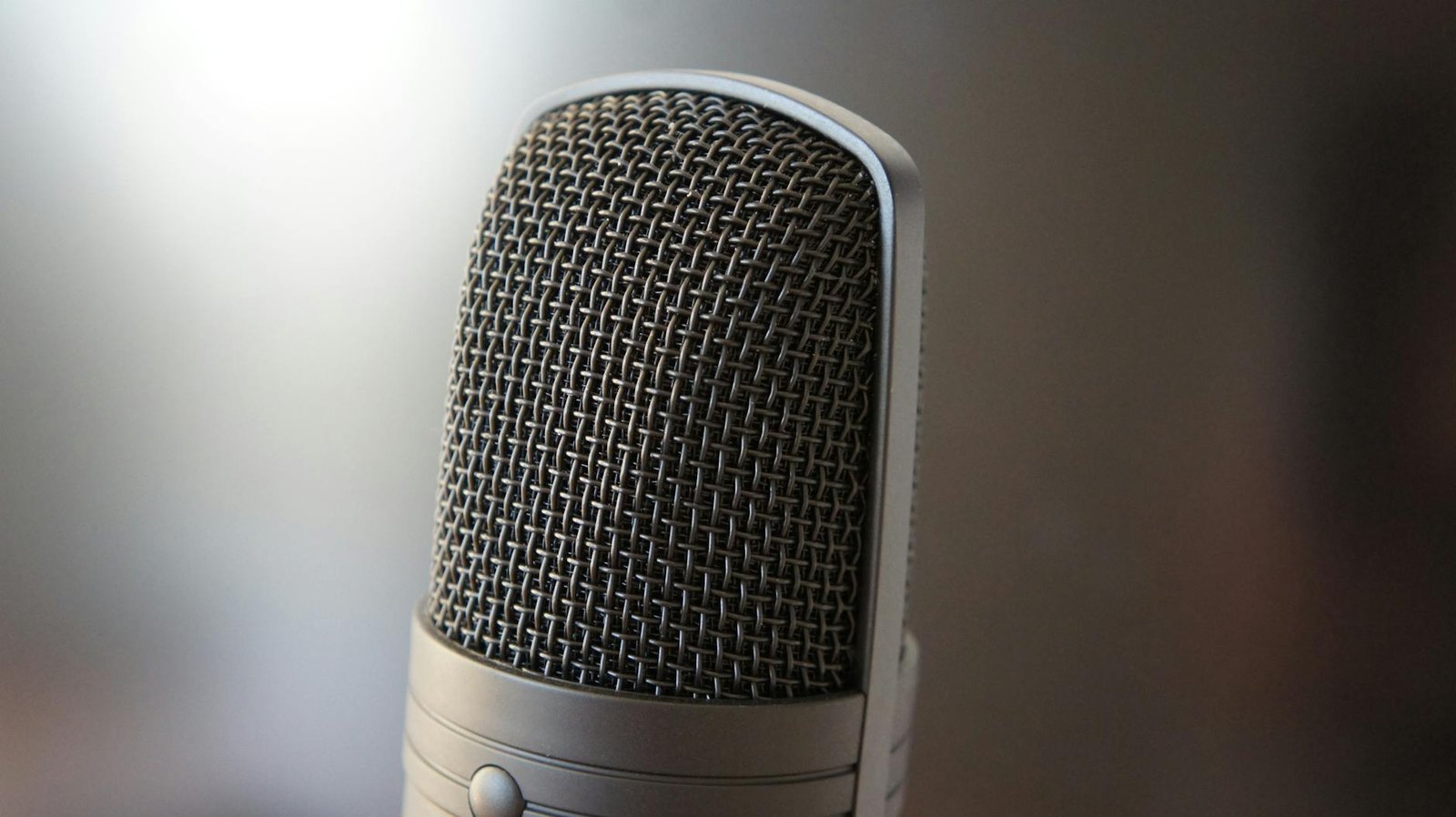
When you are shopping on Amazon, you will see terms like “Cardioid,” “Omnidirectional,” and “Bidirectional.” For 99% of WFH professionals, Cardioid is the only word that matters. A cardioid pattern is heart-shaped, meaning the microphone is highly sensitive to sounds directly in front of it and virtually deaf to sounds coming from the back. If you have a mechanical keyboard clacking away behind your mic, a cardioid pattern is your first line of defense.
Headsets vs. Standalone Microphones
I remember making the mistake of buying a massive, professional-grade XLR condenser microphone for my first remote job. It looked cool, but it was a nightmare for office calls. It picked up every single reflection off my hardwood floors. I eventually learned that while standalone mics offer the best raw audio quality, a headset with a boom mic is often better for noise cancellation because the microphone stays a constant one inch from your mouth.
Standalone microphones like the Blue Yeti Nano USB Microphone are excellent for those who don’t want to wear something on their head all day. The Nano is more compact than its predecessor but retains that crisp, “radio host” quality. It’s the gold standard for WFH professionals who value aesthetics and desk space. But be warned: you will need a boom arm to get it close to your mouth if you want to truly eliminate background hum.
On the other side of the fence, we have the “workhorse” headsets. Products like the Jabra Evolve2 65 Wireless Headset are ubiquitous in modern offices for a reason. They use a three-microphone array specifically designed to filter out the chatter of other people talking nearby. This is a crucial feature if your “home office” is actually a shared kitchen table.
The Best Noise-Canceling Microphones on Amazon
I have narrowed this list down to the units that actually deliver on their promises. No fluff, just gear that survives eight-hour Zoom marathons.
1. Sony WH-1000XM5 Wireless Headphones
Wait, didn’t I say headphones aren’t usually the best? Sony changed the game with the XM5. While the previous XM4 model was mediocre for calls, the XM5 uses eight microphones and an AI-driven noise-reduction algorithm that is honestly spooky. I’ve taken calls in busy airports with these, and nobody on the other end could hear the gate announcements.
- Best for: The frequent traveler who needs a “one-and-done” solution.
- Pros: Industry-leading ANC for your ears and incredible mic isolation.
- Shop on Amazon: Sony WH-1000XM5
2. Shure MV7+ USB Podcast Microphone
If you want to sound like a professional broadcaster, this is the one. It features “Voice Isolation Technology” which is essentially a physical design that prevents room echo from entering the capsule. It also has a “Digital Popper Stopper” to keep your “P” sounds from hitting the listener’s ears too hard. Much like we discussed in the best standing desk home office guide, investing in your primary workstation tools pays dividends in long-term comfort and productivity.
- Best for: Client-facing executives and podcasters.
- Pros: XLR and USB outputs; amazing auto-level mode.
- Shop on Amazon: Shure MV7+
3. Yealink BH76 Bluetooth Business Headset
Yealink is a brand that most people ignore until they see it in a corporate boardroom. The BH76 is their answer to the high-end office call microphone market. It features a retractable microphone boom arm. When you’re just listening to music, it looks like a standard pair of lifestyle headphones. When you’re on a call, pull out the boom for studio-quality voice pick-up with five separate microphones working to cancel noise.
- Best for: The person who hates the “gamer” or “call center” look of traditional headsets.
- Pros: Qi wireless charging; very long battery life; discreet look.
- Shop on Amazon: Yealink BH76
4. Poly Voyager Focus 2 UC
Poly (formerly Plantronics) has been making headsets since the Apollo moon landing. The Focus 2 creates what they call an “acoustic fence.” If a sound happens outside of a small radius around your mouth, the people on your call simply won’t hear it. It is arguably the most effective noise-canceling microphone for blocking out high-pitched noises like crying babies or barking dogs.
- Best for: Parents working from home.
- Pros: Extremely comfortable “sling” headband; best-in-class noise fence.
- Shop on Amazon: Poly Voyager Focus 2
5. AnkerPowerConf S500 Speakerphone
Sometimes you don’t want anything on your head or a giant mic in your face. The PowerConf S500 is a dedicated speakerphone puck. It uses four microphones and a 32kHz sampling rate to ensure you sound clear even if you’re pacing around the room. It’s perfect for those “walk and talk” meetings that keep many of us sane.
- Best for: Small meeting rooms or people who find headsets fatiguing.
- Pros: Zoom Certified; works as a decent Bluetooth speaker for music too.
- Shop on Amazon: Anker PowerConf S500
Comparison Table: WFH Microphones at a Glance
| Product | Type | Primary Feature | Best For |
|---|---|---|---|
| Sony WH-1000XM5 | Wireless Headset | AI Noise Suppression | Travelers / All-in-one |
| Shure MV7+ | Standalone USB/XLR | Voice Isolation Tech | Professional Voice Quality |
| Poly Voyager Focus 2 | Office Headset | Acoustic Fence Mic | Noisy Households |
| Blue Yeti Nano | Standalone USB | Cardioid Focus | Desk Aesthetics |
Technical Features to Look for in 2026
If you are looking to buy a new microphone this year, don’t just look at the price tag. The landscape of office tech is shifting toward smarter, more integrated devices. I’ve seen cheap $50 mics that outperform $200 ones simply because they have better onboard DSP (Digital Signal Processing). You want a device that handles the processing on its own hardware, rather than offloading it to your computer’s CPU, which can lead to lag.
Another major shift in 2026 is the adoption of LE Audio and LC3 codecs. If you are going wireless, ensure the device supports these. They provide significantly higher audio quality at much lower bitrates, meaning your voice won’t “clipp” or sound robotic when your Wi-Fi signal dips. High-fidelity voice isn’t just about sounding good; it’s about reducing “listener fatigue” for your colleagues.
When I was researching the best wireless earbuds for iPhone and Android in 2026, I noticed that even the smallest devices are now packing triple-mic arrays. For a WFH setup, you should demand at least that. Look for “beamforming” technology, which allows the microphone to digitally “point” itself at your mouth while you move. This is particularly useful if you tend to lean back or fidget during long presentations.
Real-World Examples and Setup Tips
Even the best noise-canceling microphone can fail if it’s set up poorly. I once spent three hours troubleshooting a “noisy” mic only to realize it was picking up vibrations from a small desk fan sitting right next to it. Your physical environment is the first stage of your noise cancellation.
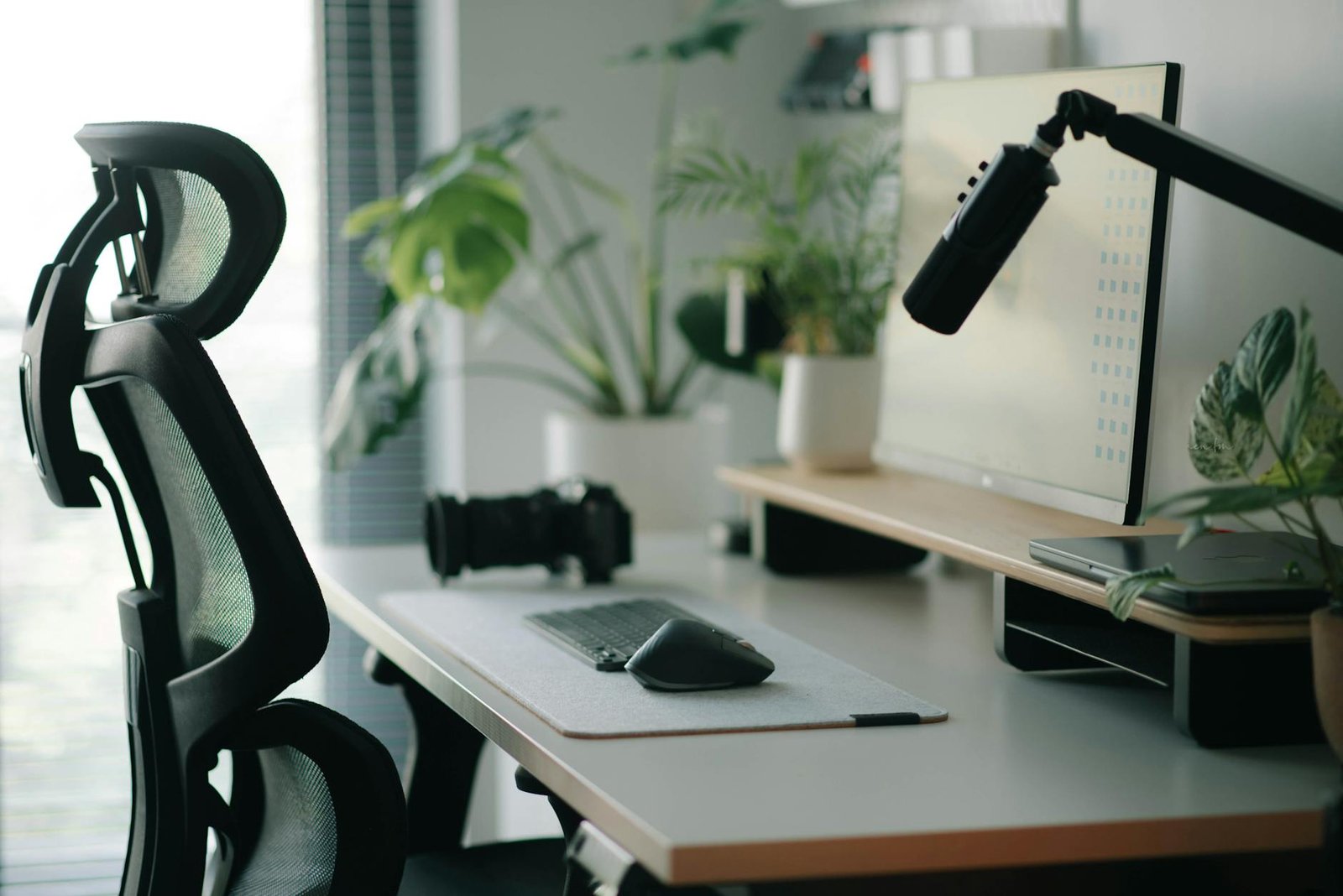
If you use a standalone mic like the Blue Yeti, do not place it directly on your desk. The tapping of your fingers on the keyboard will travel through the desk and into the mic like a drum. Use a shock mount and a boom arm. This simple 2026-era WFH hack will do more for your sound quality than a $500 software upgrade. It moves the microphone away from the noise sources (keyboard, PC fans) and closer to the sound source (you).
For those using software-based cancellation (like Krisp or the built-in “Background Noise Suppression” in Microsoft Teams), remember that these tools are “destructive.” They work by cutting out frequencies. If your room is already very loud, the AI will cut out so much of the audio spectrum that your voice will sound thin and metallic. The best strategy is a “hybrid” approach: use a directional cardioid microphone to do the heavy lifting and software to catch the occasional stray dog bark.
The tech world moves fast, and as we saw with the impact of AI on various industries, microphones are becoming more like computers themselves. Many of the newer models on Amazon now include “Auto-Gain Control.” This is a lifesaver for people who speak quietly and then suddenly get loud during a debate. The mic automatically adjusts its sensitivity so your listeners don’t have to constantly fiddle with their volume knobs.
Frequently Asked Questions
Does a noise-canceling microphone block out people talking in the background?
Yes, but with caveats. A high-quality cardioid microphone or a headset with an “acoustic fence” will significantly dampen other voices. However, if they are standing directly behind you or speaking loudly, the microphone might still catch the higher frequencies of their voice. For the best results in shared spaces, a boom-arm headset is superior because the mic is so close to your mouth that it can distinguish your voice from the background chatter more accurately.
Is a USB microphone better than a Bluetooth headset for office calls?
Generally, yes. USB microphones offer a wired connection, which means zero latency and no chance of your battery dying mid-conversation. Bluetooth headsets often compress the audio to save bandwidth, which can make your voice sound “muffled.” However, in 2026, many wireless office headsets now come with a dedicated USB dongle that uses 2.4GHz radio frequency instead of Bluetooth, providing wire-like stability and quality.
What is the difference between ENC and ANC in microphones?
ANC (Active Noise Cancellation) is designed to help you hear things better by blocking outside noise from reaching your ears. ENC (Environmental Noise Cancellation) is designed to help the people on the other end hear you better by filtering out background noise from the microphone’s input. When buying a WFH microphone, you are primarily looking for excellent ENC performance.
Can I use a gaming microphone for professional office calls?
Absolutely. In fact, gaming microphones are often better at noise cancellation than standard “business” ones because they are designed to ignore the sound of loud clicking keyboards and gaming PC fans. The only downside is the aesthetic; you might not want a microphone that glows with bright RGB lights during a serious meeting. Look for “stealth” versions or models where the lighting can be disabled.
Do I need a pop filter for my home office microphone?
If you are using a standalone condenser microphone, a pop filter is highly recommended. It prevents “plosives” (the burst of air when you say words starting with P or B) from hitting the microphone and causing a loud thud. Many modern office-centric microphones have small pop filters built into the internal mesh, but if you find people are constantly telling you your voice sounds “boomy,” a $10 Amazon pop filter will solve the problem instantly.
Selecting the right gear is about more than just checking boxes on a spec sheet. It’s about finding the tool that fits your specific environment, whether that’s a quiet den or a busy living room. By choosing a microphone with a strong cardioid pattern, a dedicated physical mute button, and proper positioning, you’re not just improving your audio; you’re showing respect for the people on the other side of the call. Now that your audio is sorted, you might want to look into upgrading your physical comfort by checking out the best standing desks for productivity in 2026.