Are you tired of wondering if that morning headache is just caffeine withdrawal or something more serious like a spike in your blood pressure? Tracking your cardiovascular health is no longer a task relegated to sterile doctor’s offices; it has become a proactive, daily habit for millions of health-conscious adults in 2026. You should care because catching a trend in your data today can prevent a major medical event five years from now.
We believe in radical transparency when it comes to health tech. While we may earn a commission from links in this article, our recommendations are based on clinical validation standards and real-world usability. Monitoring your vitals should be as seamless as checking your best smartwatches for Android for a text message.
- Upper arm cuffs are consistently more accurate than wrist-based models for medical-grade tracking.
- Look for “Clinically Validated” or “AHA Recommended” labels to ensure the sensor meets global standards.
- Smart features like Bluetooth syncing to Apple Health or Google Fit help visualize long-term trends.
- Correct posture and cuff size are more important for accuracy than the actual price of the device.
I remember sitting in my cardiologist’s office two summers ago, staring at a high reading and insisting it was just “white coat syndrome.” My doctor handed me a basic Omron unit and told me to track it at home for a week. What I learned was eye-opening: my blood pressure actually spiked right after my second cup of coffee and dropped significantly after a 10-minute walk. Without a reliable at-home blood pressure cuff, I would have been chasing a ghost rather than managing a lifestyle habit. That experience changed how I view home diagnostics forever.
Best Blood Pressure Monitors for At-Home Use in 2026
Choosing the right hardware is the first step toward better heart health. In 2026, the market is flooded with “smart” devices, but we have filtered the noise to bring you only those that provide consistent, repeatable results. Here is how the top contenders stack up for accuracy, ease of use, and value.
| Model | Best For | Key Feature | Price Tier |
|---|---|---|---|
| Omron Platinum | Clinical Accuracy | Triple-Read Mode | Premium |
| Withings BPM Connect | Tech Enthusiasts | Wi-Fi & Bluetooth | Mid-Range |
| Greater Goods Smart | Budget Friendly | Community Support | Entry-Level |
The Clinical Gold Standard: Omron Platinum Blood Pressure Monitor
The Omron Platinum Blood Pressure Monitor remains the undisputed king of at-home diagnostics. Its “TruRead” technology automatically takes three consecutive readings and averages them, which is exactly how medical professionals suggest you measure your pressure. This device is the gold standard for anyone who needs to provide high-precision data to their doctor. It is bulky compared to newer sleek models, but the accuracy is worth the extra space on your nightstand.
The Minimalist Choice: Withings BPM Connect
If you hate fumbling with wires and separate base units, the Withings BPM Connect Wi-Fi Blood Pressure Monitor is a revelation. It is an all-in-one cuff that syncs via Wi-Fi, meaning you don’t even need your phone nearby for it to log your data. It feels like a piece of high-end tech rather than a medical tool, which genuinely makes you more likely to use it daily. Pair this with your best smart scales for a comprehensive look at your metabolic health.
The Budget Hero: Greater Goods Bluetooth Monitor
You do not need to spend $100 to get a quality reading. The Greater Goods Bluetooth Blood Pressure Monitor offers a large, backlit display and seamless app integration for a fraction of the cost of legacy brands. We love their business model, too; a portion of every purchase goes to their charity partners, making it a feel-good buy that actually works. It is the perfect choice for those who are just starting their monitoring journey and want a reliable blood pressure machine review of their personal numbers.
What is a Blood Pressure Monitor and Why Should I Use One?
A home blood pressure monitor is a digital medical device designed to measure the force of your blood against artery walls without requiring a professional clinic visit. Using one allows you to detect “masked hypertension,” where your readings appear normal at the doctor but spike during your normal daily routine. It provides a broader, more accurate picture of your cardiovascular health than a single annual checkup ever could.
The mechanism is surprisingly simple but precise. The cuff inflates to temporarily stop blood flow, and as it deflates, sensors detect the vibration of blood rushing back (systolic) and the pressure when the heart is at rest (diastolic). According to the American Heart Association (AHA), monitoring at home can significantly improve the management of hypertension because it encourages patient engagement and provides real-time feedback on lifestyle choices.
In my experience, the biggest hurdle isn’t the technology; it’s the habit. We often think of these devices as tools for the elderly, but “lifestyle hypertension” is rising among younger professionals. If you are already tracking your steps or using red light therapy to optimize your recovery, adding a 60-second blood pressure check is the logical next step in your wellness stack.
Common Misconceptions About At-Home Accuracy
There is a lingering myth that home devices are “close enough” but not truly accurate. This is simply not true in 2026, provided you are using a best blood pressure monitor that has been third-party validated. Organizations like the American Medical Association (AMA) maintain lists of “Validated Device Listing” (VDL) products that meet rigorous testing protocols. If your device is on that list, its margin of error is comparable to the manual sphygmomanometer used by your nurse.
Another misconception is that wrist monitors are just as good as arm cuffs. While wrist models have improved, they are extremely sensitive to body position. If your wrist isn’t exactly at heart level, the reading can be off by 10 mmHg or more. For serious medical tracking, always opt for a bicep-style cuff unless your doctor specifically recommends otherwise due to physical limitations.
What most guides miss is the “cuff size” factor. Using a cuff that is too small for your arm is the fastest way to get a falsely high reading. I made the mistake of using a standard cuff on my husband, who has larger “gym arms,” and his reading came back 15 points higher than it actually was. Always measure your mid-arm circumference before you buy to ensure the accurate blood pressure device amazon sends you actually fits properly.
How to Use an At-Home Blood Pressure Cuff Correctly
Getting an accurate reading is 20% about the machine and 80% about your technique. You can buy the most expensive unit on the market, but if you take your pressure while sitting cross-legged and scrolling through stressful emails, the numbers will be useless. Consistency is the key to actionable data.
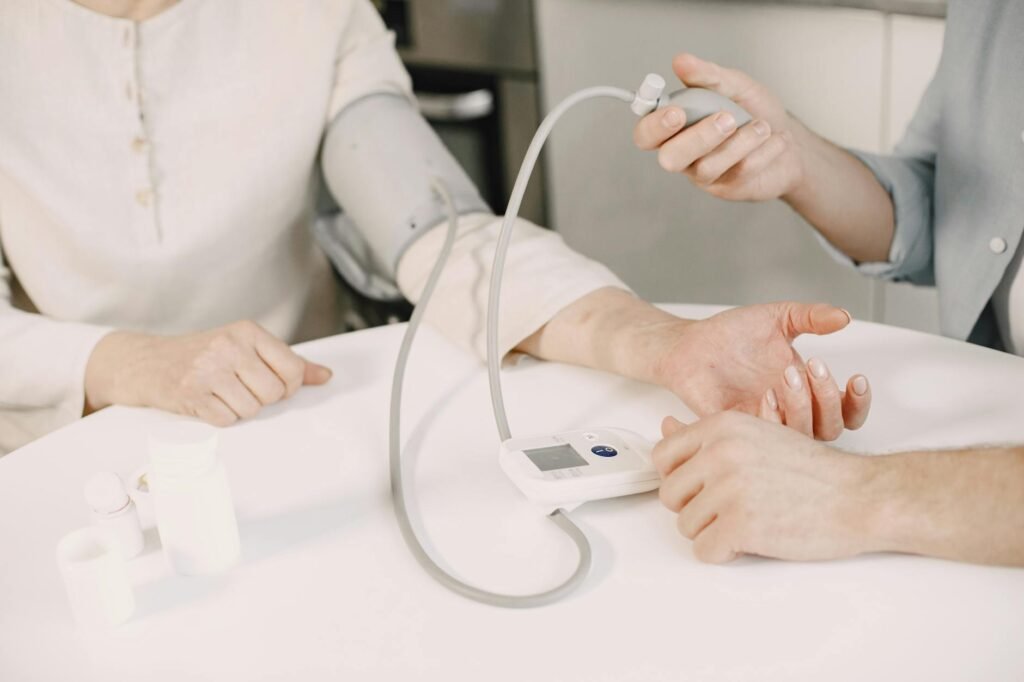
Find the best blood pressure monitor for at-home use in 2026. Shop top-rated, clinically validated cuffs on Amazon to track your heart health with accuracy.
- Prep for success: Do not smoke, drink caffeine, or exercise for 30 minutes before taking a measurement. Empty your bladder first; a full bladder can add 10 points to your systolic reading.
- Sit properly: Use a chair with back support. Keep your feet flat on the floor (don’t cross your legs!) and your arm supported on a flat surface like a table.
- Position the cuff: Place the cuff on your bare arm, about an inch above the bend of your elbow. The center of the cuff should be at the same level as your heart.
- Stay still and quiet: Do not talk or look at your phone during the measurement. Take a deep breath and relax.
- Multiple readings: Take two or three readings about a minute apart and average them. Most 2026 models like the Omron Platinum do this for you automatically.
The truth is, your blood pressure is dynamic. It changes when you stand up, when you eat, and certainly when you are stressed. By standardizing your ritual, taking the measurement at the same time every morning, for example, you eliminate the “noise” and see the actual trend. It’s a small time investment for a huge health payoff.
Real-World Examples: When Data Saves the Day
Numerical data isn’t just for spreadsheets; it has real-world consequences. Take “Sarah,” a 42-year-old marketing executive who started using a best blood pressure monitor after noticing she felt lightheaded during afternoon meetings. Her doctor had previously dismissed her concerns, citing her healthy weight and diet. However, her home logs showed that her pressure was spiking to 160/95 specifically during high-stress work hours, a classic case of stress-induced hypertension that a one-off clinic visit would never have caught.
Another example is a 2024 study published in the Journal of the American Medical Association (JAMA), which found that patients who engaged in “self-monitoring” were significantly more likely to reach their target blood pressure goals than those who relied solely on clinic visits. This is because the immediate feedback of a high reading often prompts better choices, like skipping that extra salty snack or prioritizing sleep. The device acts as a silent health coach on your wrist or nightstand.
We’ve seen similar spikes in interest for other vitals, with people using heart rate monitors to track fitness gains. Why would you care less about the pressure in your pipes than the rhythm of your pump? Both are pieces of a puzzle that, when put together, give you total control over your longevity.
How We Picked the Best Devices for 2026
Our selection process isn’t just about reading Amazon reviews; it’s about clinical pedigree. We look for devices that have passed the ISO 81060-2 protocol, which is the international standard for non-invasive blood pressure measurement. We also prioritize “ease of cuff fit.” If a cuff is a nightmare to wrap around your own arm, you won’t use it. Innovation in 2026 has moved toward “D-ring” cuffs that allow for easy one-handed application.
Data portability is our second major criteria. We live in a connected world. If your at-home blood pressure cuff doesn’t play nice with the health ecosystem you already use, whether that’s Apple Health, Google Fit, or a specific doctor’s portal, it’s essentially a paperweight. We favored models with stable Bluetooth or Wi-Fi connections and high-rated apps that don’t crash every time you try to export a PDF for your physician.
Lastly, we look at durability. These are medical instruments, not disposable toys. A well-built monitor should last at least 3 to 5 years of daily use. We analyzed long-term user feedback to see which brands suffer from “sensor drift” or broken pump motors over time. The brands featured here have a proven track record of standing behind their hardware.
Can a Smartwatch Replace a Traditional Cuff?
As of 2026, the short answer is no, but it’s getting closer. Many high-end smartwatches now claim to offer blood pressure monitoring through optical sensors. While these are interesting for “spot checks,” they are not medical-grade. They actually require a traditional cuff to “calibrate” them regularly. Relying solely on a watch for hypertension management is risky because those sensors can be thrown off by skin tone, wrist hair, or even a tight strap.
Think of your smartwatch as an early warning system. If your watch tells you something is off, that is your cue to break out the accurate blood pressure device amazon shipped you and get a real reading. It’s about layers of defense. Your watch provides the breadth of data, but your cuff provides the depth and accuracy needed for medical decisions.
The tech is evolving fast, though. We’ve seen papers from researchers at the University of California, San Diego, exploring “ultrasonic” sensors in wearables that could eventually match cuff accuracy. Until those are commercially available and FDA-cleared as standalone diagnostic tools, the inflatable cuff remains the king of the castle. Stick to what is proven when your heart health is on the line.
Look, at the end of the day, monitoring your blood pressure isn’t about being obsessed with numbers or living in fear of a stroke. It’s about data-driven peace of mind. By taking sixty seconds a day to check in with your body, you’re removing the “what ifs” from your health equation. You’re taking the same proactive approach you would with your skincare or your career. It’s a simple, low-cost habit that pays astronomical dividends in the form of extra years and better quality of life. Grab a monitor, follow the steps, and take charge of what’s happening under the hood.
Frequently Asked Questions
What is the most accurate blood pressure monitor for home use?
The Omron Platinum and Withings BPM Connect are widely considered the most accurate for home use due to their clinical validation and advanced sensor technology. Both brands consistently appear on the American Medical Association’s list of validated devices. For the best results, ensure your cuff is the correct size for your arm, as a poor fit is the most common cause of inaccurate readings.
Is it better to have a wrist or arm blood pressure monitor?
For medical accuracy, a bicep (upper arm) monitor is significantly better than a wrist monitor. Wrist monitors are highly sensitive to body position and often provide fluctuating results if your arm is not perfectly level with your heart. Doctors almost always recommend arm cuffs for patients managing hypertension or cardiovascular conditions.
Can caffeine or stress affect my blood pressure reading?
Yes, both caffeine and stress can cause temporary spikes in blood pressure that do not reflect your “baseline” health. It is essential to wait at least 30 minutes after consuming coffee or encountering a stressful event before taking a measurement. To get a true reading, sit quietly for five minutes before pressing the start button on your device.
How often should I calibrate my home blood pressure monitor?
Most manufacturers recommend having your device checked for accuracy once every two years. You can often do this by bringing your home monitor to your next doctor’s appointment and comparing its reading to the professional manual measurement. If the results are within 10 mmHg of each other, your home device is still performing well.
Does the FDA approve blood pressure monitors?
The FDA does not “approve” blood pressure monitors; instead, it “clears” them. This means the manufacturer has demonstrated that the device is substantially equivalent to a legally marketed device and is safe and effective for its intended use. Always look for “FDA Cleared” on the packaging when shopping for a reliable monitor on Amazon.

TRENDING: Partner Snores at Night? 7 Proven Tips to Finally Sleep Deeply
Download the new game Guess The Celebrity Quiz and check how well you know your idols
Always be up to date with the news and follow the trends!
👉🏻 Support our work by giving us a small donation