Table of Contents
- An Urgent Gathering on Volatile Waters
- Key Takeaways from the ASEAN Summit
- Recent Incidents Sparking Alarm
- Understanding the South China Sea Historical Claims
- International Law and the Maritime Disputes
- ASEAN’s Diplomatic Tightrope Act
- The Influence of External Powers in the Region
- Why the South China Sea Matters Economically
- Potential Paths Forward for Regional Stability
- Frequently Asked Questions
An Urgent Gathering on Volatile Waters
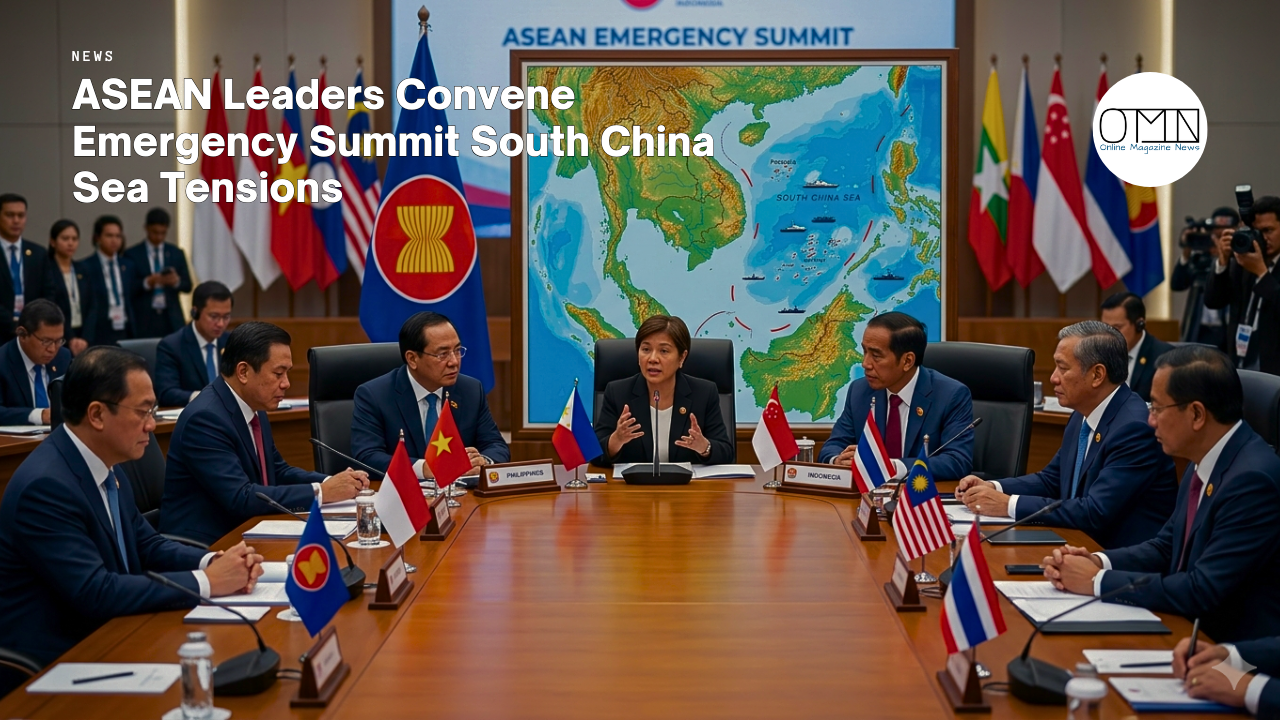
Southeast Asian nations, under the umbrella of the Association of Southeast Asian Nations, or ASEAN, have found themselves at a critical juncture. Recent, troubling incidents in the South China Sea have pushed regional leaders to convene an emergency ASEAN summit. This extraordinary gathering aims to address the escalating geopolitical tensions and persistent maritime disputes that threaten stability in one of the world’s most vital waterways. It’s a situation demanding immediate and concerted action, a clear signal that the status quo is no longer tenable. And this isn’t just about fishing rights or minor territorial squabbles; the stakes involve national sovereignty, vast natural resources, and the very fabric of international relations across the Indo-Pacific.
Key Takeaways from the ASEAN Summit
- An emergency ASEAN summit was called due to recent, intensifying incidents in the South China Sea.
- Leaders are grappling with complex sovereignty claims and a rising number of confrontations between claimant states.
- The summit highlights the delicate balance ASEAN members must strike between national interests and regional solidarity.
- Key discussions revolve around de-escalation mechanisms, a potential Code of Conduct, and the role of international law.
- The economic significance of the South China Sea, including shipping lanes and energy resources, underpins the urgency of resolving these disputes peacefully.
- External powers, particularly the United States and China, exert significant influence, complicating regional solutions.
Recent Incidents Sparking Alarm
The call for an emergency ASEAN summit didn’t come out of the blue. Over the past few months, a series of concerning events has dramatically heightened the already palpable tensions in the South China Sea. We’ve seen reports of aggressive maneuvers by coast guard vessels, blockades hindering supply missions to remote outposts, and even instances of water cannons being deployed against civilian boats. These aren’t isolated events, mind you. They represent a dangerous pattern of escalation that carries the very real risk of miscalculation, potentially igniting a broader conflict. Each new incident chips away at regional trust and makes a peaceful resolution seem more distant.
Take, for instance, the recent confrontation near Second Thomas Shoal, involving Philippine and Chinese vessels. Manila accused Beijing of blocking and intentionally colliding with its resupply boats, activities China predictably denies, claiming the Philippines encroached on its territory. Then there’s the ongoing dispute over fishing grounds, where fishermen from various nations report harassment and intimidation. These are the kinds of flashpoints that keep diplomats up at night. And it’s why leaders felt compelled to gather, seeking to douse the flames before they engulf the entire region.
Understanding the South China Sea Historical Claims
To truly grasp the complexity of the current maritime disputes, one must look back at the convoluted tapestry of historical claims. Several nations, including China, Vietnam, the Philippines, Malaysia, Brunei, and Taiwan, lay claim to various islands, reefs, and maritime zones within the South China Sea. These claims often overlap and are rooted in historical maps, ancient fishing rights, and assertions of discovery and occupation. For example, China bases its extensive claim, often depicted by the “nine-dash line,” on historical usage and maps dating back centuries. This line encompasses a significant portion of the sea, much to the consternation of its neighbors.
Vietnam, conversely, asserts sovereignty over the Paracel and Spratly Islands, citing historical administrative control and geographical proximity. The Philippines points to its exclusive economic zone, as defined by the United Nations Convention on the Law of the Sea (UNCLOS), arguing that features like the Spratly Islands fall within its legitimate maritime territory. Malaysia and Brunei also have claims based on UNCLOS and their continental shelves. This intricate web of competing historical narratives and modern legal interpretations makes finding common ground incredibly difficult, a challenge that consistently dogs the ASEAN summit discussions.
International Law and the Maritime Disputes
The role of international law, particularly UNCLOS, is central to the debate over the South China Sea. UNCLOS, ratified by most claimant states, establishes a comprehensive legal framework for all ocean activities. It defines concepts like territorial seas, exclusive economic zones (EEZs), and continental shelves. For many ASEAN members, their claims are firmly anchored in UNCLOS provisions, arguing that certain features and waters fall within their 200-nautical-mile EEZs, granting them sovereign rights for exploring and exploiting marine resources. But this is where the international legal principles clash head-on with historical assertions.
In 2016, an arbitral tribunal under UNCLOS, in a case brought by the Philippines, largely invalidated China’s expansive “nine-dash line” claims, ruling them to be without historical basis under international law. The tribunal also clarified that certain features in the Spratly Islands are “low-tide elevations” or “rocks” and therefore do not generate an EEZ or continental shelf. China, however, has consistently rejected this ruling, calling it “null and void” and refusing to recognize its legitimacy. This rejection significantly complicates efforts to resolve the disputes through international legal mechanisms, forcing ASEAN to seek diplomatic avenues. It’s a stark reminder that legal pronouncements, without enforcement, often fall short of creating real-world change. This situation is somewhat reminiscent of the complexities seen in G20 Summit Concludes Amid Trade Sanction Divisions, where international agreements often face resistance from powerful nations.
ASEAN’s Diplomatic Tightrope Act
ASEAN plays a delicate but crucial role in addressing the South China Sea issues. The bloc operates on a principle of consensus, meaning all ten member states must agree for any significant action to be taken. This can be both a strength, fostering unity, and a weakness, leading to paralysis when member states have differing interests or are influenced by larger external powers. For example, some member states are direct claimants in the disputes, while others are not, creating internal divisions on how assertively the bloc should confront China, its largest trading partner.
Despite these challenges, ASEAN has long championed the idea of a Code of Conduct (COC) in the South China Sea. This proposed agreement aims to establish rules and norms to manage disputes, prevent incidents, and promote cooperation among claimants. Negotiations for a COC have been painstakingly slow, stretching over decades, with little concrete progress. The recent emergency ASEAN summit has reignited calls to expedite these talks, but significant hurdles remain, particularly regarding the binding nature of the code and its geographical scope. It’s a constant balancing act, trying to assert regional agency while navigating the powerful gravitational pull of larger economies and military forces. If you’re looking to understand the intricate historical background and diplomatic nuances shaping Southeast Asia, a book like Contest for the South China Sea: China, America, and the Future of Asia by Bill Hayton offers invaluable insights. You can find it and similar geopolitical analyses by searching on Amazon.
Consensus Challenges Within the Bloc
The consensus model, while foundational to ASEAN, often faces severe stress when confronted with high-stakes geopolitical issues. Individual member states, facing their own economic and strategic considerations, don’t always align perfectly on how to approach Beijing. Some nations rely heavily on trade with China and are hesitant to take a strong stance that might jeopardize those ties. Others, more directly impacted by China’s assertive actions in the South China Sea, push for a more unified and forceful response. This internal divergence can lead to watered-down statements or, worse, a perceived lack of unity that external actors might exploit. It’s a constant push and pull, a testament to the diverse interests within the bloc.
The Code of Conduct Hurdles
Developing a truly effective Code of Conduct remains one of ASEAN’s most ambitious, yet elusive, goals. Initial discussions on a Declaration on the Conduct of Parties in the South China Sea (DOC) began way back in 2002, but a legally binding COC has yet to materialize. Key sticking points include whether the code should be legally binding, how it would be enforced, and whether it should cover new features or reclaimed land. China, for its part, has often been accused of dragging its feet in negotiations, preferring to deal with claimant states bilaterally rather than through a united ASEAN front. This approach often gives China a stronger negotiating position, further frustrating the bloc’s efforts. The urgency expressed at the recent ASEAN summit underlines the mounting impatience for meaningful progress on this front.
The Influence of External Powers in the Region
The South China Sea is not merely a regional issue; it has become a nexus of great power competition. The United States, Japan, Australia, and other extra-regional powers have significant strategic and economic interests in ensuring freedom of navigation and maintaining a “free and open Indo-Pacific.” The U.S. Navy regularly conducts “freedom of navigation operations” (FONOPs) in the disputed waters, challenging what it perceives as excessive maritime claims. These operations are often met with strong condemnation from Beijing, which views them as provocations and infringements on its sovereignty. It’s a dangerous dance, always on the precipice.
China, naturally, views the South China Sea as integral to its national security and economic ambitions. Its expansive island-building activities and militarization of artificial islands have been a major source of regional concern, transforming reefs into fortified outposts capable of housing military aircraft and missile systems. These actions have fundamentally altered the strategic landscape. The interplay of these powerful external forces means that any resolution, or even de-escalation, in the maritime disputes must inevitably consider their roles and interests. Many foreign policy experts will keep a close eye on these developments, perhaps even referring to a comprehensive global political atlas for geographical context, which can be found by searching political world atlas on Amazon.
The US-China Rivalry
The overarching rivalry between the United States and China casts a long shadow over the entire region. Washington seeks to maintain its long-standing alliances and security commitments in Asia, viewing China’s assertiveness as a challenge to the rules-based international order. Beijing, conversely, sees U.S. involvement as an attempt to contain its rise and interfere in its sovereign affairs. This fundamental disagreement fuels many of the actions and reactions observed in the South China Sea. Any movement toward greater stability in the region would require some level of understanding, or at least managed competition, between these two global behemoths. This complex dynamic is quite different from the specific regional focus on Middle East Peace Talks Collapse Global Leaders React, but the underlying challenge of great power influence on local conflicts remains a constant.
Why the South China Sea Matters Economically
Beyond the flags and military maneuvers, the economic significance of the South China Sea cannot be overstated. Roughly one-third of global maritime trade, valued at trillions of dollars annually, passes through these waters. Major shipping lanes connect East Asia with Europe, the Middle East, and Africa. Any disruption, whether from conflict or even heightened tensions, would have catastrophic ripple effects on global supply chains and economies worldwide. Think about it: blockades, increased insurance premiums for shipping, or outright conflict would send shockwaves far beyond the littoral states.
Furthermore, the South China Sea is believed to hold vast untapped reserves of oil and natural gas, particularly in areas like the Reed Bank and Spratly Islands. Access to these energy resources is a primary driver of the territorial claims, offering immense potential for energy security and economic prosperity to any nation that can exploit them. Fisheries in the region are also incredibly rich, providing livelihoods for millions of people in surrounding countries. The depletion of these fish stocks due to overfishing and environmental degradation, exacerbated by aggressive territorial enforcement, represents another pressing concern. The economic incentives, therefore, are powerful motivators in these ongoing disputes.
Shipping Lanes and Global Trade
Consider the sheer volume: tankers carrying crude oil, container ships laden with consumer goods, bulk carriers transporting raw materials. All of them traverse the South China Sea. It’s a critical artery of global commerce. Maintaining open and secure sea lines of communication (SLOCs) is paramount for all nations, not just those in the immediate vicinity. Any military action or even prolonged tension that threatens these SLOCs would impact everything from consumer prices in Europe to manufacturing output in Japan. This is why international bodies and major trading nations consistently call for peaceful resolution and freedom of navigation. And it’s why the outcomes of an ASEAN summit on these issues resonate globally.
Energy Resources and Fisheries
The potential for immense oil and gas reserves beneath the seabed of the South China Sea is a powerful lure. Estimates vary wildly, but some suggest billions of barrels of oil and trillions of cubic feet of natural gas. For energy-hungry nations in Asia, securing access to these resources offers a path toward greater energy independence. This prospect intensifies the competition for control over disputed areas. Meanwhile, the rich fishing grounds are a lifeblood for coastal communities. But indiscriminate fishing practices, often associated with paramilitary fishing fleets, threaten the long-term sustainability of these vital resources. Managing these environmental and resource challenges adds another layer of complexity to the already thorny political and legal disputes. One practical way to stay informed about daily maritime activities and geopolitical shifts is through reliable news feeds or analytical reports. For those interested in a deeper understanding of maritime law and its implications, books like The Law of the Sea can be found on Amazon, providing scholarly perspectives on these complex issues.
Potential Paths Forward for Regional Stability
The emergency ASEAN summit is a necessary step, but it’s just one piece of a much larger puzzle. What are the viable paths forward for achieving lasting stability in the South China Sea? Dialogue, transparency, and multilateral cooperation are certainly top priorities. Strengthening ASEAN’s collective voice and its ability to negotiate with external powers as a unified front could yield more meaningful progress on a Code of Conduct. Regional confidence-building measures, such as joint naval exercises focused on disaster relief rather than combat, could also help foster trust among claimant states. And, critically, adherence to international law, specifically UNCLOS, remains the bedrock for any legitimate claim or peaceful resolution.
Some experts propose “track two” diplomacy, involving academics and non-governmental organizations, to explore creative solutions outside the rigid constraints of formal state-to-state negotiations. Others suggest joint development agreements for disputed resources, where claimant states agree to share the benefits of oil, gas, or fish stocks, temporarily setting aside sovereignty issues. This approach has seen limited success elsewhere but offers a pragmatic way to defuse immediate economic tensions. Ultimately, the path to peace will require immense political will, a willingness to compromise, and a genuine commitment to regional stability over narrow nationalistic pursuits. Without these elements, the current cycle of escalation is likely to continue.
De-escalation Mechanisms and Diplomacy
Effective de-escalation mechanisms are paramount. These might include clearer communication protocols between naval and coast guard vessels, hotlines for immediate incident reporting, and agreed-upon rules of engagement to prevent minor confrontations from spiraling out of control. Think about what happens in the heat of the moment: a misunderstanding, a miscommunication, and suddenly, a small incident turns catastrophic. Diplomatic channels must remain open, even when tensions are at their highest. Continuous dialogue, even if difficult, is always preferable to silence and suspicion. The emergency ASEAN summit aims to reinforce these essential diplomatic lines.
Revisiting the Code of Conduct
The long-stalled Code of Conduct must be revisited with renewed urgency. A truly effective COC would need to be legally binding, clearly define acceptable behaviors, and include robust enforcement mechanisms. It should also have a transparent dispute resolution process. While China has historically preferred non-binding agreements and bilateral discussions, the growing regional consensus, as evidenced by the emergency ASEAN summit, might create fresh impetus for a more substantive framework. Moving beyond general declarations to concrete commitments is the real challenge here. But it’s a necessary one for genuine, lasting peace in the South China Sea.
Frequently Asked Questions
Why is the South China Sea so strategically important?
The South China Sea is strategically vital for several reasons. It serves as a critical maritime trade route, with an estimated one-third of global shipping passing through its waters, connecting major economies. Moreover, it is believed to hold significant untapped oil and natural gas reserves beneath its seabed, offering immense economic potential. The region’s rich fishing grounds also provide livelihoods for millions, making control over these resources a key factor in the geopolitical tensions.
Which countries are involved in the South China Sea disputes?
The primary claimants in the South China Sea disputes include China, Vietnam, the Philippines, Malaysia, Brunei, and Taiwan. Each of these nations asserts sovereignty over various islands, reefs, and maritime areas within the sea, often with overlapping claims. These competing claims are based on a mix of historical narratives, geographical proximity, and interpretations of international maritime law.
What is the role of the United States in the South China Sea?
The United States, while not a claimant state, plays a significant role in the South China Sea. It asserts its interest in maintaining freedom of navigation and overflight, upholding international law, and ensuring regional stability. The U.S. Navy conducts “freedom of navigation operations” (FONOPs) in the disputed waters to challenge what it considers excessive maritime claims, often drawing strong reactions from China.
What is the Code of Conduct in the South China Sea?
The Code of Conduct (COC) in the South China Sea is a proposed agreement between ASEAN member states and China aimed at establishing rules and norms to manage disputes, prevent incidents, and promote cooperation in the contested waters. Negotiations for a legally binding COC have been ongoing for decades, with various sticking points, including its scope, enforceability, and legal status, posing significant hurdles to its finalization.
How does the 2016 arbitral ruling affect the disputes?
In 2016, an arbitral tribunal under the United Nations Convention on the Law of the Sea (UNCLOS), in a case brought by the Philippines, largely invalidated China’s expansive “nine-dash line” claims, ruling them inconsistent with international law. The tribunal also clarified the status of certain features in the Spratly Islands. However, China has rejected this ruling, stating it is “null and void,” which significantly complicates its enforcement and impact on ongoing disputes.
Can ASEAN truly resolve the South China Sea tensions?
ASEAN faces significant challenges in unilaterally resolving the South China Sea tensions due to its consensus-based decision-making, which can lead to internal divisions among member states with differing interests. Additionally, the immense influence of external powers like China and the United States complicates regional efforts. While ASEAN is crucial for facilitating dialogue and pushing for a Code of Conduct, a lasting resolution will likely require broader international cooperation and a willingness from all major actors to compromise and adhere to international law.
What are the potential risks if tensions escalate further?
Further escalation of tensions in the South China Sea carries serious risks. These include accidental collisions or confrontations between naval or coast guard vessels, which could quickly spiral into broader military conflicts. Economic disruptions, such as blockades or increased shipping costs, could severely impact global trade and supply chains. Additionally, continued militarization and resource competition could lead to environmental degradation and further destabilize regional security, potentially involving larger global powers.
The emergency ASEAN summit on South China Sea tensions serves as a stark reminder of the fragile peace in the region. Leaders are grappling with a complex web of historical claims, international legal interpretations, and powerful economic and strategic interests. While the path forward is fraught with challenges, the very act of convening signals a shared recognition of the urgent need for de-escalation and diplomatic engagement. The world watches, understanding that stability in these vital waters is not just a regional concern, but a cornerstone of global commerce and security. Ultimately, the onus is on all parties to step back from the brink, prioritize dialogue, and uphold the principles of international law to ensure a peaceful and prosperous future for the Indo-Pacific.
TRENDING: Major Social Media Platform Faces Global Outage After Cyberattack
Download the new game Guess The Celebrity Quiz and check how well you know your idols
Always be up to date with the news and follow the trends!
 Support our work by giving us a small donation