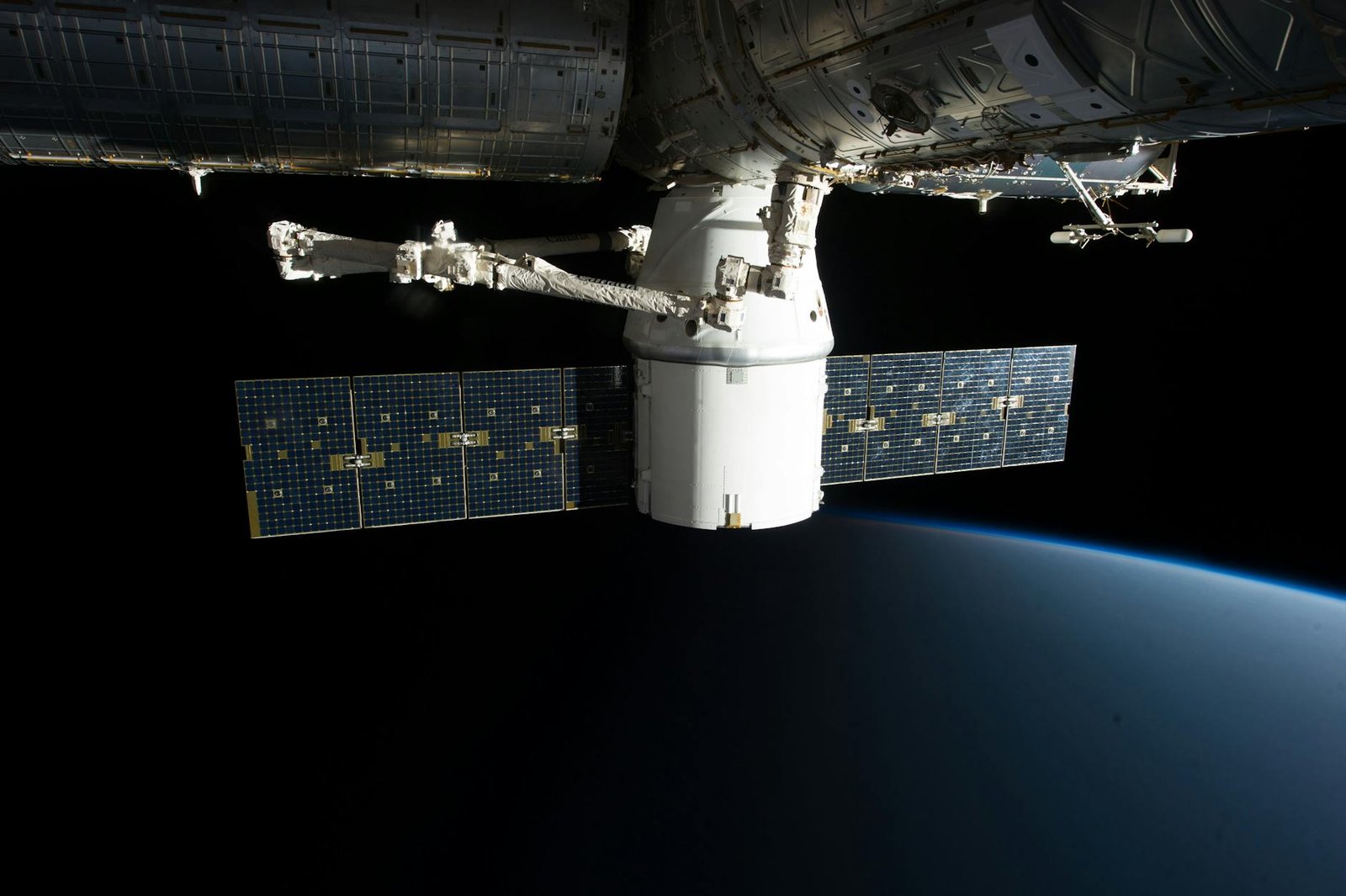
The night sky often feels like a silent, static backdrop to our lives, but 250 miles above our heads, the International Space Station (ISS) is currently buzzing with the kind of frantic energy usually reserved for a Silicon Valley startup on launch day. We often think of space as a place of serene floating, but the reality is far more industrial, cramped, and scientifically intense. Recently, the International Space Station welcomed a fresh rotation of explorers, marking the start of a mission that pushes far beyond routine maintenance and into the gritty details of how humans might one day survive a trip to Mars.
I’ve tracked NASA missions for over a decade, and there’s a persistent myth that the ISS is just a multibillion-dollar “room with a view.” The truth is much more fascinating. While the world below focuses on the next tech merger or the latest celebrity trial, this new crew is essentially acting as biological guinea pigs. They aren’t just there to look at the stars; they are there to solve the riddle of long-duration spaceflight. If we can’t figure out how to stop the human body from essentially “melting” in microgravity, our dreams of multi-year voyages are dead on arrival. This latest expedition is a major step in ensuring those dreams stay alive.
- Fresh Crew Integration: A multi-national team has successfully docked, bringing the station’s occupancy to its peak capacity for high-yield research.
- Biological Frontiers: New experiments focus on “space-associated neuro-ocular syndrome” (SANS) and bone density loss, critical for trips to Mars.
- Advanced Technology: The crew is testing next-generation life support systems that recycle 98% of water, wood-based satellites, and 3D organ printing.
- International Cooperation: Despite terrestrial tensions, the ISS remains a bastion of global collaboration between NASA, ESA, JAXA, and Roscosmos.
Table of Contents
- The Arrival: Who Is the New Crew?
- The Physical Toll of Long-Duration Space Travel
- Breaking Down the 2026 Research Agenda
- Next-Gen Tech and Life Support Systems
- How This Prepares Us for the Red Planet
- Frequently Asked Questions
The Arrival: Who Is the New Crew?
The orbital laboratory didn’t just get new roommates; it gained a specialized team of scientists, pilots, and engineers meticulously selected for their psychological resilience. In early 2026, the SpaceX Crew Dragon once again proved its reliability, ferrying a diverse group consisting of NASA veterans and first-time flyers from international partner agencies. This rotation is vital because it maintains the “human chain” of continuous presence that has existed since 2000. The current new crew transition ensures that the ISS remains fully staffed for complex, hands-on scientific labor.
In my experience watching these dockings, the “welcome ceremony” is always the most human part of the mission. You see the tired, slightly pale newcomers floating into the hatch, greeted by the messy, hair-standing-on-end current residents. It’s a reminder that beneath the high-tech suits, these are people doing a very difficult job. This particular team includes specialists in regenerative medicine and structural engineering, a combination designed to tackle the station’s aging infrastructure while simultaneously pushing for medical breakthroughs. NASA has emphasized that this specific rotation is “heavy on science,” reducing time spent on routine chores to maximize laboratory hours.
One thing most guides miss is that a full house on the ISS actually makes life more difficult for the astronauts. With seven to eleven people on board, the environmental control systems have to work overtime to scrub CO2, and the “gym” (the Treadmill with Vibration Isolation Stabilization) is booked around the clock. If you’re curious about how this level of activity impacts the tech they use daily, you might find our look at the latest tech products released in 2026 provides some terrestrial context for the innovation happening above us.
The Physical Toll of Long-Duration Space Travel
Why do we need a new crew every six months? Because space is, frankly, trying to kill us. In microgravity, your blood doesn’t flow down to your legs; it pools in your chest and head. Your bones think they aren’t needed anymore and begin to shed calcium at an alarming rate, roughly 1% to 1.5% of bone mineral density per month. Understanding the biological shifts during long-duration spaceflight is the primary hurdle for any future Mars mission.
The crew is currently investigating “Space-Associated Neuro-ocular Syndrome” (SANS), where the shape of the eye actually flattens due to fluid pressure. It’s a terrifying prospect for an astronaut who needs 20/20 vision to land a multi-billion dollar craft. They are using high-resolution ultrasound and retinal imaging to track these changes in real-time. This isn’t just “neat” science; it’s survival science. I once spoke with a flight surgeon who noted that if we sent a crew to Mars today without these interventions, they might arrive nearly blind and too brittle to walk on the surface.
Beyond the physical, there is the psychological “monotony of the void.” To combat this, the crew is participating in behavioral studies. They track their sleep cycles (or lack thereof, since they see 16 sunrises a day) and use specialized light therapy. For those of us on Earth trying to optimize our own environments, the tech they use for focus and recovery is often adapted for commercial use. For instance, many astronauts utilize high-end noise management. You can find similar, though less “space-grade,” tools in our guide to the best noise canceling microphones for WFH office calls if you’re looking to upgrade your own professional bubble.
What happens to the human body after one year in space?
After a full year in microgravity, the human body undergoes significant physiological remodeling. Muscles, particularly in the lower back and legs, can atrophy by up to 20% if rigorous exercise isn’t maintained, while bone density loss mimics severe osteoporosis. Fluid shifts toward the head can cause permanent changes to eye structure and intracranial pressure. Furthermore, exposure to cosmic radiation increases the long-term risk of cancer and cardiovascular issues. Most of these changes reverse upon returning to Earth, but some, like certain vision shifts and radiation-induced DNA damage, may be permanent.
Breaking Down the 2026 Research Agenda
The ISS is essentially a giant petri dish that never stops spinning. One of the most exciting projects this new crew is handling involves space research into “Organ-on-a-Chip” technology. Instead of testing drugs on animals or humans, scientists use tiny chips that mimic the functions of human organs. In microgravity, the aging process of these cells accelerates, allowing researchers to see in weeks what would take years to observe on Earth. The ISS serves as an “accelerated aging” laboratory that could unlock cures for Earth-bound diseases.
The crew is also focusing on:
- Bio-printing: Attempting to 3D print meniscus tissue (knee cartilage) in microgravity, where the lack of “sag” allows for more complex structures.
- Plant Biology: Growing “heavy-duty” greens like dwarf tomatoes and spicy peppers to supplement the astronaut diet and provide psychological comfort.
- Material Science: Investigating how certain alloys cool in a vacuum, which could lead to much stronger and lighter turbine blades for jet engines back home.
The diversity of the work is staggering. One moment an astronaut might be repairing a leaking cooling pump, and the next they are peering through a microscope at protein crystals that are growing perfectly symmetrical because gravity isn’t pulling them out of shape. These crystals are essential for designing new medications. If you’re interested in health and wellness at a more personal level, check out our report on top health trends in 2026 to see what the future of well-being looks like on the ground.
Next-Gen Tech and Life Support Systems
To get to Mars, we have to stop bringing everything with us. Shipping water to the ISS costs roughly $10,000 to $25,000 per pound depending on the launch vehicle. This new crew is testing a significantly upgraded Environmental Control and Life Support System (ECLSS). This system is designed to achieve a 98% water recovery rate. Yes, that means recycling sweat and urine into ultra-pure drinking water. Perfecting closed-loop life support systems is the only way to make long-distance space travel economically viable.
There’s also a push for more sustainable orbital infrastructure. The crew recently deployed the first wooden satellite prototype. While it sounds primitive, wood actually doesn’t burn or rot in the vacuum of space, and it doesn’t create harmful aluminum particles when it eventually de-orbits and burns up in the atmosphere. It’s a counterintuitive take on “green” tech that might prove revolutionary.
Reliability is everything when you’re 250 miles up. When parts break, the crew can’t just call a repairman. They rely on high-quality tools and equipment. For their downtime, maintaining physical health is non-negotiable. While they use specialized space-grade gear, we can use tools like the Theragun PRO G5 or the Hyperice Hypervolt 2 Pro for muscle recovery here on Earth. These handheld percussive devices are actually quite popular among ground support teams to help manage the physical strain of long shifts at Mission Control.
How This Prepares Us for the Red Planet
The International Space Station is a “stepping stone” to the Moon and Mars. However, I’ve always argued that we focus too much on the rocket and not enough on the “cabin.” A trip to Mars takes about seven to nine months one-way. During that time, the crew will be in a confined space similar in size to a large RV. This new crew’s work on “human factors”, how people interact with technology and each other under stress, is more important than the fuel calculations. The ISS is the only place we can simulate the psychological and physiological isolation of deep-space missions.
One critical experiment being run right now involves the “Food Physiology” project. It looks at how a specialized diet can improve the immune system and gut microbiome in space. We know that the immune system gets “confused” in orbit, dormant viruses like shingles can reactivate. If we can’t keep an astronaut’s immune system robust, a simple infection could turn fatal during a Mars transit. This research has direct applications for people with compromised immune systems on Earth, proving once again that space exploration is rarely just about space.
As we look toward the decade’s end, the ISS might be nearing its retirement (scheduled for roughly 2030), but the data collected by this current crew will be its lasting legacy. They are defining the “owner’s manual” for the human body in the cosmos. It’s a reminder that while the news cycle is dominated by political debates and market crashes, some things, like the pursuit of the stars, remain universal and steady.
Whether you’re an aspiring astronaut or just someone fascinated by the sheer scale of human ambition, it’s a great time to be watching the skies. If the technical side of this inspires you to upgrade your own home “mission control,” you might consider a Fully Jarvis Bamboo Standing Desk or a Herman Miller Aeron Chair to keep your productivity as high as the astronauts’. Keeping your body healthy and your environment optimized is the first step toward your own “long-duration” work goals.
Frequently Asked Questions
How long do crews stay on the ISS?
Typically, a standard mission duration is about six months. However, some astronauts, like Frank Rubio or Christina Koch, have stayed for nearly a year to or more to help researchers study the effects of very long-duration spaceflight on the body.
How fast does the ISS travel?
The station orbits the Earth at a staggering speed of roughly 17,500 miles per hour. This means it circles the entire planet every 90 minutes, allowing the crew to witness about 16 sunrises and sunsets every single day.
Why is research on the ISS better than on Earth?
Microgravity allows researchers to study physical and biological processes without the “masking” effect of Earth’s gravity. This leads to clearer observations of fluid dynamics, crystal growth, and cellular behavior that are simply impossible to achieve on the ground.
Does the radiation in space pose a big risk?
Yes, it is one of the most significant hurdles for deep-space travel. On the ISS, astronauts are still partially protected by Earth’s magnetic field, but they still receive significantly more radiation than we do on the ground, which is why their exposure is carefully monitored.
What happens to the ISS after it’s decommissioned?
Current plans involve a controlled de-orbit around 2030. The station will be guided into a remote part of the Pacific Ocean called Point Nemo. This will make way for private, commercial space stations currently in development by companies like Axiom Space.
Can I see the ISS from my house?
Absolutely. Because of its large solar arrays, the ISS is the third brightest object in the sky after the Sun and Moon. You can use NASA’s “Spot the Station” tool to find out exactly when it will fly over your city.
The work happening on the International Space Station represents the absolute peak of human ingenuity. Even as we deal with the complexities of life in 2026, it’s grounding, or perhaps the opposite, to remember that a dedicated team is quite literally living and working in the future. Their research into long-duration spaceflight isn’t just about getting to Mars; it’s about pushing the boundaries of what the human body and mind can achieve. Keep your eyes on the horizon; the era of true interplanetary travel is closer than it’s ever been.