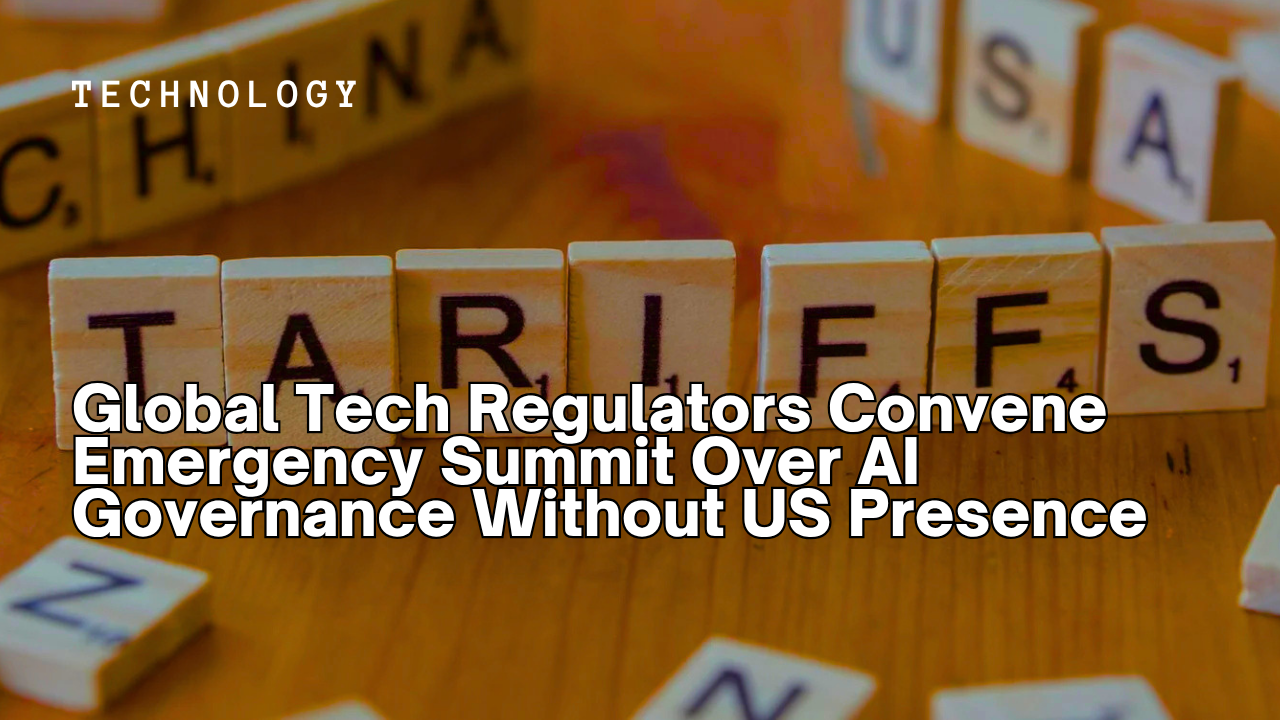
Have you been keeping up with the rapid developments in artificial intelligence? Regulators around the globe certainly have, and the stakes are higher than ever. Just recently, global tech regulators convened an emergency summit focused on AI governance, a critical meeting notable for one glaring absence: the United States.
It’s a moment that highlights a widening chasm in how different geopolitical blocs are approaching the most transformative technology of our era. This isn’t just about technical standards; it’s about values, power, and the future shape of our digital world. We’re talking about carving out the foundational rules for AI, and some major players are moving forward without the US at the table.
Key Takeaways:
- Global tech regulators met to discuss AI governance without US participation, underscoring divergent approaches to AI regulation.
- The EU AI Act and China’s comprehensive AI policies are leading the charge in establishing concrete rules and frameworks.
- The absence of the US raises questions about future interoperability and its influence on global AI standards.
- Key topics included mitigating AI risks, fostering innovation, and ensuring ethical deployment.
- International cooperation remains crucial, balancing national interests with a unified approach to artificial intelligence laws.
Table of Contents
- The Emergency Summit and Why It Matters
- A Growing Regulatory Divide in AI
- EU AI Act: The Pacesetter
- Understanding China AI Policy
- The US Approach and Its Implications
- Why the Lack of US Presence is Significant
- Challenges and Opportunities for Global AI Governance
- Balancing Innovation with Safety and Ethics
- What Are the Immediate Impacts of the Global AI Summit?
The Emergency Summit and Why It Matters
The recent emergency global AI summit, held in a discreet location in Brussels, brought together leading tech regulators from several major economies. These included representatives from the European Union, the United Kingdom, Japan, South Korea, Canada, Australia, and a delegation from the African Union. Their agenda was clear: to discuss urgent challenges related to AI governance, regulatory frameworks, and establishing foundational artificial intelligence laws before the technology’s rapid advancement outstrips our ability to control it. The elephant in the room, of course, was the prominent absence of any official US contingent.
This wasn’t just a routine conference; it was a crisis meeting aimed at harmonizing international approaches to AI liability, ethical guidelines, and data privacy. My own experience covering global tech policy for over a decade tells me that when a summit is termed “emergency,” it typically signifies a palpable sense of urgency and a recognition that current frameworks are insufficient. The conversations I’ve heard from contacts within these regulatory bodies suggest a genuine fear of catastrophic outcomes if strong, coordinated AI regulation isn’t implemented swiftly. It’s a feeling akin to the early days of global cybersecurity concerns, but with far greater potential societal disruption.
The core of the matter truly lies in setting common standards. Without them, we risk a “Wild West” scenario where different nations create vastly different rules, making cross-border AI development and deployment incredibly complex, if not impossible. Imagine an AI system trained in one jurisdiction facing legal challenges in another due to conflicting ethical mandates. This is the future these regulators are trying to prevent.
A Growing Regulatory Divide in AI
The global landscape for AI governance has been anything but unified. For years, we’ve seen distinct philosophies emerge from different parts of the world. Europe, for instance, has consistently led with a precautionary principle, prioritizing fundamental rights and safety, especially with the implementation of the EU AI Act. In contrast, the US has generally favored an innovation-first approach, with less direct government intervention, relying more on industry self-regulation and existing legal frameworks.
China, meanwhile, has taken a comprehensive top-down approach, deeply integrating AI development with national strategic goals and a clear (though often criticized) focus on control and surveillance. This triad of differing perspectives – the EU’s regulation-heavy stance, China’s state-driven development, and the US’s lighter touch – has made a truly global consensus on AI governance a distant dream.
This summit, proceeding without the US, is a clear signal that the non-US world powers are not waiting. They are actively forging pathways for artificial intelligence laws and tech regulation guided by their own visions. The discussions focused on shared principles for AI risk assessment, transparency requirements for high-risk AI systems, and mechanisms for international collaboration on AI research and development – all with a view towards creating a more secure and ethically sound digital future.
EU AI Act: The Pacesetter
When we talk about effective AI regulation, the European Union’s AI Act stands out as truly groundbreaking. It’s become the world’s first comprehensive legal framework on artificial intelligence, setting a benchmark that other nations are now studying intently. Enacted in 2024 and expected to be fully implemented by 2026, this act categorizes AI systems based on their risk level.
Systems deemed “high-risk” – those used in critical infrastructure, law enforcement, employment, or crucial public services – face stringent requirements. These include mandatory human oversight, robust data governance, transparency obligations, and rigorous conformity assessments before they can be deployed. This granular, risk-based approach is what sets the EU AI Act apart, offering a pragmatic yet protective model for AI governance.
From my perspective, the EU’s courage to put a stake in the ground here is commendable. Many critics argued it would stifle innovation, but the reality is more nuanced. While it does impose compliance costs, it also creates a clear, predictable legal environment that can foster trust and responsible AI development. The act’s influence is already evident, with countries like Canada and Brazil drafting legislation that echoes many of its principles.
What are the key pillars of the EU AI Act?
The EU AI Act is built on several foundational pillars designed to ensure AI systems are safe, transparent, and non-discriminatory. It employs a risk-based categorization, from “unacceptable risk” AI (like social scoring by governments, swiftly banned) to “minimal risk” AI (such as spam filters). High-risk systems require extensive pre-market conformity assessments, strong human oversight, and clear documentation. There are also specific transparency obligations for certain AI applications, like deepfakes. This comprehensive framework aims to strike a delicate balance between fostering AI innovation and protecting fundamental rights.
Understanding China AI Policy
Across the globe, China’s approach to artificial intelligence laws presents a stark contrast to the EU’s. Beijing’s AI policy is deeply intertwined with its national strategy for technological self-sufficiency and global leadership. While the EU focuses on consumer protection and ethical safeguards, China’s regulations often prioritize national security, social stability, and economic development.
China has been incredibly proactive in rolling out specific regulations for different aspects of AI. For example, it implemented strict rules for algorithmic recommendations in 2022, requiring platforms to offer users the option to switch off personalized recommendations and stipulating that algorithms should not induce addiction or excessive spending. This was followed by comprehensive regulations on deep synthesis (deepfakes) and generative AI services in 2023, placing responsibility on providers to ensure content aligns with socialist values and national laws.
The truth is, China’s system, while often criticized for its potential surveillance implications, offers a level of governmental foresight and coordination that few other nations can match. They are deploying AI as a tool for economic growth, national defense, and social management on an unprecedented scale. This strong state guidance shapes everything from research priorities to data access, creating a unique ecosystem for AI development and deployment.
The US Approach and Its Implications
The United States has historically adopted a more hands-off approach to emerging technologies, advocating for a policy environment that encourages innovation through minimal regulatory burdens. For AI, this has largely meant relying on existing industry standards, voluntary guidelines, and sector-specific legislation rather than a sweeping federal AI law. While agencies like the National Institute of Standards and Technology (NIST) have released AI Risk Management Frameworks, these are voluntary, not legally binding.
This philosophy stems from a belief that excessive regulation could stifle American competitiveness and slow down technological progress. Many US tech leaders and policymakers argue that prescriptive tech regulation might inadvertently disadvantage US companies in the global race for AI supremacy. They often point to the agility of startups and the rapid pace of innovation as reasons to avoid rigid legislative frameworks.
However, this light-touch approach also invites fragmentation. Without a unified federal strategy, different states or even different federal agencies might develop their own, potentially conflicting, AI guidelines. This creates a patchwork of rules that can be difficult for businesses to navigate domestically, let alone internationally. When I tried to map out the various US state initiatives on AI last year, it became clear how disparate they were, making consistency a real challenge.
Many US-based companies, especially larger ones, are already building compliance mechanisms for the EU AI Act, knowing that if they want to operate in Europe, they must adhere to its stringent rules. This phenomenon, often called the “Brussels Effect,” means that the EU’s regulations effectively become a global standard, even for companies outside its jurisdiction.
One tool I’ve seen many businesses adopt for navigating these complex international regulatory landscapes is the AI Compliance Management Software. These platforms help track requirements and ensure that diverse regulatory needs are met, reducing the burden on in-house legal teams. They’re becoming increasingly crucial for any company operating internationally with AI.
Why the Lack of US Presence is Significant
The absence of the world’s leading technological power from a critical global AI summit is more than just a diplomatic blip; it has profound implications for the future of AI governance. For one, it signals a lack of alignment on foundational principles. When major economies can’t even agree on what constitutes responsible AI or common risks, achieving global interoperability for AI systems becomes significantly harder.
Historically, the US has played a crucial role in shaping international standards for emerging technologies. Think about the internet’s architecture or even early cybersecurity frameworks. Its absence now means that the norms and standards being developed – particularly by the EU and Asian powers – might not reflect American values or economic interests. This could lead to a fragmented global AI landscape where US companies face an uphill battle in markets shaped by non-US regulations.
Moreover, it could undermine the ability to address global challenges that require a unified AI response, such as AI in warfare, autonomous weapons systems, or even mitigating AI’s role in disinformation campaigns. When powerful nations operate in regulatory silos, finding common ground on these existential issues becomes incredibly complicated. It also sends a message that the US might be prioritizing national innovation over international collaboration on critical ethical and safety concerns – a trade-off that many global partners are increasingly unwilling to make.
Challenges and Opportunities for Global AI Governance
Establishing effective global AI governance is fraught with challenges. Nations have different legal traditions, economic priorities, and ethical considerations. The sheer pace of AI development also means that any regulation risks becoming obsolete before it’s even fully implemented. Consider the rapid advancements in generative AI throughout 2023 and 2024; many existing frameworks struggled to keep up.
Then there’s the geopolitical dimension. AI is increasingly seen as a strategic asset, intertwined with national security and economic power. This makes true cooperation difficult when nations are simultaneously competing for AI dominance. The varying approaches to AI policy – market-driven, rights-based, or state-controlled – make finding common ground a diplomatic high-wire act.
However, there are also significant opportunities. A harmonized approach to AI safety standards, for instance, could reduce R&D costs for companies, simplify compliance, and accelerate trust in AI technologies globally. Imagine a universal “AI safety certificate” that allows products to be deployed seamlessly across borders, much like certain electronics standards. This would be a for international trade and innovation.
For individuals, robust global AI governance could mean greater protection against algorithmic bias, privacy violations, and misuse of AI systems. It could also foster greater public confidence, encouraging wider adoption of beneficial AI applications in areas like healthcare and environmental monitoring. The conversations at this recent summit, even without US involvement, are crucial first steps in exploring these opportunities.
Balancing Innovation with Safety and Ethics
This is arguably the perennial tension in tech regulation: how do you foster groundbreaking innovation without compromising safety, ethics, and fundamental human rights? The discussions at the global AI summit certainly grappled with this. Many policymakers believe that strong AI governance isn’t a roadblock to innovation but a necessary foundation for sustainable and responsible growth. They argue that by setting clear boundaries and accountability mechanisms, regulators can actually encourage innovation within a trusted framework.
Consider the parallel with the automotive industry. Early cars had few regulations, leading to safety concerns. Over time, seatbelt mandates, airbag requirements, and emissions standards became commonplace – not stifling the industry, but making it safer and more reliable, fostering greater public adoption. Many believe AI regulation will follow a similar trajectory.
The challenge lies in getting the balance right. Too much regulation, or poorly designed regulation, can indeed stifle creativity and disproportionately affect smaller startups. But too little, and we risk widespread societal harm, loss of public trust, and a potential for AI systems to exacerbate existing inequalities. The world is looking for that sweet spot, and without a united front, finding it becomes exponentially harder.
For individuals and smaller businesses looking to stay current, resources like the AI Ethics Guidebook can be invaluable. These guides help demystify the complex regulations and offer practical advice on developing and deploying AI ethically, irrespective of the specific national laws you’re operating under.
What Are the Immediate Impacts of the Global AI Summit?
The immediate impacts of this global AI summit are primarily in two areas: accelerated collaboration among the participating nations and increased pressure on the US to clarify its own federal AI strategy. We’re likely to see intensified efforts among the EU, UK, Japan, and other attendees to harmonize their national AI regulations and possibly even develop shared standards for high-risk AI systems. This could lead to a more consistent international regulatory environment, albeit one that currently excludes the world’s largest AI developer.
Secondly, the absence of the US is a powerful statement. It suggests that these nations are prepared to move ahead without American leadership (or even participation) in critical areas of tech regulation. This might prompt the US government to re-evaluate its current stance and potentially accelerate its own efforts to craft a more cohesive federal framework for artificial intelligence laws. The pressure to avoid being left behind in shaping the future of global AI governance will certainly mount.
While the full ramifications will unfold in the coming months and years, one thing is certain: the conversation about AI governance is no longer just theoretical. It’s active, urgent, and shaping the future – with or without all players present.
Frequently Asked Questions About Global AI Governance
What is AI governance?
AI governance refers to the frameworks, policies, and laws designed to guide the development, deployment, and use of artificial intelligence systems. It aims to address ethical considerations, mitigate risks, ensure accountability, and promote the beneficial use of AI across society. This includes everything from data privacy to algorithmic bias and autonomous decision-making.
Why is global cooperation on AI regulation necessary?
Global cooperation on AI regulation is crucial because AI systems often operate across borders, making national-level regulations insufficient. Harmonized international standards can prevent regulatory arbitrage, ensure consistent ethical protections, and facilitate the safe and responsible development and deployment of AI technologies worldwide. It also helps address shared challenges like deepfakes and autonomous weapons.
How does the EU AI Act compare to China’s AI regulations?
The EU AI Act primarily focuses on a risk-based approach to protect fundamental rights, emphasizing transparency, human oversight, and accountability, particularly for high-risk AI systems. China’s AI regulations, while also addressing risks, are often more prescriptive and deeply integrated with national strategic goals, prioritizing national security, social stability, and industrial development, with a stronger state role in guiding AI sectors. Both aim for control but from very different philosophical starting points.
What is the “Brussels Effect” in AI regulation?
The “Brussels Effect” describes how the European Union’s regulations can become de facto global standards due to the size and importance of its internal market. Companies operating globally often choose to comply with the EU’s stringent rules (like the GDPR or the AI Act) to gain access to the European market, thereby extending the EU’s regulatory influence far beyond its borders. This means even non-EU companies end up adopting EU standards.
Will the US eventually join global AI governance efforts?
While the US has historically preferred a less interventionist approach, the growing international consensus and the potential for regulatory fragmentation might eventually compel it to join more formalized global AI governance efforts. Domestically, there is increasing pressure from within the tech community and from Congress for a clearer federal strategy. The current dynamics suggest that while direct participation in every global summit isn’t guaranteed, the US will likely seek to influence or align with international artificial intelligence laws in due course, possibly through bilateral agreements or by eventually developing a comprehensive federal framework.

TRENDING: Best Collagen Supplements on Amazon 2026 We Tested Top Brands
Download the new game Guess The Celebrity Quiz and check how well you know your idols
Always be up to date with the news and follow the trends!
 Support our work by giving us a small donation