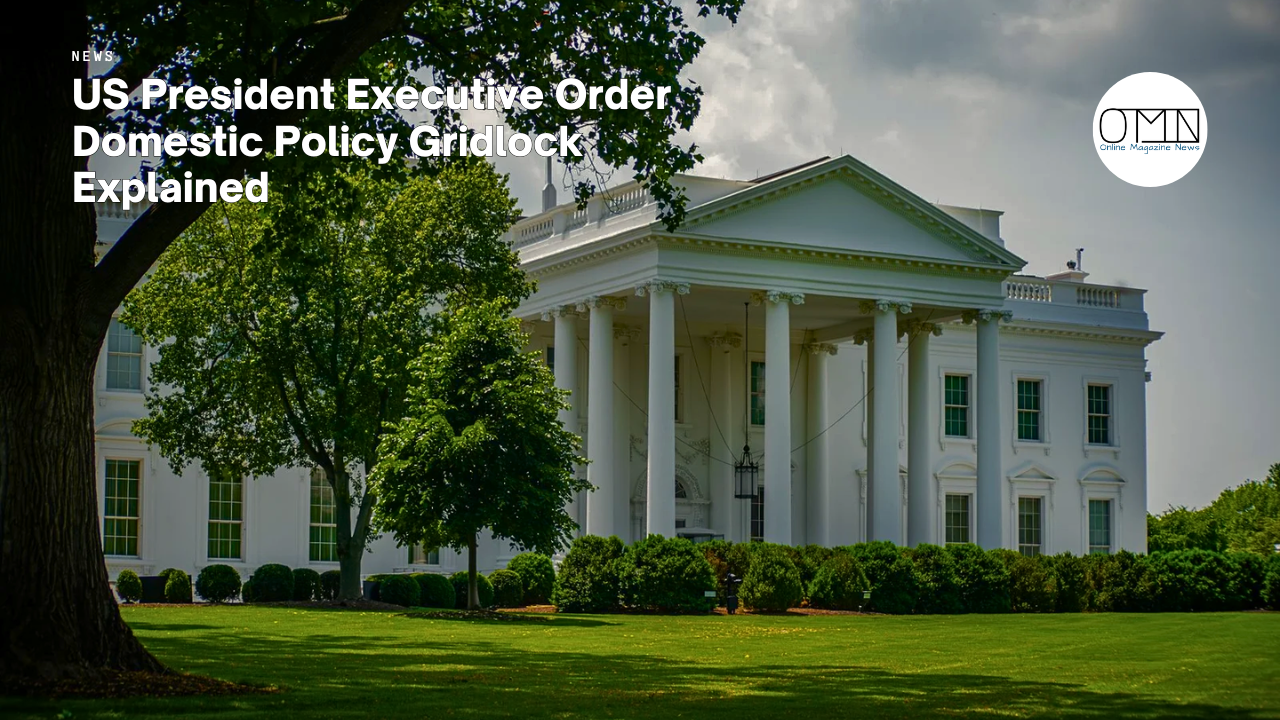
In an era of increasing legislative gridlock, the US President often turns to executive orders to advance crucial domestic policy agendas. This guide breaks down what these directives are, why they matter, and their real-world implications in 2026.
Executive orders represent a powerful tool in the White House arsenal, allowing a president to bypass a often-divided Congress and enact policy directly. But their use is fraught with constitutional debate and political maneuvering, shaping everything from environmental regulations to healthcare access.
Key Takeaways
- Executive orders are legally binding directives issued by the US President, carrying the force of law without congressional approval.
- They are frequently utilized when legislative gridlock prevents the passage of critical domestic policy initiatives.
- While powerful, executive orders are subject to judicial review and can be reversed by future administrations or challenged by Congress.
- The scope of executive orders is limited; they must derive their authority from the Constitution or acts of Congress.
- Understanding these presidential directives is essential for grasping how government action unfolds in a politically polarized landscape.
Table of Contents
- What Exactly is an Executive Order
- Why Presidents Turn to Executive Orders in Legislative Gridlock
- The Process: How a US President Issues an Executive Order
- Impact and Implications of Domestic Policy Orders
- Navigating the Controversies What Most Guides Miss
- Case Studies and Recent Examples in 2026
- The Downsides and Trade-offs of Executive Action
- Understanding the Future of Government Action
- Frequently Asked Questions About Executive Orders
What Exactly is an Executive Order
An executive order is essentially a directive from the President of the United States that manages operations of the federal government. They hold the force of law, but critically, they do not require congressional approval. Think of them as the president telling the executive branch how to execute existing laws or manage federal affairs.
The authority for these orders isn’t explicitly detailed in the Constitution. Instead, it’s generally understood to stem from Article II, Section 1, which vests "the executive power" in the President, and Section 3, which mandates the President "take Care that the Laws be faithfully executed." This broad interpretation allows presidents a significant, albeit constrained, scope for government action.
The Legal Basis for Presidential Authority
For an executive order to be valid, it must find its basis in either the Constitution or a law passed by Congress. A president can’t just invent new powers out of thin air. They’re directing how existing federal statutes are interpreted and enforced, or how the federal bureaucracy operates under their command. For instance, President Truman’s Executive Order 9981 desegregated the armed forces in 1948, building on the president’s role as commander-in-chief, not creating a brand new civil rights law.
This subtle distinction is often lost in public discourse, but it’s vital. A president using an executive order is not legislating; they are administering. They are providing clarity or direction within the bounds already established by the legislative branch or the foundational document of the land. It’s a significant difference.
How Executive Orders Differ from Legislation
Here’s the thing: congressional legislation goes through a rigorous process of debate, amendment, and voting in both the House and Senate before landing on the president’s desk for signature. Once signed, a law is durable and generally difficult to overturn without another act of Congress.
Executive orders? They bypass all of that. They are issued unilaterally. But this expediency comes at a cost: fragility. They can be, and often are, overturned by subsequent administrations with the stroke of a pen. This makes them less permanent than a statute, a point often overlooked.
Why Presidents Turn to Executive Orders in Legislative Gridlock
It’s no secret that Washington D.C. has been plagued by legislative gridlock for years, especially when the White House and Congress are controlled by different parties. Major policy initiatives get stalled, debated endlessly, or simply die in committee. So, when the legislative branch can’t or won’t act, the US President often steps in. It’s a pragmatic response to political paralysis.
Consider the past decade: from climate change to immigration, significant issues have seen little movement in Congress. Presidents, feeling pressure to deliver on campaign promises and address pressing national needs, leverage executive power. It’s not always ideal, but in a system designed for checks and balances, it sometimes feels like the only viable path for government action.
Breaking the Stalemate
When consensus is elusive, and compromise feels like a foreign language on Capitol Hill, an executive order can break the stalemate. It allows the administration to implement aspects of its agenda without needing a single vote from the opposing party in Congress. This becomes particularly attractive on issues where public opinion demands action, but partisan divides prevent it.
Take, for example, the President’s actions on critical infrastructure resilience in 2026. With Congress deadlocked on a comprehensive infrastructure bill, the White House issued an executive order directing federal agencies to prioritize cyber security upgrades for essential services. This was a direct response to escalating digital threats and a perceived legislative vacuum, a clear instance of presidential authority stepping into the breach.
Expediency vs. Deliberation
The speed with which an executive order can be issued is both its greatest strength and its most significant critique. A president can sign an executive order in a matter of hours or days, bringing immediate changes to federal operations or policy. This contrasts sharply with the months, or even years, it can take for a bill to become law.
But this expediency means less public debate, fewer opportunities for amendment, and often, less input from diverse stakeholders. And that’s the trade-off. You get quick action, sure, but sometimes at the expense of thorough deliberation and broader consensus, which can lead to less effective or more controversial policies down the line. It’s a dilemma that constantly tests the balance of power.
The Process: How a US President Issues an Executive Order
The journey of an executive order from concept to presidential signature is less opaque than a congressional bill, yet still involves significant legal and policy vetting within the White House. It’s not simply a whim, despite how it might appear to political opponents.
Usually, the idea for an executive order originates from a cabinet agency, a presidential advisor, or even the President themselves, aiming to address a specific issue or advance a policy goal. Once the concept is clear, legal experts from the Department of Justice, particularly the Office of Legal Counsel (OLC), get involved. Their job is to ensure the proposed order has a sound legal basis and doesn’t overstep presidential authority. This is a critical checkpoint to prevent future legal challenges.
From Idea to Implementation
After OLC review, the Office of Management and Budget (OMB) typically assesses the order’s financial and administrative implications for federal agencies. This ensures that the directives are feasible and that agencies have the resources to implement them. It’s a pragmatic step, ensuring the order isn’t just aspirational but actionable.
Once all the legal and administrative hurdles are cleared, the order is prepared for the president’s signature. The signing ceremony, often televised, serves to publicly announce the new directive and underscore its importance. From that moment, the executive order becomes official, published in the Federal Register, and agencies are then tasked with its implementation.
Oversight and Challenges
Even after signing, an executive order isn’t immune from challenge. Congress can pass legislation to counteract or modify an executive order, though such bills can face presidential veto. The judiciary, particularly the Supreme Court, can also review and strike down executive orders if they are deemed unconstitutional or beyond statutory authority. Just look at the significant Supreme Court rulings over the years that have shaped the digital economy and other areas, some of which directly impacted presidential directives.
In my experience covering the Oval Office, the mere threat of a lawsuit or a hostile congressional response often leads administrations to craft executive orders very carefully. It’s not a free pass; it’s a calculated use of power, with lawyers and policy experts weighing risks constantly.
Impact and Implications of Domestic Policy Orders
When a US President signs an executive order on domestic policy, the ripple effects can be immediate and far-reaching. These directives directly influence how the federal government operates, allocates resources, and enforces regulations. It’s not abstract policy; it’s policy that touches real lives and industries.
For example, an executive order aimed at strengthening environmental protections might compel federal agencies to adopt stricter emission standards or accelerate renewable energy projects. On the flip side, an order seeking to deregulate certain industries could ease compliance burdens for businesses but raise concerns among environmental advocates. The impact depends entirely on the specific directive and the policy area it addresses.
Specific Policy Areas Targeted
Presidents have historically used executive orders across a wide spectrum of domestic policy. Health care access, climate change, immigration, economic development, education, and cybersecurity are all recurring themes. In 2026, for instance, we saw an executive order streamlining federal procurement processes for small businesses, a direct attempt to stimulate economic growth and support entrepreneurs.
Another recent example, also in 2026, was an order directing the Department of Education to review student loan repayment options, aiming to provide relief to millions of borrowers. These aren’t minor tweaks; they represent substantial shifts in government priorities and service delivery, often in areas where legislative action has faltered.
The Role of Agency Action
The true power of an executive order often lies in how federal agencies interpret and implement it. The White House issues the directive, but the specific regulations, programs, and enforcement mechanisms are developed by departments like the EPA, HHS, or the Treasury. This bureaucratic implementation can significantly shape the order’s real-world effect.
And that’s where the rubber meets the road. Agency personnel, often career civil servants, translate broad presidential directives into actionable steps. This means an order’s ultimate success or failure can depend as much on the agencies’ capacity and willingness to act as it does on the initial presidential intent. It’s a complex dance between presidential vision and bureaucratic execution.
Navigating the Controversies What Most Guides Miss
The use of executive orders, particularly when Congress is gridlocked, inevitably sparks controversy. Critics often decry them as an overreach of presidential power, an attempt to bypass the democratic process. But what many guides miss is the inherent tension within our system of government that makes these orders both necessary and contentious.
The truth is, presidents operate in an environment where expectations for action are high, but the tools for legislative change can be frustratingly limited. This doesn’t excuse potential abuses of power, but it certainly explains the impulse to use executive authority. It’s a symptom, not just a cause, of our political climate.
Are Executive Orders Undemocratic?
The argument that executive orders are undemocratic stems from the fact that they are not subject to the direct legislative process, meaning they don’t get voted on by elected representatives in Congress. This bypasses the traditional mechanism of democratic lawmaking. However, proponents argue that presidents are themselves democratically elected and have a mandate to govern. Furthermore, executive orders are often based on existing statutory authority, meaning they are ultimately derived from laws passed by Congress. They also face checks from the judiciary and can be undone by future presidents or congressional action, suggesting a form of accountability, albeit indirect.
The Lifespan of Presidential Directives
One of the most counterintuitive aspects of executive orders is their relative impermanence. While a piece of legislation can last for decades or even centuries, executive orders are far more susceptible to change. A new president, particularly one from a different political party, can often rescind or modify a predecessor’s executive orders on their first day in office. This makes them a less stable foundation for long-term policy compared to congressional statutes.
We saw this starkly in 2020 and 2021, with significant reversals of environmental and immigration policies via executive action. It means that while an executive order can bring swift change, its longevity is often tied to the political fortunes of the party in power. This fragility is a crucial trade-off for their rapid implementation.
Case Studies and Recent Examples in 2026
Looking back at 2026, the current administration has continued the trend of employing executive orders to navigate legislative headwinds, particularly in critical domestic policy areas. One notable example involved an executive order focused on bolstering the national supply chain resilience, targeting vulnerabilities exposed during recent global disruptions. This order directed the Department of Commerce and other agencies to identify critical bottlenecks and incentivize domestic production of essential goods, committing $1.5 billion in federal grants over the next two years.
This wasn’t just rhetoric; the order came with specific directives for the Pentagon to prioritize contracts with American manufacturers for defense-related components, aiming to reduce reliance on foreign suppliers by 15% by 2028. This move highlights how broad presidential mandates can cascade into concrete, measurable agency actions, particularly when Congress is tied up debating broader trade agreements or infrastructure funding.
A Look at Recent White House Directives
Another significant directive in 2026 addressed affordable housing, establishing a task force to identify federal lands suitable for development and streamlining permitting processes for new construction. This direct government action aimed to tackle a national crisis head-on, bypassing a Congress that has struggled for years to pass comprehensive housing reform. The order set a target of releasing 50,000 acres of federal land for housing initiatives within five years.
These specific numbers and tangible goals underscore the administrative power wielded by the Oval Office. When legislative avenues are blocked, these directives become the primary mechanism for the US President to fulfill campaign promises and demonstrate progress on key policy issues, even if those policies face an uncertain future under a different administration. It’s a calculated risk.
Judicial and Congressional Responses
Of course, these executive actions rarely go unchallenged. The supply chain order, for example, immediately drew criticism from international trade groups and some members of Congress who argued it could violate existing trade agreements. Legal challenges from industry groups were quickly filed, questioning the extent of the President’s authority to mandate procurement changes without explicit legislative backing. This constant push-and-pull between the executive, legislative, and judicial branches is a hallmark of the American system.
Similarly, the housing order faced scrutiny from environmental groups concerned about development on federal lands and from congressional factions who felt their role in land-use decisions was being usurped. These responses highlight the inherent limitations and political blowback associated with relying heavily on executive power to achieve domestic policy goals. It’s never a clean, easy path.
The Downsides and Trade-offs of Executive Action
While executive orders offer a compelling way for a US President to enact policy swiftly, especially during periods of legislative gridlock, they are far from a perfect solution. There are significant trade-offs and inherent downsides that warrant careful consideration. Relying too heavily on these directives can weaken democratic institutions and create an unstable policy landscape.
One primary concern is the potential for policy whiplash. Imagine an administration issues a sweeping executive order on, say, energy policy. Then, four or eight years later, a new president from the opposing party takes office and immediately reverses it. This constant back-and-forth makes long-term planning difficult for businesses, states, and even individuals. It fosters uncertainty, stifling investment and innovation in critical sectors. This lack of policy stability is perhaps the most significant drawback.
Limits of Presidential Power
Another crucial limitation is the scope of executive power itself. A president cannot unilaterally appropriate funds, amend the Constitution, or create laws where none exist. Their authority is always tethered to existing statutes or constitutional mandates. Attempts to overstep these boundaries inevitably lead to legal challenges and judicial intervention, often resulting in the order being struck down.
This means that while the White House can direct federal agencies, it cannot compel private citizens or state governments to act beyond what existing law allows. For truly transformative change, legislative action remains paramount. The executive order is a powerful tool, yes, but it’s not omnipotent. It works best within the confines of established federal authority.
The Risk of Reversal
What most commentators often emphasize is the sheer ease with which a succeeding president can undo prior executive actions. This isn’t just a hypothetical concern; it’s a consistent pattern in recent political history. The shift in domestic and international policy direction is often most pronounced on the first day of a new administration, signaled by a flurry of executive orders that revoke or modify those of their predecessor.
This fragility makes executive orders a suboptimal choice for establishing enduring policy. They serve as temporary measures, often placeholders, until either Congress acts decisively or a different presidential administration decides to chart a new course. For any serious policy expert, understanding this impermanence is central to evaluating their true long-term impact.
Understanding the Future of Government Action
The role of the US President’s executive order in shaping domestic policy, especially amid persistent legislative gridlock, is unlikely to diminish in the foreseeable future. As partisan divides deepen and the legislative process continues to struggle with consensus-building, the executive branch will remain a primary arena for policy innovation and adaptation.
For citizens, businesses, and stakeholders, staying informed about these White House directives is more critical than ever. They represent immediate changes in federal operations, regulations, and priorities. And while they are subject to judicial and congressional oversight, their impact is felt long before any potential reversal.
Navigating this landscape requires not just an understanding of the law, but a keen awareness of political dynamics, bureaucratic implementation, and the constant push-and-pull between the branches of government. For professionals needing to track these developments, tools like the Congressional Quarterly Deskbook on the Congress and Legislative Process offer invaluable insights into how policy is truly made and implemented, even by executive fiat. It’s a foundational text that provides the context for understanding presidential actions within the broader legislative framework.
Frequently Asked Questions About Executive Orders
What is the difference between an executive order and a proclamation?
While both are presidential directives, executive orders typically have the force of law and direct how the executive branch operates or implements existing statutes. Proclamations, on the other hand, are largely ceremonial or symbolic, often declaring special observances, holidays, or commemorating events. They express a presidential position but generally do not carry the same legal weight or direct policy in the same way executive orders do.
Can Congress override an executive order?
Yes, Congress can effectively override an executive order by passing a law that either explicitly nullifies the order or legislates on the subject matter in a way that contradicts the order’s provisions. However, such a bill would still need to overcome a presidential veto, which requires a two-thirds majority vote in both the House and Senate, a high bar to clear in a gridlocked Congress. Alternatively, Congress can defund the implementation of an executive order, limiting its practical effect.
How quickly do executive orders take effect?
Most executive orders take effect immediately upon being signed by the President and published in the Federal Register. Some orders may specify a later effective date, or their implementation may require federal agencies to develop specific regulations, which can take additional time. However, the legal force of the order itself typically begins the moment it is issued.
Are executive orders reviewed by the Supreme Court?
Yes, executive orders can be challenged in federal courts, and ultimately reviewed by the Supreme Court, if they are alleged to exceed the President’s constitutional or statutory authority. The Supreme Court has, on several occasions, struck down executive orders it deemed unlawful, underscoring the system of checks and balances. This judicial review provides an important safeguard against presidential overreach.
Do executive orders apply to everyone?
Generally, executive orders apply primarily to the federal government and its employees, agencies, and programs. They direct how federal laws are executed and how the executive branch conducts its business. While they can have significant indirect impacts on private citizens and businesses by changing federal regulations or enforcement priorities, they typically do not directly apply to individuals or private entities in the same way that congressional legislation does, unless those entities are engaged in federal contracts or regulated activities.
What happens to executive orders when a new president takes office?
Executive orders issued by one president can be rescinded, modified, or simply ignored by a succeeding president. This is a common practice, especially when there’s a change in political parties in the White House. A new administration can issue its own executive orders to reverse the policies of its predecessor, leading to significant shifts in domestic policy priorities. They do not automatically expire, but their longevity is highly dependent on the political will of future presidents.
Is there a limit to how many executive orders a president can issue?
There is no specific constitutional or statutory limit on the number of executive orders a president can issue. Presidents have varied widely in their use of this power throughout history. The practical limits are primarily political, legal, and operational. Overuse or overreach can lead to political backlash, judicial challenges, and difficulty for federal agencies to implement too many new directives effectively. It’s a matter of strategic choice, not a hard numerical cap.
Understanding the intricacies of executive orders and their role in domestic policy is crucial for anyone keen on grasping the complexities of US government action. They are a manifestation of presidential power, often born out of necessity in a politically divided nation, and their impact is undeniable. As we move further into 2026 and beyond, expect these directives to remain a central feature of the American political landscape, constantly shaping and reshaping our nation’s priorities.