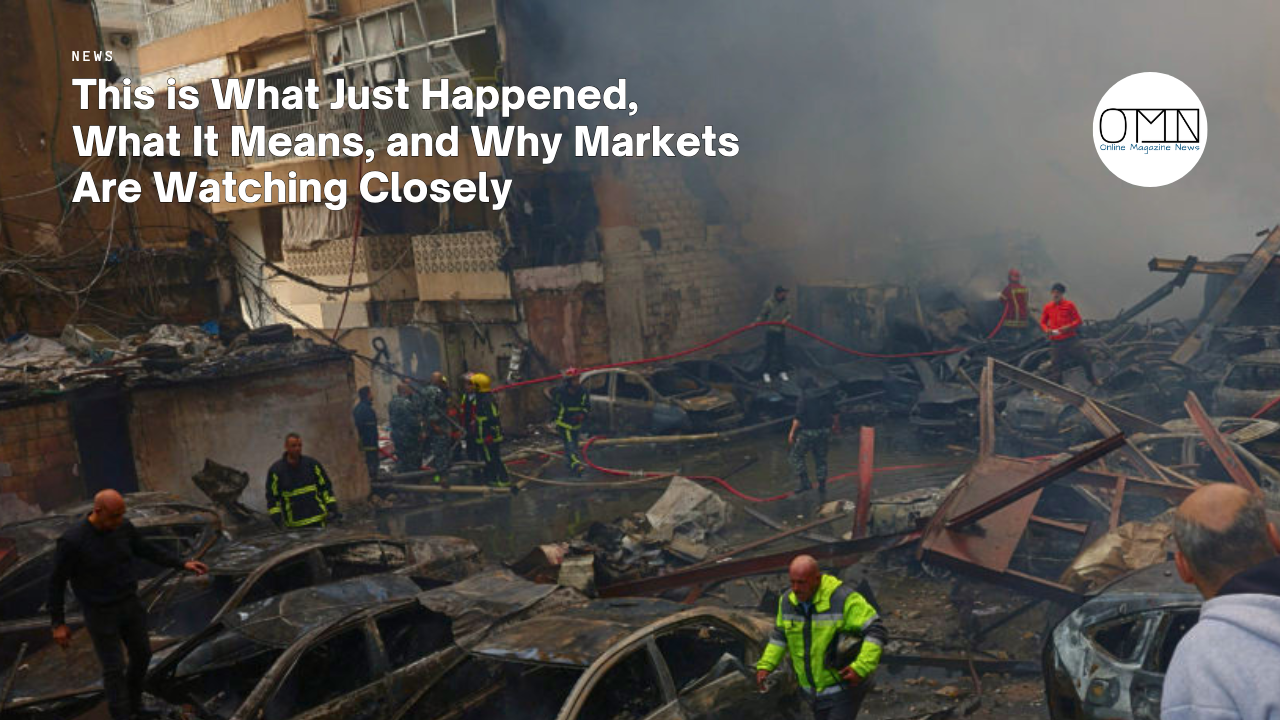
After nearly 40 days of airstrikes, missile exchanges, and the world holding its breath over the Strait of Hormuz, the United States and Iran agreed to a fragile two-week ceasefire early Wednesday morning. Markets surged. Tehran celebrated. And yet, within hours, new explosions were reported across the region. Here is everything you need to know.
How the Ceasefire Happened — and Why It Almost Didn’t
The deal very nearly fell apart before it existed. President Trump had set a hard deadline of Tuesday evening for Iran to comply with American demands or face what he described as civilizational destruction. Those were not empty words from a public relations standpoint. The threat drew a formal rebuke from Pope Leo XIV and alarmed allies from London to Beijing. With less than two hours left on the clock, Pakistan’s Prime Minister Shehbaz Sharif announced that both sides had pulled back from the edge.
Pakistan played a quiet but absolutely pivotal role throughout this conflict. Sharif had been shuttling messages between Washington and Tehran for weeks, and his credibility with both governments made him the only viable broker left standing. When the agreement landed, he posted on X that both parties had shown “remarkable wisdom” and invited their delegations to Islamabad on Friday, April 10, for formal negotiations aimed at a permanent settlement.
Trump celebrated almost immediately, posting on Truth Social that it was “a big day for World Peace!” and saying the U.S. had already met all of its military objectives. Iran’s Supreme National Security Council confirmed its side of the agreement, saying it would halt all defensive operations as long as American and Israeli strikes were suspended.
What sparked this war in the first place? The conflict erupted on February 28, 2026, when a U.S.-Israeli operation killed Iran’s Supreme Leader Ayatollah Ali Khamenei. What followed was 40 days of strikes, countermeasures, and escalating threats that drew in Hezbollah, Gulf states, and global energy markets. At least 1,497 people were killed in Lebanon alone, including dozens of health workers.
The Strait of Hormuz: Why the Whole World Was Watching
If you have been filling up your car lately and wincing at the price, the Strait of Hormuz is part of the reason. This narrow channel between Iran, Oman, and the UAE handles roughly 20 percent of the world’s oil supply on any given day. Iran shut it down. Ships stopped moving. Energy prices did not just rise, they spiked to record levels in the hours before the ceasefire was announced.
The moment the truce was confirmed, the mood flipped entirely. Oil futures dropped sharply, stock markets in Asia, Europe, and the U.S. all climbed, and the first vessels began transiting the strait within hours. Two ships were tracked moving through in the early morning, which for a lot of investors was the most reassuring image of the day.
Iran’s foreign ministry confirmed that passage through the strait would be coordinated with its armed forces during the two-week window, and reports emerged that Iran was quietly working with Oman to establish a formal maritime protocol for managing tanker traffic going forward. Whether that holds will be one of the key things to watch.
Key Facts at a Glance
- Ceasefire agreed on April 8, 2026 — day 40 of the US-Israeli war on Iran
- Pakistan brokered the deal; Islamabad talks set for April 10
- Two-week pause, not a permanent peace agreement
- Strait of Hormuz to reopen during the truce period
- Israel says the deal does NOT cover its operations in Lebanon
- U.S. troops will remain in the region to enforce compliance
- Global markets surged on the news; oil prices fell sharply
Israel, Lebanon, and the Complication Nobody Wanted
Here is where things get messy. Pakistani Prime Minister Sharif stated clearly that the ceasefire covered Lebanon as well. Within hours, Israeli Prime Minister Benjamin Netanyahu said the opposite, confirming that Israel’s military operations against Hezbollah in southern Lebanon would continue without interruption.
And they did continue. Israel launched what Lebanese authorities described as its largest single-day assault since the war began, striking multiple neighborhoods in Beirut during the morning rush hour. Lebanon’s civil defense reported more than 250 people killed and over 1,100 wounded on Wednesday alone. Israeli military spokespeople said they were targeting Hezbollah positions that had dispersed into civilian areas.
A senior Israeli official told reporters that the U.S. had privately assured Israel it would push for the removal of Iran’s highly enriched uranium, an end to further enrichment, and the dismantlement of Iran’s ballistic missile threat as conditions for any final deal. Netanyahu stated publicly that Iran’s enriched uranium would be removed from the country one way or another, through diplomacy or by force.
What the Two Sides Are Actually Demanding
The gap between the American and Iranian positions remains wide, and that is the honest truth even amid the optimism. Iran’s 10-point proposal, published by state media, includes demands that sit uncomfortably alongside Washington’s own 15-point framework.
Iran wants the right to continue uranium enrichment, recognition of its authority over the Strait of Hormuz, the lifting of sanctions, compensation for war damages, and a full withdrawal of U.S. combat forces from regional bases. The Trump administration’s position, stated repeatedly by Secretary of State Marco Rubio, is that Iran can never have nuclear weapons and that enrichment must stop entirely.
Trump, interestingly, described Iran’s 10-point plan as a “workable starting point” on Tuesday evening — which was a notable softening of tone, and one that the White House quickly walked back in subsequent social media posts. That kind of back-and-forth has defined the entire negotiating period, and analysts are divided on whether Islamabad will produce anything more durable than the ceasefire itself.
Trump’s Tariffs Are Making Everything More Complicated
You cannot fully understand the pressure on both sides to reach this deal without talking about what is happening to the global economy right now. Trump’s sweeping tariff regime, which imposed a universal 10 percent duty on all imports and reciprocal rates of 20 to 50 percent on dozens of countries, has already sent markets into turbulence. The S&P 500 has shed significant ground, the Nasdaq entered correction territory, and recession warnings are now flashing from Wall Street analysts who were bullish just months ago.
Energy prices spiking because of a blocked Strait of Hormuz on top of tariff-driven inflation was a genuinely alarming combination. Gasoline prices in the U.S. were already meaningfully higher than when Trump took office. U.S. midterm elections are on the horizon. That political calculus almost certainly accelerated the White House’s willingness to reach a deal, even an imperfect one.
Markets exhaled when the ceasefire landed. Stocks across Asian and European benchmarks climbed Wednesday morning, and U.S. futures moved higher as well. Geoff Yu, a senior market strategist at BNY, told CNBC that what markets are now pricing in is a first step toward something more permanent. The key word is “toward.” Nobody is calling this solved.
Can This Ceasefire Actually Hold?
The honest answer from most analysts is: probably not on its own. Vice President JD Vance himself described the truce as “fragile” on Wednesday. Even as the announcement was being digested, an Iranian oil refinery was struck, Kuwait reported intercepting 28 drones targeting oil facilities and power stations, and the UAE flagged fresh attacks as well.
The trust deficit on both sides runs very deep. Iran watched previous ceasefire arrangements in Lebanon collapse into renewed Israeli operations, and Tehran’s negotiators have made clear they will not accept another arrangement where a pause on paper allows continued strikes in practice. Iran’s ambassador in Pakistan warned Gulf countries that America would eventually leave the region and that they would have to live with Iran long after.
On the American side, defense secretary Pete Hegseth said U.S. forces would be staying in the Middle East, “prepared to go on offense” and “ready to restart at a moment’s notice.” The Chairman of the Joint Chiefs echoed that message. These are not the words of a side that believes the war is genuinely over. They are the words of a side that achieved a pause and wants to keep its leverage intact.
Matt Gertken, chief geopolitical strategist at BCA Research, put it bluntly: Trump may temporarily accept Iran as a gatekeeper of the Hormuz with midterm elections approaching and gasoline prices elevated, but after the election cycle, the U.S. national security establishment will push for a more permanent resolution. His conclusion was stark — fighting will likely resume later this year if not sooner.
What Happens Next
The immediate next step is the Islamabad meeting on Friday, April 10. Delegations from the U.S. and Iran will sit down under Pakistani mediation for the first serious attempt at negotiating a comprehensive peace framework. Iran expert Trita Parsi noted that while these talks could fail, “the terrain has shifted.” Forty days of warfare have blunted American military credibility while also exhausting Iran. That creates, at minimum, a different kind of negotiating environment than existed before February 28.
The nuclear question will be the hardest one. It was the issue that collapsed earlier talks, and neither side has moved substantially on it. Washington insists on zero enrichment. Tehran insists on the right to enrich. Bridging that gap will require creative frameworks, significant political cover on both sides, and probably a lot more time than two weeks.
For now, the world has a pause. Oil is flowing again. Markets are cautiously higher. And in Tehran, people gathered in squares to celebrate what state media framed as a victory. In Washington, Trump called it a big day. In Beirut, the bombs kept falling.
Online Magazine News will continue to follow developments from Islamabad and across the Middle East as negotiations begin Friday. Bookmark this page for live updates.