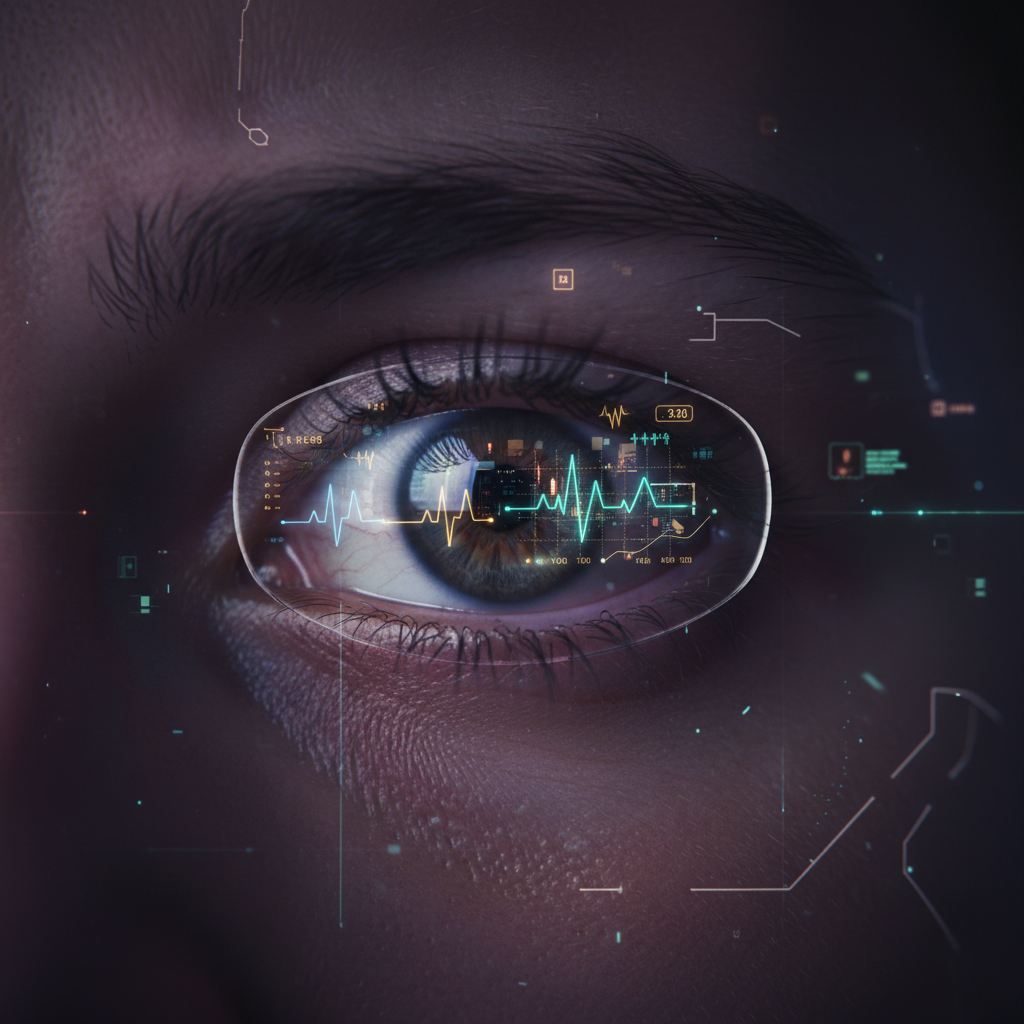
Imagine a world where your contact lenses aren’t just for correcting vision. No, we’re talking about a tiny, almost invisible screen floating before your eyes, displaying real-time augmented reality (AR) data, and simultaneously monitoring your vital health signs. It sounds like science fiction, something out of a cyberpunk novel, doesn’t it? But smart contact lenses with AR and health diagnostics are no longer just a fever dream for Silicon Valley engineers; they are on the cusp of becoming a tangible, albeit complex, reality.
This isn’t merely an upgrade to your existing eyewear. This is a complete reimagining of human-computer interaction, a new frontier in wearable tech that promises to revolutionize everything from daily navigation to personalized healthcare. But here’s the thing: with such profound advancements comes an equally profound set of questions, especially concerning our fundamental right to privacy. Are we ready for what comes next?
Key Takeaways
- Imminent Arrival: Smart contact lenses integrating AR and health monitoring are moving from concept to early-stage development, promising significant breakthroughs.
- Dual Functionality: These lenses aim to provide interactive AR displays directly on the retina while also collecting vital biometric data like glucose levels, eye pressure, and even early disease markers.
- Privacy Paradox: The incredible utility of these devices is shadowed by serious privacy concerns, particularly regarding continuous data collection and potential misuse.
- Ethical Debates: Discussions around data security, informed consent, digital surveillance, and personal autonomy are paramount as this technology matures.
- Regulatory Challenge: Governments and international bodies face an uphill battle to create robust regulations that protect individuals without stifling innovation.
What’s Driving Smart Contact Lens Development?
For years, companies like Mojo Vision, Google, and Samsung have been quietly, or not so quietly, pushing the boundaries of what’s possible with tiny, intricate electronics. The race to miniaturize powerful computing and display technology has fueled the dream of truly invisible wearables. We’ve seen smartwatches, smart rings, and even smart clothing, but the eye, as the primary gateway for visual information, has always been the ultimate prize for augmented reality integration. It’s the logical next step, really.
The allure isn’t just about convenience. It’s about seamlessly blending digital information with our physical world, without the bulky headsets of today’s virtual reality (VR) systems. Think about how much information we process visually every day. Imagine having a digital overlay that enhances that, offering directions, identifying faces, or even translating languages in real-time. This is the promise of advanced AR display within a contact lens.
How Do Smart Contact Lenses Actually Work?
This is where the engineering gets truly mind-bending. At their core, these lenses are designed to be a miniature computer, complete with power, processing, communication, and, most importantly, display elements. And it all needs to fit onto a tiny, curved surface that sits comfortably on your eyeball, without obstructing vision.
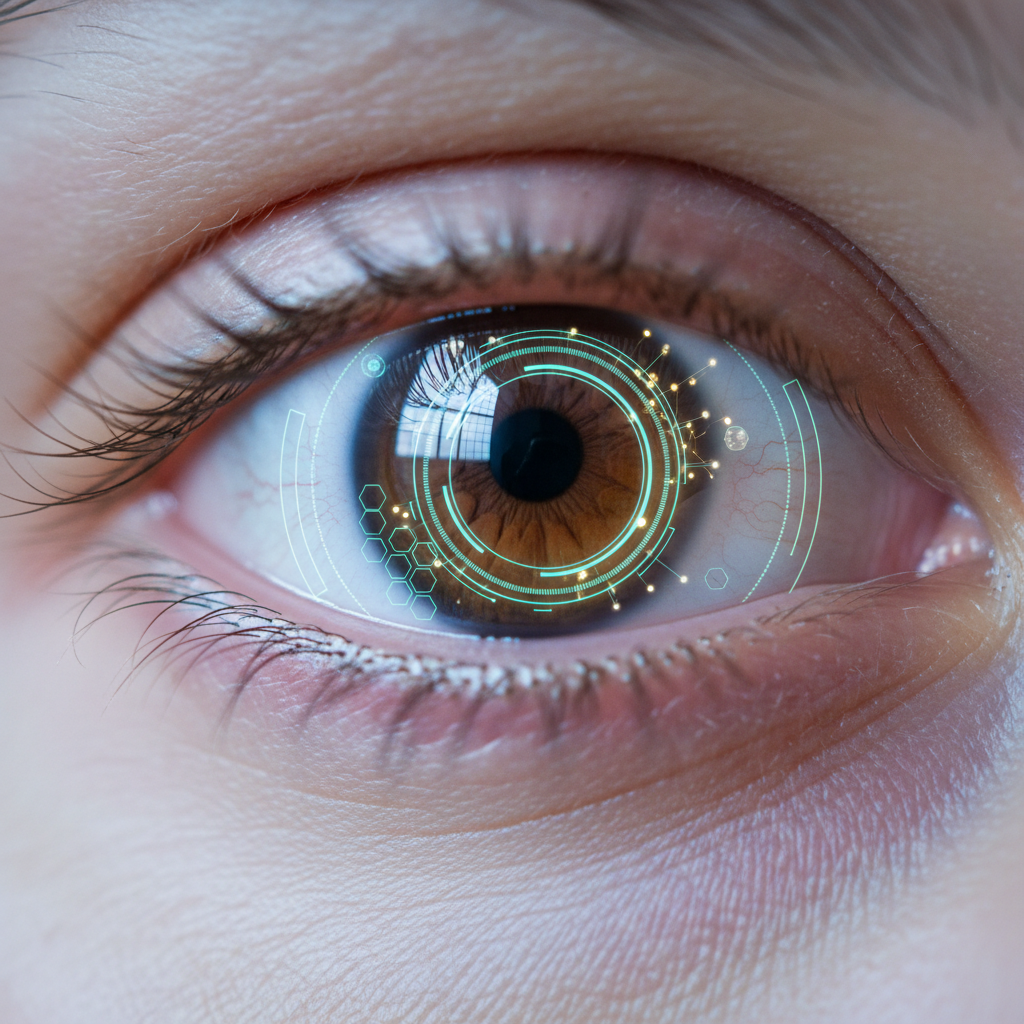
Early prototypes, like those developed by Mojo Vision, have showcased micro-LED displays smaller than a grain of sand. These tiny pixels project information directly onto your retina, creating a crisp, clear image that appears to float in your field of vision. It’s a marvel of micro-fabrication, to say the least.
AR Display Capabilities
The potential applications of an AR display in a contact lens are staggering. Imagine walking through a new city, and street names, restaurant ratings, and historical facts appear as subtle overlays on buildings. Or perhaps in a professional setting, a surgeon could have patient vitals and anatomical models projected directly into their line of sight during an operation.
For everyday use, think about subtle notifications from your smartphone, a gentle reminder about your next appointment, or even turn-by-turn navigation that doesn’t require looking down at a screen. The vision is to make digital information instantly accessible and contextual, without ever pulling you out of the real world. It’s a truly immersive experience that current smartphones simply can’t replicate.
If you’re curious about what a more tangible augmented reality experience feels like right now, consider trying a dedicated headset. Many readers swear by the Meta Quest 3, which offers impressive standalone VR and mixed reality capabilities, providing a glimpse into interactive digital overlays, even if it’s not quite contact-lens-level discreet yet.
Health Monitoring & Diagnostics
Beyond AR, the health diagnostics aspect of these smart contact lenses is equally revolutionary. Our eyes are, after all, a window into our overall health. The tear film, for instance, contains a wealth of biomarkers that can indicate everything from glucose levels for diabetics to early signs of certain cancers or neurological disorders.
Researchers are developing lenses embedded with tiny sensors that can continuously monitor these biomarkers. For someone managing diabetes, this could mean an end to painful finger-prick tests, replaced by a non-invasive, real-time glucose reading displayed right in their vision. For glaucoma patients, it could mean constant monitoring of intraocular pressure, preventing irreversible vision loss. This continuous, passive monitoring could represent a paradigm shift in preventive healthcare. It’s about catching issues early, before they become major problems, providing truly personalized health insights.
The Incredible Potential of Future Vision Technology
The convergence of AR and health diagnostics in a single, inconspicuous device truly unlocks a new era of future vision technology. Think about athletes receiving real-time performance metrics overlaid on their field of view, or pilots seeing critical flight data projected seamlessly. For individuals with visual impairments, these lenses could potentially restore or enhance their perception of the world, providing navigational aids or object recognition.
Education could be transformed, with interactive learning experiences projected directly onto what students are looking at. Professionals in fields like architecture or engineering could visualize complex 3D models interacting with physical spaces in real-time. The possibilities are, frankly, limitless, offering a level of human augmentation previously only dreamed of. This is a leap comparable to the advent of the internet itself.
Privacy Nightmare: The Dark Side of Constant Data Collection
But let’s cut to the chase. This remarkable potential comes wrapped in an enormous ethical challenge. As thrilling as the prospect of these lenses is, the constant collection of highly personal data, both visual and biometric, presents a looming privacy nightmare. We’re talking about a device that not only sees what you see, but also knows what’s happening inside your body. That’s a level of surveillance capacity that dwarfs anything we’ve ever encountered in wearable tech.
Consider the recent discussions around advanced AI and data collection, as seen with OpenAI’s Project Q* and its implications for human-level reasoning. Now imagine that level of data processing applied to your every glance, your every biometric fluctuation. It’s enough to make anyone pause.

Data Collection and Consent
Here’s the obvious problem: who owns all this data? The visual feed of your life, combined with sensitive health information, forms an incredibly detailed profile of your existence. What happens if this data is sold to advertisers, insurance companies, or even governments? Will we truly have meaningful consent when the choice might be between utilizing groundbreaking health monitoring and protecting our most intimate data?
The terms and conditions for these devices will likely be dense, lengthy, and practically unreadable for the average person. We already grapple with this for smartphones; imagine the complexity when your very perception and biological state are at stake. This isn’t just about targeted ads; it’s about the potential for discrimination based on health predictions or behavioral patterns derived from your gaze.
Surveillance and Security Risks
Then there’s the surveillance angle. If these lenses can capture what you see, they could, in theory, record or transmit that footage. Are we effectively equipping ourselves with always-on spy cameras? This raises immediate red flags for public spaces, journalism, law enforcement, and even personal relationships. The line between personal observation and unwanted recording becomes incredibly blurry.
And what about cybersecurity? A device constantly connected, directly on your eye, collecting vital health data. It’s a prime target for hackers. A breach wouldn’t just expose your photos; it could expose your medical history, your daily routines, and even manipulate the information you see. The integrity of your perception could be compromised. That’s a chilling thought.
For those interested in enhancing personal health monitoring without deep-diving into the potential privacy issues of full-blown AR lenses, a device like the Oura Ring provides a solid, discreet option. It tracks sleep, activity, and readiness, offering valuable insights into your well-being while maintaining a clearer boundary of data collection than future smart lenses might.
Balancing Innovation and Privacy: The Regulatory Challenge
Governments worldwide are already struggling to keep pace with the rapid evolution of technology. Data privacy laws like GDPR in Europe or CCPA in California are steps in the right direction, but smart contact lenses introduce entirely new categories of data and modes of collection. How do you regulate a device that merges your physical vision with digital information, and simultaneously monitors your biology?
The challenge will be to create frameworks that foster innovation without sacrificing fundamental rights. This isn’t just about data ownership; it’s about bodily autonomy, cognitive liberty, and the right to an unmonitored existence. We need international cooperation, clear ethical guidelines, and robust legal protections before this technology becomes widespread. Without them, we risk building a future where our eyes become gateways for corporate or state control.
What About the Current AR Landscape?
It’s important to contextualize smart contact lenses within the broader evolution of augmented reality. Right now, most AR experiences come through smartphone apps, like Snapchat filters, or through more advanced headsets like the Microsoft HoloLens or the aforementioned Meta Quest 3. These devices are still somewhat clunky, drawing clear lines between the digital and physical.
Smart glasses, like Ray-Ban Stories, offer a step towards greater integration, allowing for photos and video capture from a first-person perspective. However, they are still easily identifiable as technology. The true allure of smart contact lenses is their near-invisibility, promising an AR experience that feels utterly natural and integrated, blurring the lines in a way no other device has managed. This discrete nature, however, also amplifies the privacy concerns, as it makes it harder to know when someone is recording or collecting data.
| Feature | Smart Contact Lenses (Future) | AR Glasses (Current) | Smartphone AR (Current) |
|---|---|---|---|
| Form Factor | Invisible, directly on eye | Glasses, visible tech | Handheld screen |
| Immersion Level | Highest, retina projection | High, overlaid on vision | Low, through a screen |
| Health Diagnostics | Yes, advanced biometric sensing | Limited (some fitness tracking) | Via external accessories |
| Privacy Risk | Extremely High (visual & biometric) | High (visual recording) | Moderate (location, app data) |
| Battery Life | Challenging, short-term | Better than contacts, still limited | Dependent on phone battery |
| Processing Power | External tethered or minimal on-lens | On-board (intermediate) | High (phone’s processor) |
The Path Forward: Ethical Design and User Control
For smart contact lenses to truly benefit humanity, they must be developed with an unwavering commitment to ethical design and user control. This means prioritizing privacy by design, making data collection and usage transparent, and giving users granular control over their information.
Perhaps future regulations will mandate “privacy modes” that visibly indicate when recording is active. Or maybe a system of decentralized data storage, giving individuals true ownership of their biometric information. It’s a complex tightrope walk, but one that developers, ethicists, policymakers, and the public must navigate together. Ignoring these privacy concerns would be a catastrophic misstep, one that could undermine public trust and hinder the adoption of genuinely transformative technology.
One tool that aims to empower users in managing their digital footprint, even as tech becomes more pervasive, is a reliable VPN service. While not directly related to smart contact lenses, products like the NordVPN Subscription help secure your online activity across various devices, reminding us that digital self-defense is increasingly crucial.
FAQ: Smart Contact Lenses and Your Future
Are smart contact lenses available for purchase today?
Not yet for the general public. While prototypes and limited test versions exist, fully functional smart contact lenses with AR display and health diagnostics are still in the development and regulatory approval stages. Many experts predict commercial availability within the next 5-10 years, though initial iterations might be more limited in functionality.
What kind of health data can smart contact lenses collect?
The primary focus for health diagnostics includes glucose levels (for diabetes management), intraocular pressure (for glaucoma detection), and potentially tear film biomarkers for early detection of various diseases, inflammation, or even hydration levels. Future developments could expand this significantly.
How will smart contact lenses be powered?
Powering such tiny devices is a significant challenge. Current research explores several methods, including miniature batteries embedded in the lens, wireless inductive charging, and even harvesting energy from natural eye movements or glucose in tear fluid. It’s an area of intense innovation.
Will smart contact lenses replace smartphones or smartwatches?
They might not fully replace them, but they could certainly diminish our reliance on them for certain tasks. Imagine getting notifications, directions, or health alerts directly in your vision without needing to pull out a phone or check a watch. They could become the ultimate discreet interface, making other wearables feel clunky by comparison. It’s a new era for wearable tech, no doubt.
What are the biggest privacy risks associated with smart contact lenses?
The main risks include continuous, involuntary collection of highly sensitive visual and biometric data, potential for unauthorized access or hacking of this data, governmental or corporate surveillance, and the erosion of personal anonymity in public spaces. The sheer volume and intimacy of the data are unprecedented, making robust privacy safeguards absolutely critical.
How will I interact with smart contact lenses if I can’t touch them?
Interaction methods are still being refined. Early concepts include subtle eye movements (like blinking patterns), gaze tracking, voice commands, or even tiny gesture sensors. The goal is to make interaction intuitive and invisible, avoiding any need to physically touch the lens itself, which would be highly impractical.
Are there any health risks to wearing smart contact lenses?
Any medical device worn on the eye undergoes rigorous testing. Potential concerns include eye irritation, oxygen deprivation to the cornea (if the lens material isn’t breathable enough), heat generation from electronics, and the long-term effects of embedded components. Developers are keenly aware of these issues and are designing materials and components for maximum biocompatibility and safety.
The advent of smart contact lenses with AR and health diagnostics truly feels like standing on the precipice of a new human experience. This future vision technology promises unparalleled convenience, hyper-personalized health monitoring, and a seamless integration of digital information into our daily lives. Yet, we cannot, and absolutely must not, turn a blind eye to the profound implications for our personal privacy and digital autonomy. The choices we make now, in how we design, regulate, and adopt these incredible pieces of wearable tech, will shape the very fabric of our future. Will they be instruments of empowerment or tools of pervasive surveillance? That critical question still hangs in the balance, and it’s one we collectively need to answer with immense foresight and unwavering ethical commitment.